

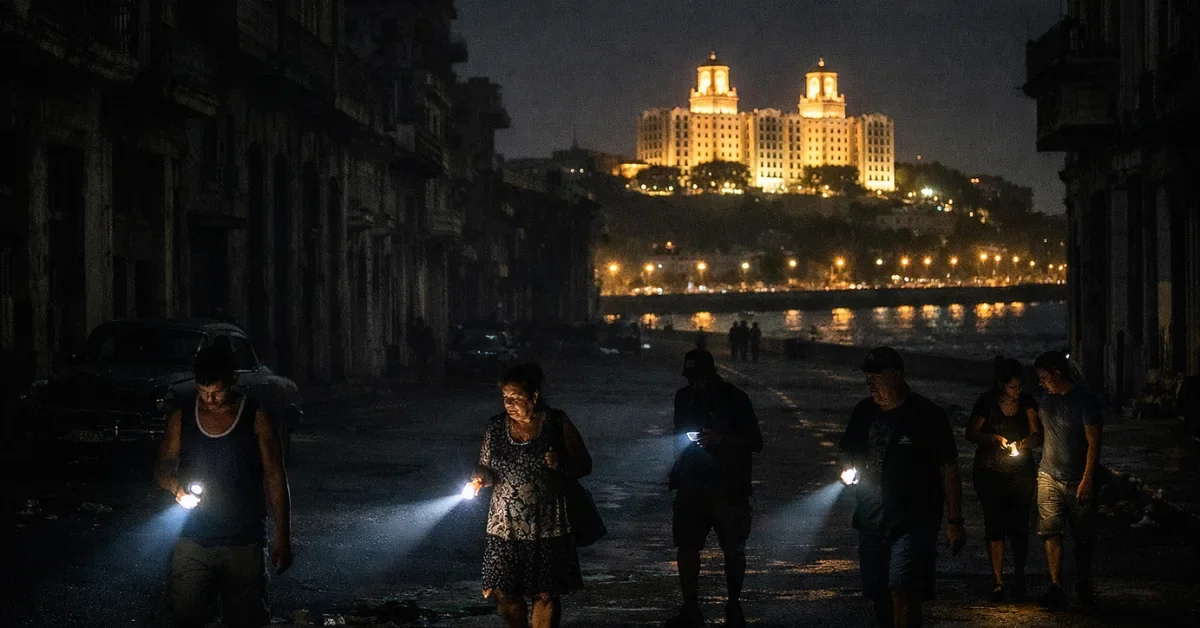
Cuba is currently facing a severe and escalating energy crisis following its second nationwide blackout in less than a week. The latest Cuba power grid collapse marks the third time this month that the Caribbean nation has been plunged into total darkness. More than 10 million residents have been left without electricity, forcing people in Havana and across the entire island to rely on flashlights to navigate their daily lives.
The Cuban Ministry of Energy confirmed the severity of the situation on social media. According to the ministry, the National Electric System experienced a complete disconnection. Officials stated that restoration protocols have been immediately initiated, and recovery efforts are actively underway to bring the obsolete power grid back online. However, the recurring failures highlight the highly fragile state of the country’s energy infrastructure.
Causes Behind the Ongoing Energy Crisis
The immediate cause of the power failures stems from a combination of an aging, obsolete electrical grid and severe fuel shortages. Cuba relies heavily on oil imports to generate its electricity, but recent geopolitical events have entirely choked off its supply chain.
Earlier this year, the United States imposed a strict oil blockade on Cuba. The Trump administration ordered a halt to Venezuelan fuel shipments following the U.S. capture of former Venezuelan President Nicolás Maduro. According to Cuban President Miguel Díaz-Canel, the island has not received any oil imports for three months. This drastic reduction in fuel has crippled the nation’s ability to maintain steady power generation. The resulting energy deficit has led to rolling blackouts and mounting discontent among citizens, who are simultaneously facing widespread shortages of food and medicine.
International Aid Convoy Arrives in Havana
Amid the deepening national crisis, an international solidarity movement organized the “Nuestra America Convoy” to provide emergency relief. The convoy recently arrived in Havana, successfully delivering 20 tons of essential supplies to the crisis-hit island. The initiative brought together activists, politicians, and artists from the United States and Europe who aimed to protest the U.S. sanctions and demonstrate visible support for the Cuban people.
Among those who traveled to the island was the Irish hip-hop trio Kneecap. The rap group stated that they joined the international aid convoy to “shine a light” on what they described as the collective punishment of the Cuban population by the U.S. embargo. To mark their arrival and show solidarity with the locals, Kneecap staged a live concert in Havana.
Luxury Hotel Stays Draw Heavy Criticism
While the convoy intended to deliver humanitarian aid, the presence of international activists quickly generated intense public backlash. Critics labeled the visitors “champagne socialists” for their choice of accommodations. Despite the severe shortages and daily power outages affecting ordinary Cubans, high-profile figures in the delegation stayed at the Gran Hotel Bristol Meliá Collection, a luxury five-star resort in Havana.
Notable figures staying at the luxury establishment included former Spanish deputy prime minister Pablo Iglesias and American political commentator Hasan Piker. The stark contrast between the foreign activists staying in a five-star hotel and the local population suffering through a total blackout fueled heavy online criticism.
In response to the backlash, Piker defended the group’s lodging choices on social media. He explicitly stated that U.S. law required the American delegation to stay at specific, officially approved luxury hotels while visiting the sanctioned country.
Viral Claims Spark Further Outrage
The controversy deepened when a sensational claim went viral on social media regarding Kneecap’s live performance. As the hip-hop trio performed their concert during the nationwide blackout, rumors began to circulate about the event’s massive energy consumption.
A viral claim alleged that the massive amount of electricity used to power the Kneecap concert directly led to the deaths of patients at nearby Cuban hospitals. According to the viral reports, the diversion of the limited power grid resources to the concert venue caused fatal disruptions to life-saving medical equipment.
This claim instantly sparked widespread outrage across digital platforms. Critics expressed fury at the idea of activists partying under stage lights while vulnerable Cubans died in the dark. While the conflicting narratives surrounding the hospital deaths remain the subject of intense debate rather than a confirmed government report, the combination of the luxury hotel stays and the concert controversy has overshadowed the convoy’s initial humanitarian mission.
As Cuba begins its difficult recovery efforts to restore electricity to millions of homes, the nation remains caught between a crumbling domestic infrastructure and tightening international embargoes.
