

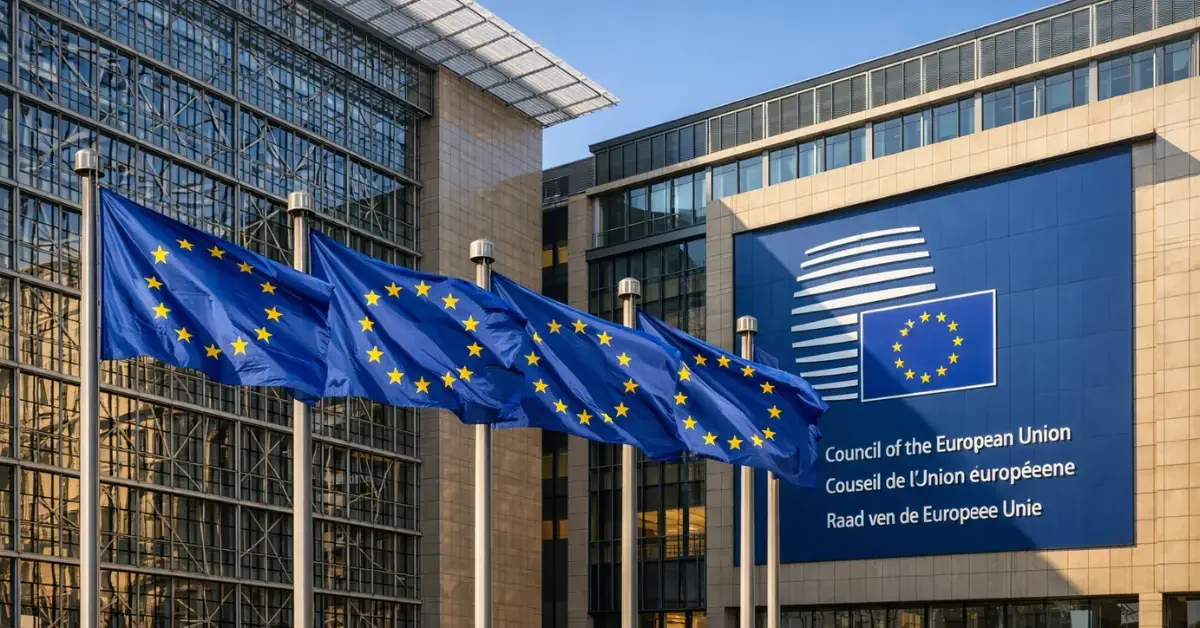
The European Union has officially extended its restrictive measures against individuals and entities supporting Moscow’s ongoing military campaign. As the EU sanctions Russia over the Ukraine war, the Council of the European Union announced on Saturday, March 14, that these measures will remain active for an additional six months. The newly established deadline for these restrictions is now September 15, 2026. These extended sanctions specifically target those who are held responsible for threatening or actively undermining the territorial integrity, sovereignty, and political independence of Ukraine.
Currently, the comprehensive package detailing how the EU sanctions Russia applies to approximately 2,600 individuals and legal entities. The enforced restrictions include strict travel bans that prevent these targeted individuals from entering or transiting through European Union member states. Furthermore, the measures mandate the freezing of financial assets held within the bloc. The directives also enforce a strict prohibition against providing any funds or other economic resources to anyone included on the designated list. The European Union has steadily expanded this extensive network of penalties since the onset of the broader Ukraine war in February 2022.
Minor Adjustments to the Sanctions List
While the overarching framework remains firmly intact, the European Union made a few adjustments to the targeted list during this latest review period. The official statement from the EU Council confirmed the removal of two living individuals from the restrictive measures. Additionally, the regulatory body decided to remove five deceased people from the active tracking list.
According to an official European Union diplomat, one of the two living individuals removed from the list was Niels Troost. Troost is a Dutch national who was initially penalized due to his involvement in the trading of Russian oil. The specific identity of the second living person removed from the list was not immediately highlighted in the official announcements.
Political Deadlock and Member State Vetoes
The diplomatic road to securing this latest six-month extension was not without significant internal challenges. The final agreement was reached only after a temporary deadlock caused by Hungary and Slovakia. Both Central European nations had initially maintained vetoes against the prolongation of the measures. Prior to this agreement, diplomatic sources noted that Hungary and Slovakia had actively sought the removal of several prominent Russian oligarchs from the European Union’s penalty list.
Slovak Foreign Minister Juraj Blanár previously made public statements confirming that his country was participating in discussions regarding these specific removals. Blanár noted that the debates centered on the potential removal of two well-known Russian oligarchs, Mikhail Fridman and Alisher Usmanov. Despite these protracted debates and initial veto threats, the broader regulatory package was ultimately renewed by the 27-nation bloc.
Energy Concerns and the Druzhba Pipeline
Energy security and economic pressures played a massive role in the negotiations leading up to the extension. Earlier in the week, Hungarian Prime Minister Viktor Orban publicly urged the European Union to suspend its established restrictions on Russian energy exports. Orban pointed to soaring regional energy prices, which he argued were being further fueled by the ongoing conflict in Iran.
Furthermore, both Hungary and Slovakia are currently engaged in a complex dispute with Ukraine regarding the flow of Russian oil. The two nations rely heavily on energy resources transported directly through the Druzhba pipeline. This reliance creates a difficult geopolitical dynamic as they attempt to balance their domestic energy requirements with their commitments to the European Union’s united economic front against Moscow.
Maintaining International Pressure on Moscow
In its official policy statement, the European Union firmly reaffirmed its unwavering determination to maintain and actively increase pressure on the Russian government. The bloc emphasized that these economic and individual restrictions are essential tools designed to force Moscow to halt its brutal war of aggression. European leaders reiterated that the ultimate goal is to compel Russia to engage in meaningful diplomatic negotiations aimed at achieving a lasting peace.
This European extension arrives during a period of shifting global energy policies and international pressures. Amid escalating geopolitical tensions in the Middle East, the United States recently instituted a temporary allowance for the purchase of Russian oil. In direct response to these global developments, European Council President António Costa issued a strong statement emphasizing that the international community must not relax its economic pressure on Moscow. Costa stressed the absolute necessity of continuing to enforce the established price cap on Russian oil to effectively limit the Kremlin’s ability to fund its military operations.
