

The humanitarian catastrophe in the Gaza Strip has reached new devastating levels in February 2026, with the death toll rising significantly amid ongoing hostilities. According to the Ministry of Health in Gaza, the number of Palestinians killed since the escalation began in October 2023 has now reached 72,045, with another 171,686 people reported injured.
In the two-week period between late January and February 11, 2026, 109 Palestinians were killed and 252 injured. While the fighting continues, the United Nations has highlighted a “fragile” opportunity for peace, urging immediate action to consolidate a ceasefire and address the profound suffering of civilians.
Severe Health and Water Crisis
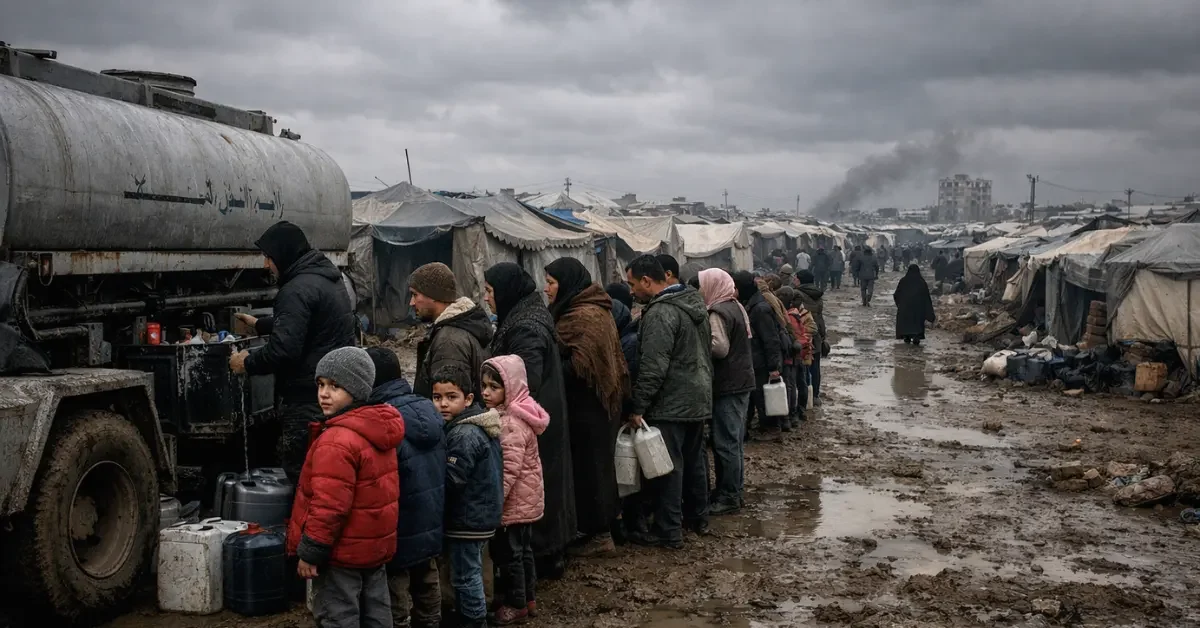
The living conditions for the 1.4 million displaced people in Gaza—approximately two-thirds of the population—remain critical. Most are residing in overcrowded makeshift sites and tents that offer little protection against winter weather. The United Nations Office for the Coordination of Humanitarian Affairs (OCHA) reports that 77 percent of water samples collected across the strip do not meet health standards.
This lack of clean water has triggered a sharp rise in infectious diseases. Health officials have recorded approximately 5,800 cases of acute jaundice syndrome (Hepatitis A) and over 496,000 cases of acute watery diarrhea, with nearly half of these cases affecting children under the age of five. The situation is exacerbated by damaged sanitation infrastructure and a scarcity of hygiene supplies.
Rafah Crossing Reopens Briefly
In a significant development, the Rafah Crossing reopened in early February 2026 for limited movement, marking the first time the crossing has been accessible for people in nearly 11 months. This reopening facilitated the medical evacuation of 91 patients and allowed a small number of Palestinians to return to Gaza.
However, the need for medical evacuation remains overwhelming. The World Health Organization (WHO) estimates that more than 18,500 people, including 4,000 children, still require urgent medical treatment outside of Gaza. Aid organizations warn that at the current pace of evacuations, it could take more than a year to transport all those in critical need.
Aid Challenges and Worker Casualties
Humanitarian operations continue to face extreme risks and logistical hurdles. Since October 2023, at least 588 aid workers have been killed in the Gaza Strip, including nearly 400 UN staff members. Access for relief missions is frequently impeded; out of 120 coordinated humanitarian movements in late January and early February, only 61 were facilitated by Israeli authorities.
Compounding the supply crisis, winter weather and transit delays have led to the spoilage of food commodities before they can even enter Gaza. Inside the strip, the destruction of the electrical grid and lack of refrigeration have further increased food waste, forcing partners to dispose of damaged goods in an environment with already constrained landfill capacity.
Diplomatic Warnings and West Bank Concerns
At the UN Security Council, officials have warned that the current “window for peace” is not indefinite. Under-Secretary-General Rosemary DiCarlo emphasized that despite ceasefire efforts, Gaza is not yet at peace, citing intensified strikes and continued armed exchanges.
Simultaneously, the situation in the occupied West Bank is described as “deteriorating rapidly.” UN reports point to large-scale operations involving live fire, mass detentions, and movement restrictions. Officials have expressed alarm over what they term the “gradual de facto annexation” of the territory, warning that the trajectory in the West Bank threatens to destabilize the region further.
