

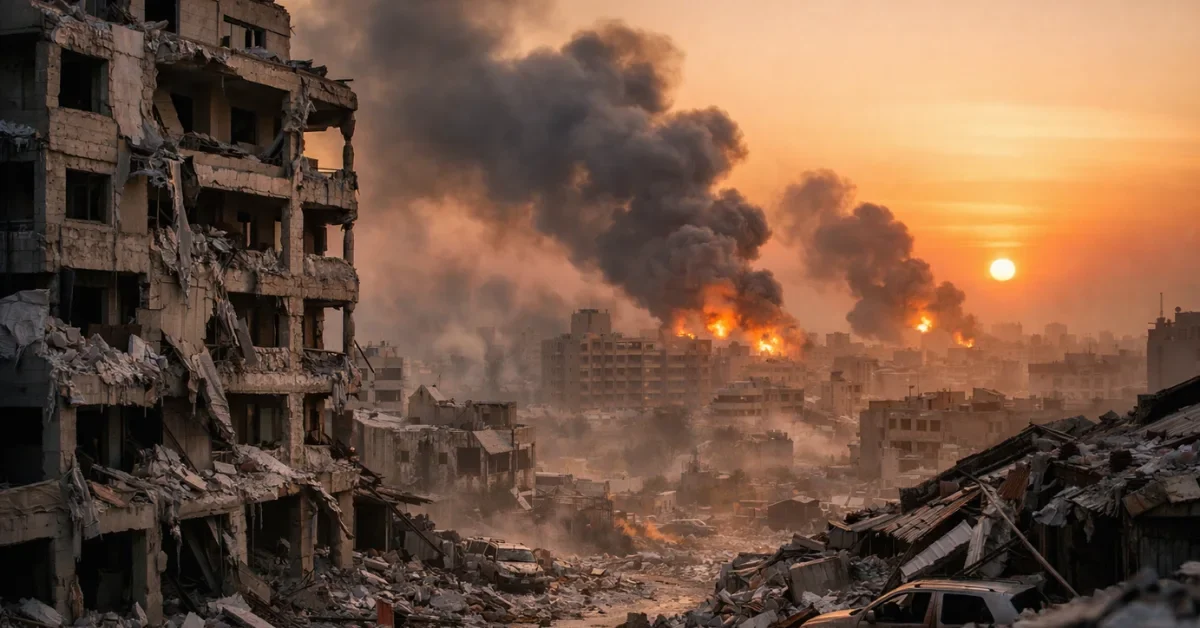
Israeli military strikes have surged across Gaza this February, casting a dark shadow over a critical diplomatic meeting between President Donald Trump and Prime Minister Benjamin Netanyahu. As the two leaders prepare to discuss the future of the region, fresh violence has once again disrupted the fragile, four-month-old ceasefire mediated by the United States. Recent reports indicate that the death toll continues to climb, with strikes hitting several civilian and medical targets across the enclave.
The surge in Gaza military strikes comes at a pivotal moment for the Trump administration, which has been pushing for a transition into the next phase of its regional peace plan. This meeting follows a series of earlier discussions at Mar-a-Lago, where President Trump warned that Hamas must disarm within a short timeframe or face severe consequences. Despite these diplomatic efforts, the reality on the ground remains volatile, with both military operations and militant exchanges threatening to collapse the truce established last October.
On February 10, health officials in Gaza reported that Israeli airstrikes and gunfire killed five Palestinians. These incidents occurred in multiple locations, highlighting the widespread nature of the current military activity. In the central Gaza area of Deir Al-Balah, an airstrike targeted and killed two individuals who were riding an electric bicycle. Shortly after, drone fire in the same vicinity claimed the life of a woman. The violence extended to the south, where a man was shot and killed by troops in Khan Younis, and to the north, where another fatality was reported in Jabalia due to gunfire.
These recent deaths are part of a larger, more violent trend observed throughout the first half of February 2026. On February 4, a major escalation resulted in significant casualties and the immediate disruption of humanitarian efforts. Reports regarding the exact death toll from that day vary between sources; while some Palestinian authorities reported 18 fatalities, including four children, other health officials stated the number reached as high as 24 people, including seven children. The Israeli military indicated these strikes were a response to a militant who opened fire on soldiers, seriously wounding a reservist.
The impact of the February 4 strikes was felt most acutely at the Rafah border crossing. Just two days after it had reopened to allow a limited number of evacuations, Israel halted the movement of patients into Egypt. This sudden closure left many critically ill Palestinians stranded in ambulances. Medical representatives from the Red Crescent confirmed that patients who had arrived at hospitals in Khan Younis for transport were turned back, being told that the crossing was once again closed for travel.
This ongoing cycle of violence has put the October 2025 ceasefire under immense pressure. According to data from the Gaza health ministry, at least 580 Palestinians have been killed by Israeli fire since the truce was initially signed. During that same period, Israeli sources have reported that four soldiers have lost their lives to militant attacks. The United Nations has issued repeated warnings that continued shelling and airstrikes are placing civilians at extreme risk and undermining the possibility of a sustained peace.
The political stakes for the meeting between President Trump and Prime Minister Netanyahu are remarkably high. President Trump has signaled that the United States is ready to advance to “Phase 2” of the peace strategy, which involves the creation of a Gaza Board of Peace and the establishment of a new Palestinian technocratic government. However, this progress is contingent on Hamas adhering to disarmament agreements. President Trump has been vocal about his expectations, stating that the group has a very short period to comply or they will face “hell to pay.”
While the focus remains on Gaza, the conflict has shown signs of spreading. Recent reports from February 11 indicate that Israeli military actions have also targeted locations in the West Bank. This broadening of the military scope coincides with heightened tensions regarding Iran’s nuclear and ballistic missile programs. President Trump has expressed a willingness to support Israeli action against Iran if it resumes building up its weapons capabilities, further complicating the regional security landscape.
The broader human cost of the conflict remains staggering. Since the initial outbreak of war on October 7, 2023, the Palestinian health ministry reports that more than 72,000 people have been killed in Gaza. On the Israeli side, the initial October 7 attack resulted in over 1,200 deaths. As President Trump and Prime Minister Netanyahu convene to chart a path forward, the escalating Gaza military strikes serve as a reminder of the immense challenges facing any long-term peace agreement.
