

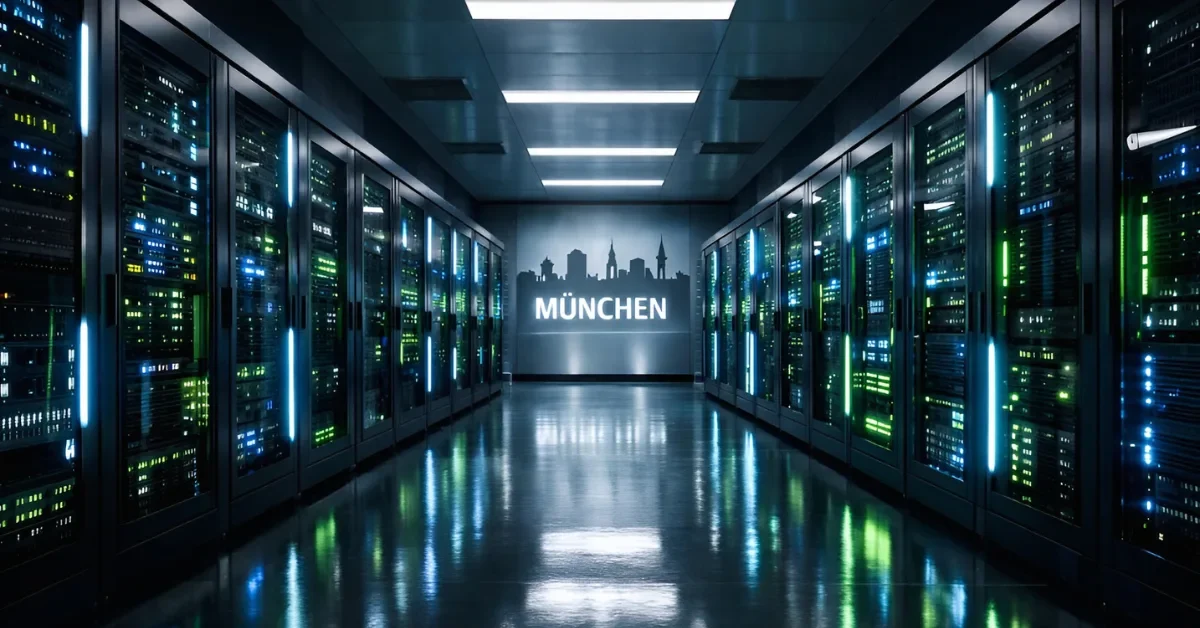
Germany has officially entered a new era of industrial computing with the launch of its first “AI Factory.” This high-performance data center, unveiled by Deutsche Telekom, is designed to provide European companies with the immense computing power needed to train and deploy artificial intelligence models securely. Located in Munich, the facility represents a significant step toward digital sovereignty for the region, offering a local alternative to relying solely on major cloud providers from the United States and China.
The new AI Factory is specifically engineered to meet the stringent requirements of industrial clients. Unlike general-purpose cloud storage, this facility is optimized for the heavy workloads associated with machine learning and generative AI. By keeping data processing within German borders, Deutsche Telekom aims to address growing concerns regarding data privacy and security, ensuring that sensitive corporate information remains compliant with European regulations.
Empowering Industry with Sovereign AI
At the core of this initiative is the need for “sovereign AI.” As artificial intelligence becomes critical for sectors like automotive manufacturing, logistics, and pharmaceuticals, companies are increasingly wary of entrusting their proprietary data to foreign tech giants. The Munich-based AI Factory offers a solution by providing a secure environment where businesses can develop custom AI applications without their data ever leaving the country.
Deutsche Telekom’s subsidiary, T-Systems, is operating the facility. The infrastructure is built on Nvidia’s advanced computing architecture, which is widely regarded as the gold standard for AI processing. This collaboration allows European enterprises to access the same top-tier technology used by global tech leaders but within a framework that adheres to strict German and European data protection laws.
The facility is already supporting high-profile partners. For instance, Agile Robots, a Munich-based robotics company, is utilizing the factory’s computing power to enhance the capabilities of its intelligent robots. This partnership highlights the practical applications of the AI Factory, demonstrating how local computing resources can accelerate innovation in robotics and automation.
A Technological Leap for Europe
The launch of the AI Factory is part of a broader strategy to reduce Europe’s technological dependence on external powers. For years, European industries have relied heavily on hyperscalers—massive cloud service providers—headquartered outside the continent. This reliance has sparked fears of “vendor lock-in” and vulnerability to geopolitical shifts. Deutsche Telekom’s investment is a direct response to these challenges, aiming to build a robust domestic ecosystem for high-performance computing.
The Munich site is powered by green energy, aligning with the European Union’s sustainability goals. As AI models require massive amounts of electricity to train, the environmental impact of these data centers is a major concern. By sourcing renewable energy, the AI Factory attempts to balance the demand for computing power with ecological responsibility.
Beyond just hardware, the initiative includes a software ecosystem designed to make AI accessible to more businesses. Deutsche Telekom is offering “AI-as-a-Service,” allowing companies to rent computing capacity on demand. This model lowers the barrier to entry for smaller firms that cannot afford to build their own supercomputers, democratizing access to cutting-edge technology.
Strategic Partnerships and Future Growth
While Deutsche Telekom is leading the project, the AI Factory is built on strategic partnerships. The collaboration with Nvidia ensures that the hardware remains state-of-the-art. Additionally, the project involves cooperation with other key players in the tech industry to create a comprehensive service offering.
This facility is not just a standalone project but a blueprint for future expansion. Deutsche Telekom has indicated plans to scale this model, potentially opening more AI factories across Europe if the demand continues to grow. The success of the Munich site could serve as a proof of concept, encouraging other European nations to invest in similar sovereign infrastructures.
The timing of this launch is crucial. With the European Union implementing the AI Act—the world’s first comprehensive AI law—regulatory compliance is becoming more complex. The AI Factory is positioned to help companies navigate this landscape by offering a compliant, transparent, and secure platform for AI development.
Overcoming Challenges in the AI Race
Despite this significant milestone, Europe still faces a steep climb to catch up with the US and China in the global AI race. The investment in the Munich AI Factory is a strong start, but it is just one piece of a larger puzzle. To truly compete, the region will need sustained investment, talent retention, and a unified approach to digital policy.
However, the specific focus on industrial AI plays to Germany’s strengths. The country’s economy is driven by engineering and manufacturing—sectors where precision, reliability, and data security are paramount. By tailoring the AI Factory to these industries rather than trying to build a consumer-facing AI competitor, Deutsche Telekom is playing a strategic game, targeting a niche where it can offer genuine value.
In summary, the opening of Germany’s first AI Factory in Munich marks a pivotal moment for European technology. It offers a tangible solution to the problems of data sovereignty and security, providing industrial giants and innovative startups alike with the tools they need to compete globally while keeping their data at home. As the demand for AI continues to surge, this facility stands as a fortress of digital independence in an increasingly interconnected world.
