

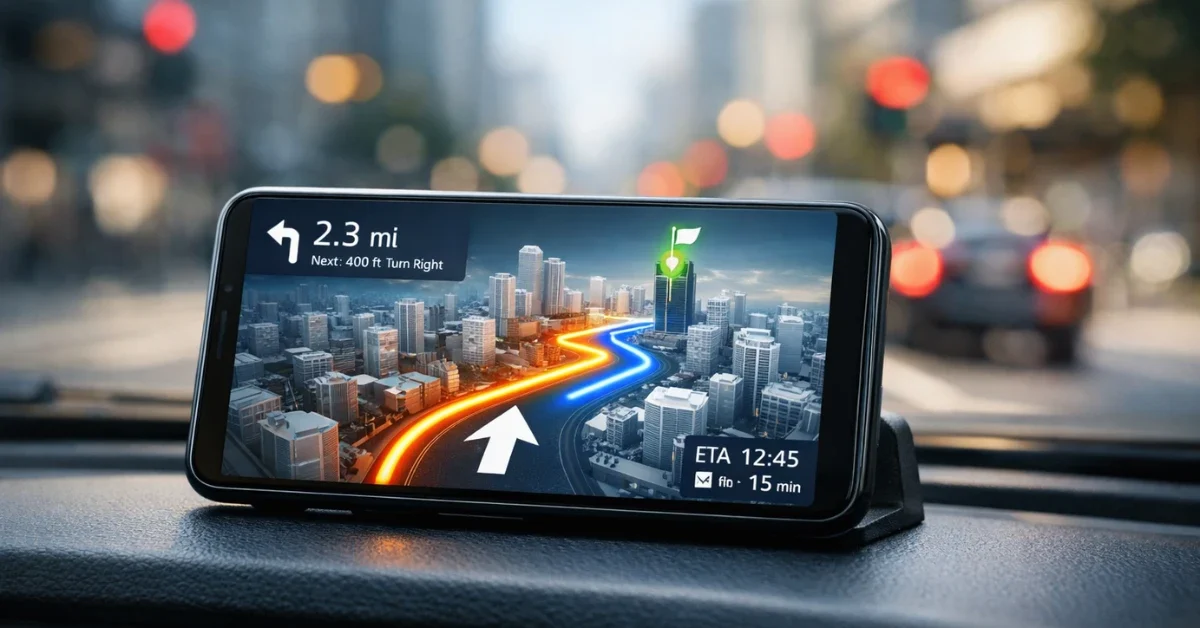
Google is rolling out its most significant navigation redesign in over ten years. Unveiled on Thursday, this massive Google Maps AI update integrates Gemini artificial intelligence into the app, introducing entirely new ways to explore the world. Reaching a user base of over two billion people, the overhaul introduces a conversational chatbot tool called Ask Maps and a completely revamped 3D driving experience known as Immersive Navigation. By leveraging the latest AI models, the technology giant aims to make route planning and daily commuting more intuitive.
The Biggest Redesign in Over a Decade
Google Maps celebrated its twentieth anniversary last year, and this latest update represents a fundamental shift in how the platform operates. According to the company, this update is designed to alter the core capabilities of a digital map. By merging up-to-date mapping data with advanced Gemini models, Google is transforming basic exploration into a conversational experience.
This integration is part of a wider strategy to embed AI tools more thoroughly across Google’s extensive range of products, including Gmail and the Chrome web browser. This highlights Google’s confidence in the Gemini 3 model. Amid an intensifying battle with AI rivals like OpenAI and Anthropic, Google is utilizing its mapping resources to differentiate its offerings and encourage users to engage with its products for extended periods.
Introducing Gemini-Powered Ask Maps
The newly introduced Ask Maps feature expands upon the conversational abilities that Google initially brought to the service last November. Users now have a powerful chatbot interface capable of handling highly complex, real-world inquiries. Users can now articulate their plans naturally and include extensive detail.
For example, users can ask where to find a phone charging station without waiting in a long line for coffee. Others might ask the app to locate the nearest clean public restroom or an illuminated public tennis court for a night match. Gemini processes these intricate requests to deliver comprehensive, tailored responses.
Personalized Recommendations and Actions
To generate these tailored answers, Ask Maps relies on a database of over 300 million places and insights from more than 500 million contributors. Gemini evaluates user-generated reviews and photographs to extract nuanced information regarding the general ambiance or activity levels of potential venues.
Responses are personalized based on a user’s previous searches, saved locations, and favorite venues within the application. Miriam Daniel, Vice President and General Manager of Google Maps, clarified that the AI relies solely on data from Google Maps, rather than pulling personal data from other applications like Gmail.
Once the AI provides a suitable option, Ask Maps simplifies turning plans into actions. Users can facilitate table reservations or finalize plans with a single tap. As one Google executive explained, the overarching goal is to require less scrolling and allow for more strolling.
Immersive Navigation Transforms the Driving Experience
Alongside conversational discovery, Google is promising a complete transformation of the driving experience. The new Immersive Navigation feature is designed to solve persistent usability issues associated with turn-by-turn directions. Built using a combination of aerial imagery and comprehensive Street View data, the tool provides drivers with a deep 3D spatial understanding of their surroundings.
Smarter Visuals and Proactive Voice Guidance
Immersive Navigation brings detailed 3D visuals that show accurate overpasses, crosswalks, road signage, and prominent landmarks. To help drivers plan ahead and maintain focus on the road, the interface uses smart zoom capabilities and renders obstructing buildings transparently.
Voice guidance has also received a significant intelligence boost. Instead of only announcing the immediate next step, the navigation system will proactively reference turns after the next one where appropriate. The AI also highlights the trade-offs between different route options. If a user is presented with multiple paths, the app will clearly explain the pros and cons, such as taking a longer route to avoid heavy traffic or tolls. When approaching a final destination, Immersive Navigation uses Street View imagery to point out the best places to park and clearly highlights exact building entrances.
Availability and Rollout Schedule
Because AI can sometimes generate false information, Google has implemented strict guardrails to prevent hallucinations and ensure the reliability of its directions.
The rollout of these features is happening in stages. Ask Maps is currently launching for mobile users in the United States and India, with desktop support arriving soon. Meanwhile, Immersive Navigation is beginning its rollout today in the United States for the Google Maps mobile app on Android and iOS. Broader platform support is scheduled for the coming months, when the 3D navigation experience will expand to Apple CarPlay, Android Auto, and vehicles equipped with Google built-in software.
