

A major new global effort called the Human Exposome Project is aiming to map the “human exposome” — the full mix of exposures people experience across a lifetime — to better understand what drives disease and how to prevent it.
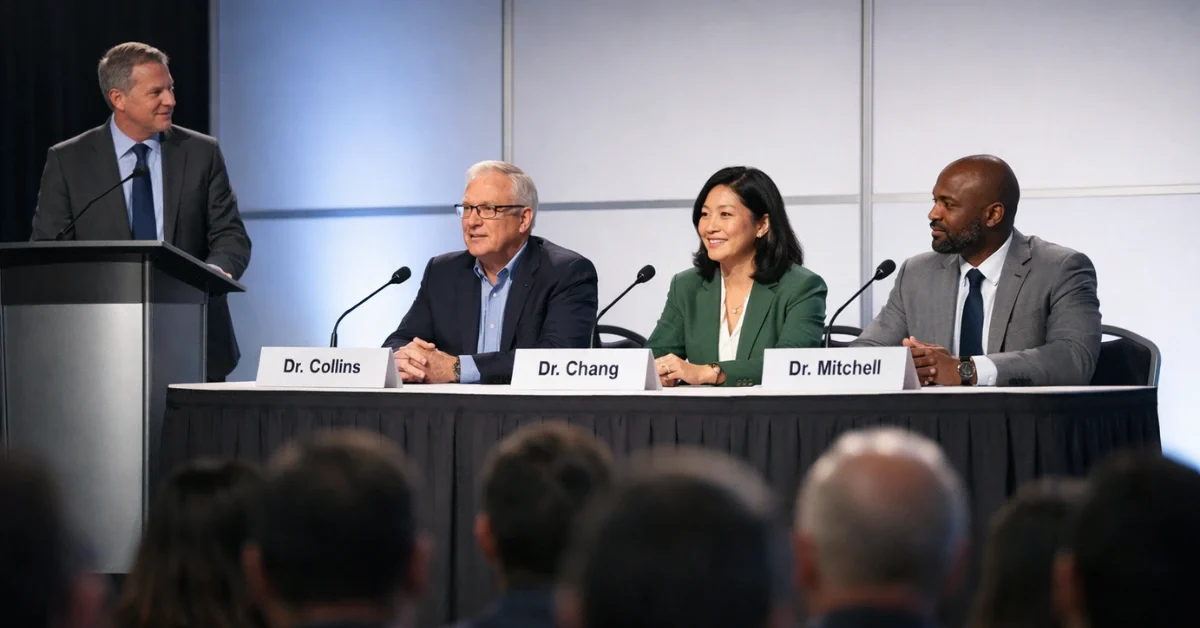
The push is being spotlighted at the AAAS Annual Meeting in Phoenix, where a high-level panel tied to the Global Exposome Forum is set to update researchers and journalists on progress since the initiative’s May 2025 launch in Washington, D.C. The session is moderated by the Financial Times and is titled “How the human exposome will unlock better health and medicine.”
What’s happening at AAAS
The panel is scheduled for Saturday, Feb. 14, 2026, from 10:00 a.m. to 11:00 a.m. MST in Room West 105 at the Phoenix Convention Center, and it is open to credentialed members of the press attending the AAAS Annual Meeting. Organizers say the goal is to brief AAAS delegates on what they describe as a major public health opportunity: understanding the human exposome and applying exposomics science at scale.
According to the event description, speakers plan to focus on three areas: the potential of exposomics, a roadmap for building a truly global community, and strategies to address scientific and policy challenges. Panel organizer Prof. Thomas Hartung of the Johns Hopkins University Bloomberg School of Public Health said, “We are here to make waves, not ripples,” adding that the panel will share examples of “buy-in with national governments, global scientific institutions and large membership-led organizations.”
What the “exposome” means
The National Institute of Environmental Health Sciences describes the exposome as the integrated compilation of physical, chemical, biological, and psychosocial influences that affect biology throughout a person’s life. Exposomics is the study of that exposome, and the broader initiative is framed as a complement to genetics-focused research.
In materials tied to the AAAS panel, organizers argue that genes account for only 10–20% of disease risk, while biological, chemical, and environmental exposures may contribute to at least 80%. They position the Human Exposome Project as a large-scale effort that could rival the Human Genome Project in ambition, but aimed at real-world drivers of health.
Momentum, partners, and regional growth
Organizers say momentum is expanding through new regional chapters and working groups that combine AI, advanced sensors, metabolomics, and big data analytics. They also describe a bottom-up approach designed to engage citizens and elected officials, alongside scientific and policy work.
One example highlighted in the AAAS materials is South Africa’s December 1, 2025 meeting in Pretoria, held alongside Science Forum South Africa and the World Conference of Science Journalists, to assess capacities for a continent-wide exposome network. The same account says pan-African experts agreed to engage with Global Exposome Forum working groups, with synchronizing health data reporting systems identified as an early priority, and that a follow-up workshop is planned for early December 2026.
The materials also describe ongoing policy discussions involving the International Network for Governmental Science Advice, including work on how “exposomethics” could be integrated into policymaking and a planned high-level session on April 29, 2026, during the Global Exposome Summit. Separately, organizers say the Global Exposome Forum launched a partnership with the Human Cell Atlas and UNESCO on Dec. 8, 2025, including virtual town halls spanning single-cell analysis, genomics, exposomics, and science policy.
Tools, infrastructure, and next steps
At the Exposome Moonshot Forum in Washington, D.C., more than 400 people from 30 countries gathered in person and virtually to commit to collaboration across disciplines, sectors, and national boundaries, according to an NIEHS account. NIEHS Director Rick Woychik said, “If we really want to influence human health, we have to develop a bold vision and think creatively about how we can work together to study the complex interplay of different environmental exposures.”
The NIEHS article points to technical advances that supporters believe make large-scale exposome work more feasible now, including mass spectrometry and nanotechnology to measure hundreds of chemicals in blood, tissue, or tumor samples. It also describes growing use of satellite imaging and sensors for the external environment, paired with improved data analysis, AI, and machine learning to bring datasets together.
Organizers describe building a coordinated framework that blends emerging technologies, big data, and AI with ethical and social considerations, while also setting shared vocabulary and standardized measurement and analysis approaches. Acting NIH Deputy Director for Program Coordination, Planning, and Strategic Initiatives Nicole Kleinstreuer said integrating the exposome into the NIH Real World Data Platform is “not just a technical challenge,” calling it “a scientific imperative” that requires harmonizing diverse data streams in a scalable and standardized way.
The next major convening point described in the AAAS materials is the Global Exposome Summit in Sitges, Spain, scheduled for April 27–29, 2026, organized by the European Exposome Forum. Organizers say the broader aim is to move exposomics from an emerging concept into a practical driver of prevention, diagnostics, treatment, and policy decisions that can improve population health.
