

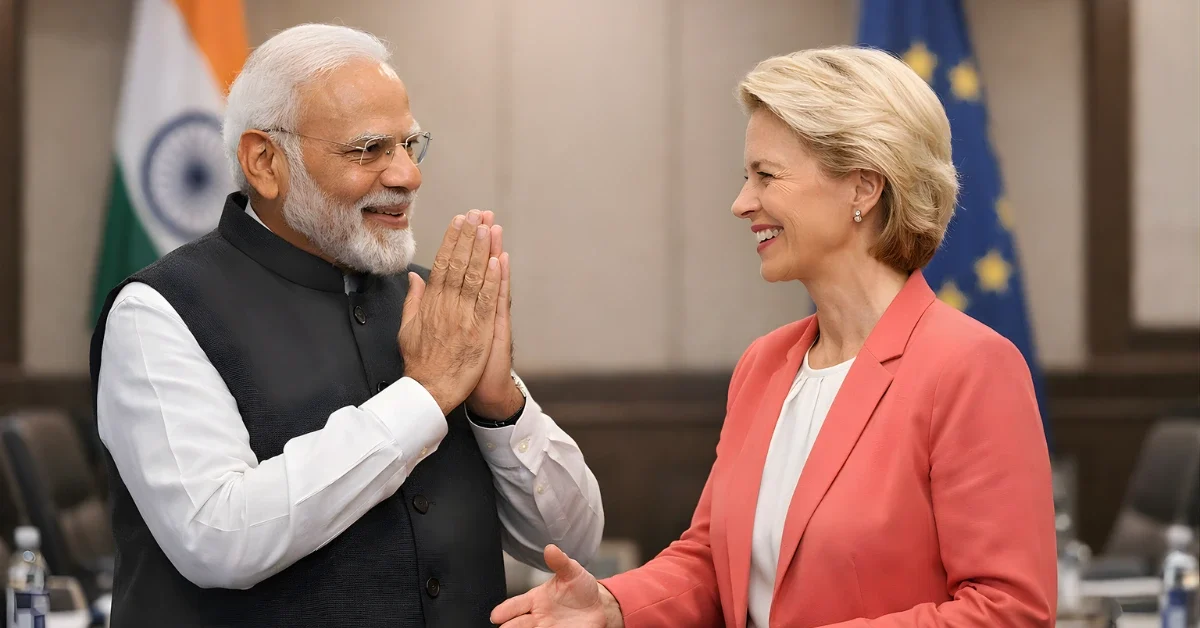
India and the European Union have concluded negotiations on a long-pending free trade agreement, with leaders expected to formally announce the outcome at an India-EU summit in New Delhi.
India’s commerce secretary Rajesh Agrawal described the deal as “balanced and forward-looking” and said it is aimed at deepening India’s economic integration with the EU.
The agreement is being positioned by both sides as a major milestone at a time when many countries are looking to diversify trade ties amid strain in relations involving the United States.
When the deal could take effect
Agrawal said the agreement’s text is headed for “legal scrubbing,” which he said would take about five to six months, with formal signing planned after that process.
A Reuters report also cited an Indian government source saying the signing would follow a legal review expected to take about five to six months and that the agreement is anticipated to be implemented within a year.
The Indian Express reported that after completing talks across 21 chapters, the legal scrubbing could take four to five months and the agreement is expected to come into effect by early next year after ratification by the European Parliament.
What’s in focus: tariffs, cars, and steel
One of the final sticking points in the negotiations involved trade in cars and steel.
India was considering cutting tariffs on cars imported from the EU to 40% from as high as 110% as part of the deal.
The EU has been pressing India to reduce steep import duties on vehicles, while India has urged the EU to ease trade restrictions affecting its steel exports.
A separate report said the deal is expected to open the way for reduced tariffs on European cars and wine, while expanding the market for Indian electronics, textiles, and chemicals.
Comments attributed to European Commission Executive Vice-President Maroš Šefčovič said the pact would lift many Indian customs duties on European goods, while sensitive sectors would be excluded to focus on what he called a positive outcome.
Why the agreement is being called significant
The pact was described as enabling freer exchange of goods between India and the 27-nation EU bloc, together representing about a quarter of global gross domestic product and a consumer base of 2 billion people.
Trade between India and the EU totalled $136.5 billion in the fiscal year ending in March 2025.
Šefčovič described the deal as “the largest trade deal ever,” while also saying around 6,000 European companies already operate in India and that trade between the partners has surged over the past decade.
The Indian Express reported that the agreement could benefit India’s labour-intensive sectors, including marine products, textiles, footwear, and sports goods.
That report also said India is likely to open its automobile and alcoholic beverage sectors, areas where the EU has strong interest.
Political context and the long path to a finish
Negotiations on the India-EU trade agreement began in 2007 and were abandoned in 2013 due to differences over market access for automobiles.
Talks resumed in 2022 after a nine-year hiatus, and later accelerated after Prime Minister Narendra Modi and European Commission President Ursula von der Leyen agreed to fast-track discussions last year.
Von der Leyen and European Council President António Costa were in New Delhi for India’s Republic Day events and to participate in the 16th India-EU Summit, alongside Modi’s public remarks welcoming the leaders.
The Indian Express said the negotiations gained urgency amid shifts in American trade policy, adding that India is facing steep 50% tariffs and that apparel exporters wrote to Vice President C P Radhakrishnan last week warning of job losses linked to U.S. tariffs.
The push for trade agreements was also framed as part of a broader effort to diversify away from dependence on the United States, with U.S. President Donald Trump’s tariff threats against European nations testing long-standing alliances.
