

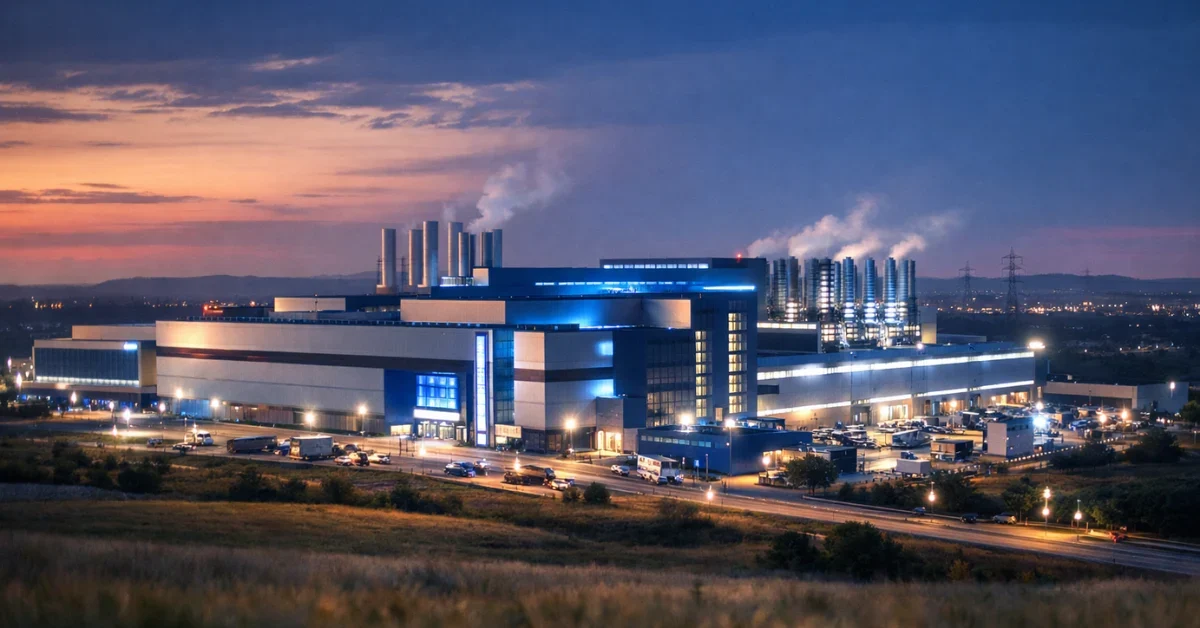
Intel has officially joined forces with Elon Musk to develop a massive semiconductor manufacturing initiative known as the Terafab project. The major U.S. chipmaker announced the partnership on Tuesday, April 7, confirming it will collaborate with Tesla, SpaceX, and xAI to produce ultra-high-performance artificial intelligence chips. This bold venture aims to build a sprawling chip factory in Austin, Texas, capable of generating an unprecedented one terawatt of AI computing power annually.
The Intel Terafab project announcement triggered an immediate reaction on Wall Street, sending Intel shares climbing nearly five percent in early trading before leveling off. By teaming up with Musk’s ecosystem of companies, Intel is stepping into an ambitious effort designed to dramatically reshape how advanced semiconductors are designed and produced. The manufacturing facility is expected to be constructed near Tesla’s existing corporate headquarters and Gigafactory in Texas.
Expanding the Intel Terafab Project Scope
The primary motivation behind this collaboration is the soaring global demand for AI processors. Musk has previously emphasized that existing semiconductor manufacturers are simply not producing chips fast enough to meet the rapidly expanding needs of his enterprises. Highlighting the urgency, Musk noted that without this massive domestic facility, his companies would lack the necessary hardware to advance their technologies. He summarized the situation directly, stating they must build the factory because they desperately need the chips.
By internalizing semiconductor production through this joint venture, Tesla, SpaceX, and xAI hope to eliminate supply chain bottlenecks. The project represents a deliberate effort to consolidate every stage of the semiconductor lifecycle—including chip design, fabrication, advanced packaging, and testing—under one roof. Consolidating these processes is expected to enable faster, more efficient production cycles than relying on outside vendors.
According to Intel, its extensive experience in manufacturing chips at a massive scale will play a critical role in helping the joint venture refactor existing silicon fabrication technology. Refactoring is a crucial development phase that typically enhances a processor’s power output and overall reliability. Intel’s ability to offer custom silicon development and packaging services makes it a logical partner to fulfill these specialized hardware requirements.
Pushing the Boundaries of Computing Power
The scale of the intended manufacturing output is staggering. The core goal of the collaboration is to produce one trillion watts of computing capacity each year. To put that massive number in perspective, running one terawatt of AI compute continuously for an entire year would require approximately twice the amount of electricity consumed annually by the entire United States.
This enormous processing power is slated to fuel next-generation applications across Musk’s corporate portfolio. The output will support autonomous driving systems for Tesla robotaxis, power the Optimus humanoid robots, and drive advanced AI models for xAI. Furthermore, the initiative targets the creation of solar-powered data centers in space. The vision includes allocating up to two hundred gigawatts of computing power for Earth-based operations while reserving a full terawatt specifically for space applications.
Overcoming Manufacturing Hurdles
Building a semiconductor fabrication plant is notoriously difficult and astronomically expensive. Only a small handful of companies worldwide, including Intel, TSMC, and Samsung, possess the specialized resources and cleanroom capacity required to produce advanced processors at high volume. Industry estimates suggest establishing a domestic facility of this magnitude requires a massive financial commitment, with the total investment expected to reach around twenty-five billion dollars.
To stay ahead of competitors, the facility will reportedly utilize a cutting-edge two-nanometer process technology. This represents the most advanced level of chip fabrication currently available, a threshold that established foundries are only just beginning to explore. Access to this highly advanced manufacturing node is critical for delivering the components required for complex AI and robotics workloads.
Leadership and Strategic Implementation
The alliance marks a significant milestone for Intel as it seeks to strengthen its position in the competitive semiconductor market. The announcement, made via Musk’s social media platform X, featured a photograph of the billionaire alongside Intel Chief Executive Officer Lip-Bu Tan following a weekend meeting. Tan publicly praised Musk’s proven track record of disrupting traditional industries, describing the manufacturing endeavor as a fundamental step change in how processors are built.
Despite the ambitious targets and substantial financial backing, a firm timeline for the facility’s construction and full operational capacity remains unclear. Musk previously indicated the project will begin with prototyping and testing the underlying infrastructure. As the partnership moves forward, the combined expertise of Intel’s engineering teams and Musk’s integrated technology network will face the monumental task of turning a multi-billion-dollar concept into a functional, high-yield reality.
