

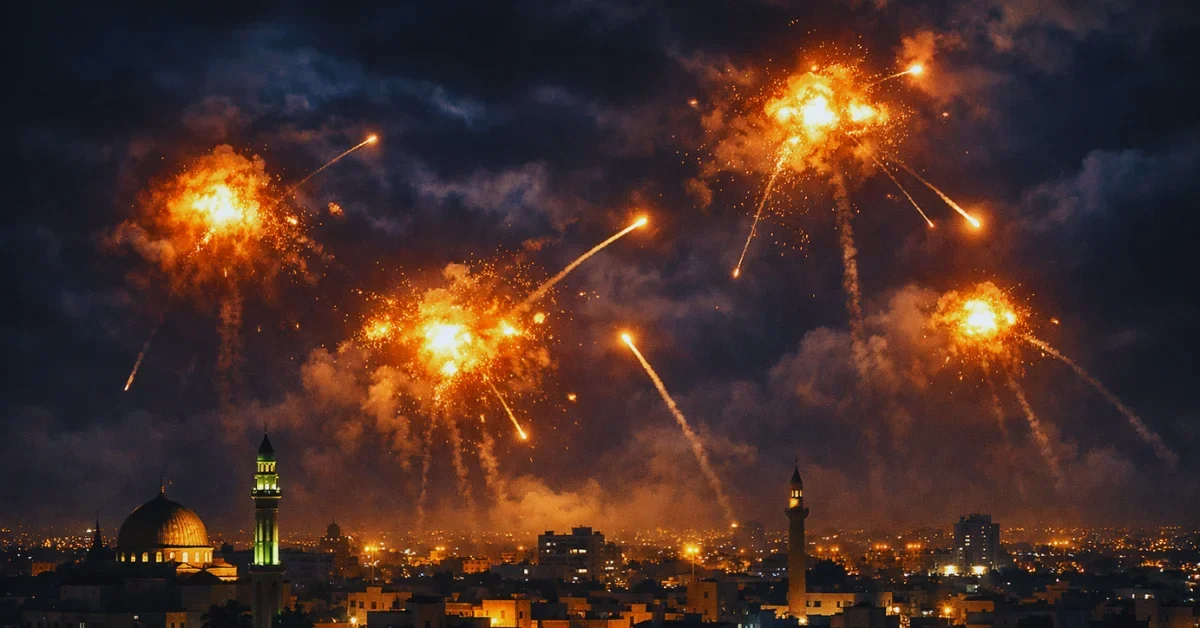
The Middle East conflict has escalated drastically following major Iran missile strikes on Israel and neighboring Gulf states. The attacks on Monday occurred shortly after Iran appointed Ayatollah Mojtaba Khamenei as its new supreme leader, succeeding his father who was killed in recent bombings. In response to unprecedented Israeli strikes on Iranian fuel depots over the weekend, Tehran launched waves of projectiles across the region, triggering air raid sirens and emergency alerts in several countries.
These Iran missile strikes mark a significant escalation in a war that began in late February 2026. Tensions soared after Israeli forces targeted 30 Iranian fuel storage complexes, an operation that surprised United States officials and raised fears of global oil price spikes. The continuous exchange of fire between US-Israeli forces and Iran has already resulted in widespread destruction and drawn multiple Gulf nations into the crossfire.
New Supreme Leader Sparks Retaliation
On Monday, Iran’s 88-member Assembly of Experts named 56-year-old Mojtaba Khamenei as the country’s third supreme leader. He replaces his father, Ayatollah Ali Khamenei, who died in a joint US-Israeli strike nine days earlier. Shortly after the announcement, state broadcaster IRIB confirmed that Iran fired its first wave of missiles under the new leader’s command toward Israel.
Images broadcast on Iranian state channels showed a projectile bearing the slogan, “At Your Command, Sayyid Mojtaba.” The country’s Revolutionary Guards quickly pledged their total obedience to the new hardline leader.
United States President Donald Trump dismissed the younger Khamenei as a “lightweight.” Speaking to reporters, Trump warned that the new leader would not last long without American approval. Similarly, the Israeli military cautioned that they would not hesitate to target the new supreme leader.
Israel Strikes Tehran’s Oil Infrastructure
The latest barrage of Iranian missiles followed a massive Israeli military operation targeting civilian industrial infrastructure. Over the weekend, Israel struck 30 fuel storage sites across Iran. Targeted locations included the Aghdasieh and Shahran oil depots in Tehran, a southern oil refinery, and another facility in Karaj.
The Israeli military claimed these sites distributed fuel to military entities. However, the scale of the attack caught US officials off guard. American representatives expressed surprise at the extensive bombings, warning that the operation was “not a good idea” because it could unsettle global oil markets and unite Iranian society.
The strikes unleashed severe environmental and health hazards across Iran’s capital. A massive cloud of toxic black smoke engulfed Tehran, a city of nearly 10 million people. Residents reported breathing difficulties, sore skin, and burning eyes. The Iranian Red Crescent Society warned that the resulting black, acidic rainfall could cause chemical burns and severe lung damage.
Water Wars and Infrastructure Attacks
Alongside the oil depot bombings, both sides have accused each other of targeting critical civilian water supplies. Iranian officials alleged that the United States attacked a desalination plant on Qeshm Island, cutting off drinking water to 30 villages. President Trump denied any knowledge of the attack while reiterating his intent to heavily escalate the bombing campaign against Iran.
Meanwhile, Bahrain accused Tehran of launching a drone strike that damaged one of its own desalination plants. These facilities are essential for survival in the arid Gulf region, making them highly sensitive targets.
Gulf States on High Alert
The fallout from the Iran missile strikes has spilled directly into neighboring Gulf countries. The United Arab Emirates placed residents in Abu Dhabi on high alert as advanced air defense systems intercepted incoming drones and missiles. The UAE Ministry of Interior urged citizens to stay indoors and avoid windows as loud explosions echoed across the capital.
Similar defense operations took place across the Arabian Peninsula. Saudi Arabia’s Defense Ministry reported shooting down at least three ballistic missiles and four drones early Monday morning. Kuwait also engaged a wave of drones that damaged fuel tanks at Kuwait International Airport, while explosions were heard in Qatar near a major US air base.
Since the broader US-Israeli offensive began, an estimated 1,000 civilians have died. Furthermore, Iranian authorities report that approximately 10,000 civilian structures, including schools and hospitals, have suffered damage. As both sides continue to exchange heavy fire, the region remains braced for further military escalation.
