

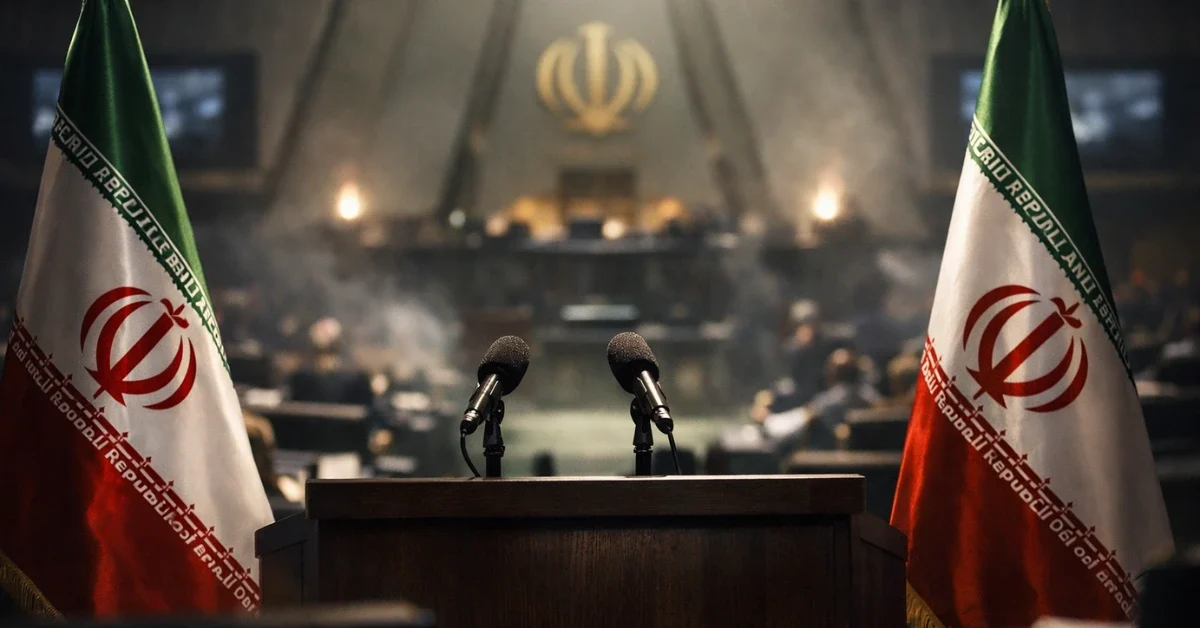
Iran has officially appointed 56-year-old Mojtaba Khamenei as the country’s new Supreme Leader, initiating a historic and unprecedented transition of power. The formal announcement arrives slightly more than a week after his father, Ayatollah Ali Khamenei, was killed in joint United States and Israeli airstrikes. Under Iran’s constitutional framework, the Supreme Leader is selected by the Assembly of Experts, an 88-member panel of Shiite clerics whose candidacies are vetted by a constitutional oversight authority known as the Guardian Council. According to state media, the clerical assembly elected Mojtaba by an overwhelming majority, establishing him as the third supreme leader in the history of the Islamic Republic.
A Historic and Controversial Transition
Mojtaba Khamenei was born in the city of Mashhad in 1969, growing up while his father led the opposition against the ruling Shah. For decades, the cleric has operated extensively behind the scenes, largely avoiding public speeches and television cameras. He is widely recognized as a hardline political figure who maintains deep connections with the Islamic Revolutionary Guard Corps (IRGC), the powerful paramilitary organization currently spearheading Iran’s military response efforts. Multiple reports suggest that the IRGC exerted significant pressure on the Assembly of Experts to secure Mojtaba’s rapid elevation to the top post. Within domestic politics, he commands substantial influence among regime officials, even though he lacks the extensive religious qualifications once held by his father.
Following the clerical assembly’s decision, various Iranian government institutions quickly mobilized to demonstrate their unified support. Lawmakers, foreign ministry officials, and state media agencies issued coordinated statements affirming their absolute loyalty to the new leader. Iran’s defense council publicly proclaimed that they would adhere to their new commander-in-chief until their last breath. Furthermore, Iran’s parliament speaker labeled supporting the younger Khamenei as both a national and religious obligation, while top security official Ali Larijani urged citizens to unite around him during these sensitive times.
Despite the orchestrated displays of public unity, the appointment carries profound historical controversies for the nation. Mojtaba’s ascension represents the first time the Islamic Republic has transferred ultimate authority from a father to a son. Critics argue this transition signals the development of a dynastic, hereditary system of governance in a country that was explicitly founded in 1979 to overthrow Shah Mohammad Reza Pahlavi’s U.S.-backed monarchy. Additionally, his public reputation remains heavily tied to the disputed 2009 presidential election, where reformist leaders accused him of actively orchestrating the severe security crackdowns against citizen protests.
Rising Tensions and Regional Warfare
The change in leadership unfolds during a period of extreme regional volatility, as military hostilities in the Middle East stretch into their tenth consecutive day. Iran is actively engaged in a broader war, directing counterattacks against United States military infrastructure and bases situated in neighboring Gulf countries. Missile and drone assaults continue to reverberate throughout the region, creating what analysts describe as one of the most dangerous security crises in the nation’s history. Experts indicate that rapidly finalizing the succession was a strategic move by the Iranian regime to project stability and resilience to both its own citizens and its foreign adversaries.
The broader succession landscape had also been significantly altered by the 2024 death of former Iranian President Ebrahim Raisi, who died in a helicopter crash and was previously considered a highly probable heir to the position.
Divided International Reactions
Internationally, the transition has drawn immediate and starkly contrasting reactions. United States President Donald Trump explicitly condemned the decision, declaring the selection of Mojtaba Khamenei entirely unacceptable. In interviews with Axios and ABC News, Trump asserted that he should have a role in the appointment process, insisting that the newly installed leader will not last long without American endorsement. Trump emphasized that Washington desires a leader capable of bringing peace and harmony to the country. In a similarly hostile posture, the Israel Defense Forces issued a direct warning on Sunday, stating that any successor to Ali Khamenei will automatically be treated as a legitimate military target.
Conversely, Iran’s international allies have firmly embraced the transition. Russian President Vladimir Putin delivered a direct message to Khamenei on Monday, pledging his unwavering support and absolute solidarity with the Iranian people. Putin emphasized that Russia intends to remain a reliable partner as Iran confronts ongoing armed aggression, acknowledging that the supreme leader’s tenure will require immense dedication and courage under the current circumstances. Regional proxy groups also voiced their approval, with Yemen’s Iranian-backed Houthi movement publicly celebrating the appointment and congratulating the Islamic Republic on securing its leadership at a critical historical juncture.
