

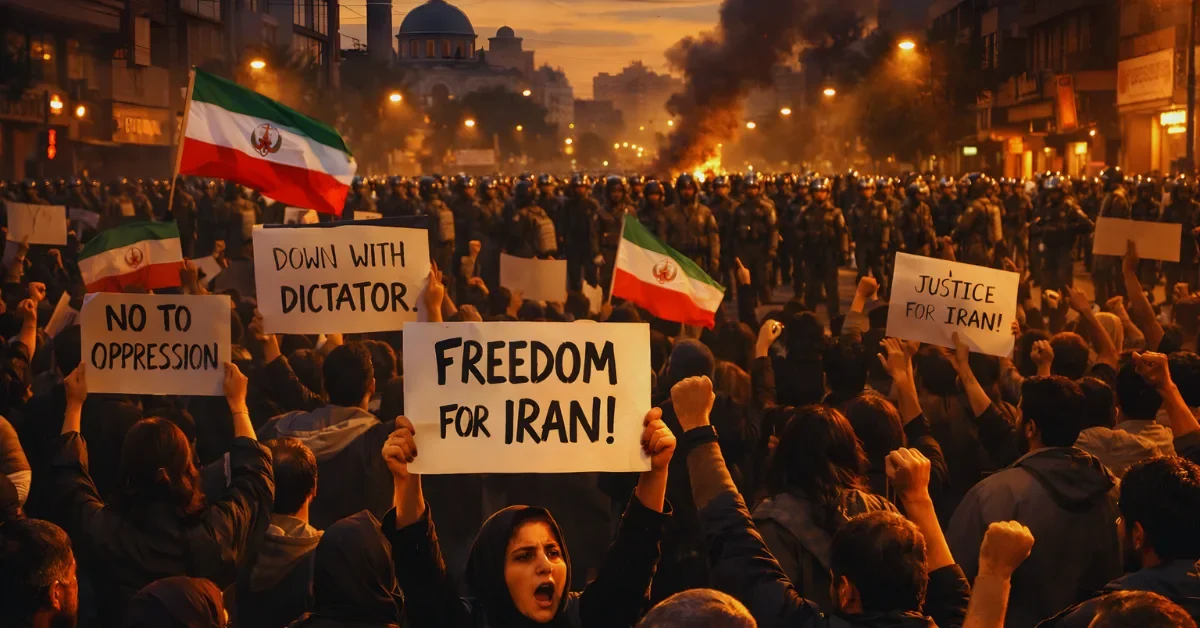
Iran is facing some of its widest and deadliest protests in years, with thousands of demonstrators clashing with security forces over worsening economic conditions and political grievances. The unrest, sparked by soaring inflation and the collapse of the rial currency, has spread across the country and drawn stern warnings from the nation’s top judiciary and leadership.
Iran’s top judge, Gholamhossein Mohseni Ejei, has declared that there will be “no leniency” for those involved in unrest or aiding what authorities call foreign enemies like the United States and Israel. The warning underscores the government’s hardening stance as tensions escalate nationwide. His comments come as rights groups report rising deaths and more than 2,000 arrests since protests began in late December.
Widespread Unrest Fueled by Economic Strain
The demonstrations began in Tehran’s historic Grand Bazaar before quickly spreading nationwide. Rights groups say protests have engulfed dozens of cities and provinces, driven by public anger over the plunging Iranian currency, high inflation, and broader economic hardship. Reports indicate at least 36 people have been killed and more than 2,000 protesters arrested during the first days of unrest.
Security forces have deployed tear gas and other crowd-control measures, particularly in major urban centers. Protests have also included strikes by bazaar merchants and labor groups, signaling growing opposition from diverse sectors of Iranian society.
Government’s Response and Judicial Crackdown
Iran’s judiciary chief framed the unrest not only as domestic dissent but as activity influenced by outside powers, warning that those who help “the enemy” will face strict action without leniency. This language echoes statements from other Iranian leaders who blame foreign interference for fueling the protests.
Authorities have not released independent casualty figures but have confirmed some deaths among security personnel. Funeral gatherings for people killed during the unrest have at times turned into new demonstrations, showing how deeply the crisis has spread into daily life.
Protests and International Tensions
The protests are unfolding amid strained international relations. Former U.S. President Donald Trump has publicly warned that the United States would intervene if Iranian forces violently suppress peaceful demonstrators, adding pressure to an already volatile situation. Iranian leaders, including Supreme Leader Ayatollah Ali Khamenei, have rejected such statements and reiterated opposition to foreign influence.
Iran’s army leadership has also issued warnings in response to what it describes as hostile rhetoric from abroad, even as the government announces limited economic relief measures, including small monthly subsidies for citizens.
Nationwide Impact and Public Discontent
The unrest reflects deeper frustration with Iran’s economic trajectory after years of sanctions and political stagnation. The sharp fall of the rial has made basic goods increasingly unaffordable, prompting shopkeepers, students, and workers to join protests that sometimes include broader political demands.
While some officials have acknowledged public economic concerns, the judiciary’s warning of harsh punishment for protesters accused of helping foreign enemies highlights a growing divide between citizens and the state. As demonstrations continue, observers say the situation remains unpredictable, with the potential for further escalation across the country.
