

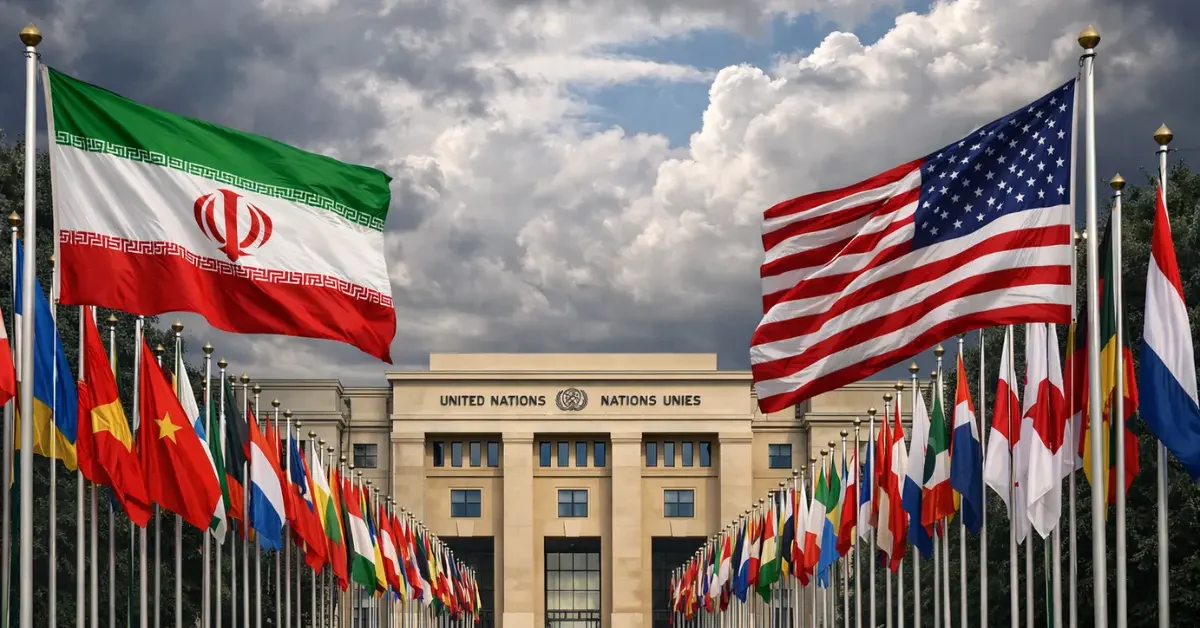
Iran has expressed readiness to explore compromises regarding its nuclear program if the United States is willing to discuss the lifting of sanctions. The potential diplomatic opening comes just days before high-stakes negotiations are set to resume in Geneva, marking a critical moment for the fragile relations between Tehran and Washington.
Tehran’s Offer of Flexibility
In an interview broadcast on Sunday, Iran’s Deputy Foreign Minister Majid Takht-Ravanchi signaled that the Islamic Republic is open to limiting its nuclear activities, provided that economic relief is on the table. Speaking to the BBC, Takht-Ravanchi emphasized that the “ball is in America’s court” to demonstrate a sincere desire for a resolution.
“If they are sincere, I’m sure we will be on the road to an agreement,” Takht-Ravanchi stated. He indicated that while Iran is prepared to discuss curbs on its atomic program to secure the removal of financial penalties, the government remains firm on separating these discussions from other security concerns. The Deputy Foreign Minister specifically noted that Iran might consider diluting its most highly enriched uranium—a key concern for Western powers—in exchange for full sanctions relief. However, he reiterated that a complete halt to uranium enrichment, which the U.S. has demanded to prevent the development of a nuclear weapon, remains a non-starter for Tehran.
Renewed Diplomacy in Geneva
The upcoming talks in Geneva, scheduled for Tuesday, follow a round of preliminary discussions held earlier this month in Oman. Those initial meetings, which included Iranian Foreign Minister Abbas Araghchi and U.S. Middle East envoy Steve Witkoff, were described by officials as “somewhat positive” but inconclusive. The U.S. delegation for the Geneva session will again include Witkoff, along with senior military officials, underscoring the gravity of the dialogue.
The context for these negotiations is tense. The Trump administration has maintained a strategy of “maximum pressure” combined with diplomatic outreach. U.S. Secretary of State Marco Rubio acknowledged on Saturday that while President Donald Trump prefers a deal, reaching one remains “very hard.” Trump himself has employed stark rhetoric, warning that a failure to reach an agreement would be “very traumatic” for Iran. To reinforce this position, the President has ordered the deployment of the aircraft carrier USS Gerald R. Ford to the region, signaling Washington’s readiness to utilize force should diplomacy collapse.
Israel Presses for a Broader Deal
The diplomatic push has faced intense scrutiny from Israel. Prime Minister Benjamin Netanyahu met with President Trump at the White House last Wednesday—their seventh meeting since Trump resumed office 13 months ago—to urge the U.S. not to settle for a narrow nuclear agreement. The Israeli leader’s visit, which was brought forward from its original date of February 18, focused on expanding the scope of the negotiations.
Israeli officials fear that a deal limited solely to nuclear enrichment would leave Iran free to advance other threatening capabilities. Netanyahu reportedly pressed Trump to include restrictions on Iran’s ballistic missile program and its support for regional proxy groups, such as Hamas and Hezbollah. Sources familiar with the discussions indicated that Netanyahu presented Israel’s “perceptions of the principles” for the negotiations, arguing that ignoring these non-nuclear threats would be a strategic error.
“I will present to the president our perceptions of the principles in the negotiations,” Netanyahu told reporters prior to the meeting. The two leaders also reportedly discussed potential military options if the diplomatic track fails.
Clashing Red Lines
Despite the potential for compromise on enrichment, a significant gap remains regarding the scope of the talks. While Israel and the U.S. push for a comprehensive security pact, Tehran has ruled out negotiations on its defensive capabilities. Ali Shamkhani, an advisor to Iran’s Supreme Leader, stated explicitly that the Islamic Republic’s missile capabilities are “non-negotiable.”
Iranian officials have insisted that the Geneva talks must remain focused exclusively on the nuclear file. They are also seeking guarantees that any new agreement will not be abandoned by future U.S. administrations, referencing the U.S. withdrawal from the 2015 Joint Comprehensive Plan of Action (JCPOA) during Trump’s first term.
The urgency of the current diplomatic effort is underscored by recent history. The resumption of talks follows a breakdown in negotiations last year that coincided with a period of escalating hostilities, including a “brief but intense war” involving Israeli and U.S. strikes on Iranian nuclear sites. With the International Atomic Energy Agency (IAEA) unable to fully verify Iran’s current stockpiles, the Geneva meetings represent a pivotal test of whether a diplomatic solution is still viable in a volatile landscape.
