

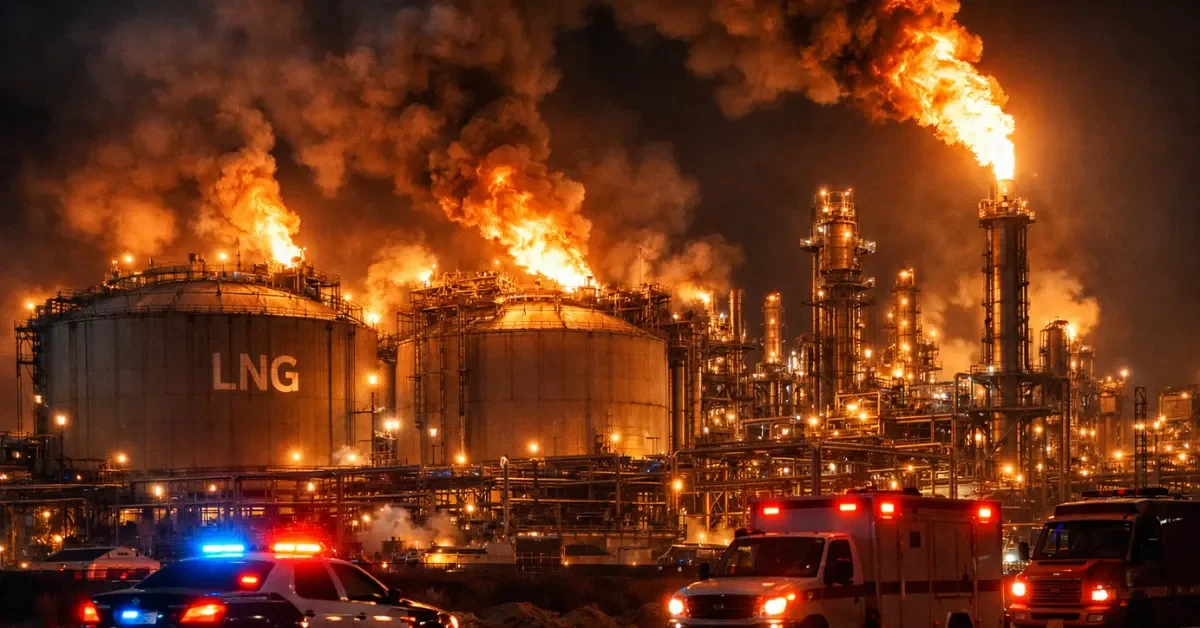
Global oil and natural gas prices have skyrocketed after Iran strikes Qatar LNG facilities with a barrage of missiles. The assault on Ras Laffan Industrial City caused extensive infrastructure damage and ignited massive fires. This brazen attack came in direct retaliation for an Israeli strike on Iran’s crucial South Pars gas field. As the escalating Middle East war expands to target vital energy infrastructure on both sides, global markets are reeling. European natural gas benchmarks have surged by more than 16 percent, and oil prices have jumped 4 percent amid mounting fears of a prolonged international supply crisis.
Escalating Retaliation Targets Key Gulf Energy Hubs
Early Thursday morning, Iranian missiles rained down on Qatar’s Ras Laffan Industrial City. The site is recognized as one of the largest liquefied natural gas export hubs on the planet. QatarEnergy confirmed that the strikes caused significant damage to multiple installations, including the Pearl Gas-to-Liquids facility. The assault triggered massive fires across the sprawling industrial complex.
Emergency response teams were quickly deployed and successfully contained the blazes. The Qatari Interior Ministry officially confirmed that no injuries or casualties occurred among facility personnel.
This strike is the latest in a rapid sequence of tit-for-tat escalations between Iran and a coalition of United States allies. Tehran launched the missile barrage shortly after Israel executed a targeted attack on Iran’s South Pars gas field. South Pars is incredibly significant to the Iranian economy, supplying the vast majority of the nation’s domestic natural gas. By striking Qatar’s energy infrastructure, Iran has signaled a willingness to cripple the energy exports of its Gulf neighbors in response to attacks on its own sovereign assets.
The Origins of the 2026 Middle East Conflict
The current wave of hostilities traces back to late February 2026. Tensions boiled over following the complete collapse of diplomatic negotiations between the United States and Iran. On February 28, United States and Israeli forces initiated a massive joint military operation against Tehran. These initial strikes targeted strategic nuclear facilities and core government personnel, resulting in the deaths of Supreme Leader Ayatollah Ali Khamenei and several other high-ranking Iranian officials.
Shortly after the initial bombardment, United States President Donald Trump announced that the joint operation was specifically designed to cripple the Iranian nuclear program and force a regime change. In the immediate aftermath, Iran launched a fierce retaliatory campaign against neighboring nations across the Persian Gulf, including Saudi Arabia, the United Arab Emirates, Bahrain, and Qatar.
Earlier in March, Qatar was forced to temporarily halt all liquefied natural gas production after Iranian drone swarms targeted the Mesaieed Industrial City and Ras Laffan. During those earlier engagements, Qatari defense forces intercepted multiple missiles and shot down two Iranian bombers. This led to the temporary closure of airspace around Doha’s Hamad International Airport.
Global Economic Fallout and Supply Chain Disruptions
The relentless targeting of Middle Eastern energy infrastructure is sending shockwaves through the global economy. Qatar is the world’s second-largest exporter of liquefied natural gas, trailing only the United States. It contributes nearly 20 percent of total global shipments according to energy consultancy Kpler. Furthermore, the Strait of Hormuz faces severe operational blockages. This crucial maritime chokepoint handles a fifth of the world’s oil trade and the majority of Qatari gas exports.
These maritime disruptions and facility damages have triggered a sharp spike in global energy costs. The Dutch Title Transfer Facility, a primary European natural gas benchmark, climbed over 16.5 percent to reach 63 euros per megawatt-hour. In the United States, natural gas prices rose by 3.8 percent to $2.181 per million British thermal units. Crude oil jumped 4 percent, while gasoline futures reached levels not seen in nearly four years.
The economic anxiety has spilled into broader financial markets, pushing European equities into the red. Meanwhile, Federal Reserve Chairman Jerome Powell noted that the central bank is holding interest rates steady. He added that it remains too early to determine the exact impact the Middle East war will have on long-term domestic inflation.
Diplomatic Expulsions and Threats of Intervention
The diplomatic fallout from the Ras Laffan attack has been severe and immediate. Qatar’s Ministry of Foreign Affairs fiercely condemned the strike, characterizing it as a brazen attack and labeling Iran a direct regional threat. In swift retaliation, Doha ordered the expulsion of all Iranian military, security, and diplomatic attachés. The targeted Iranian officials were declared unwelcome and given a strict 24-hour deadline to leave the country.
As tensions reach a boiling point, the threat of broader international involvement looms large. President Trump has issued a stark warning to Tehran, promising stern military intervention if Iran continues to launch retaliatory strikes against American allies in the region. With energy facilities burning and critical maritime trade routes blocked, Gulf nations remain on high alert as the world braces for the next phase of the crisis.
