

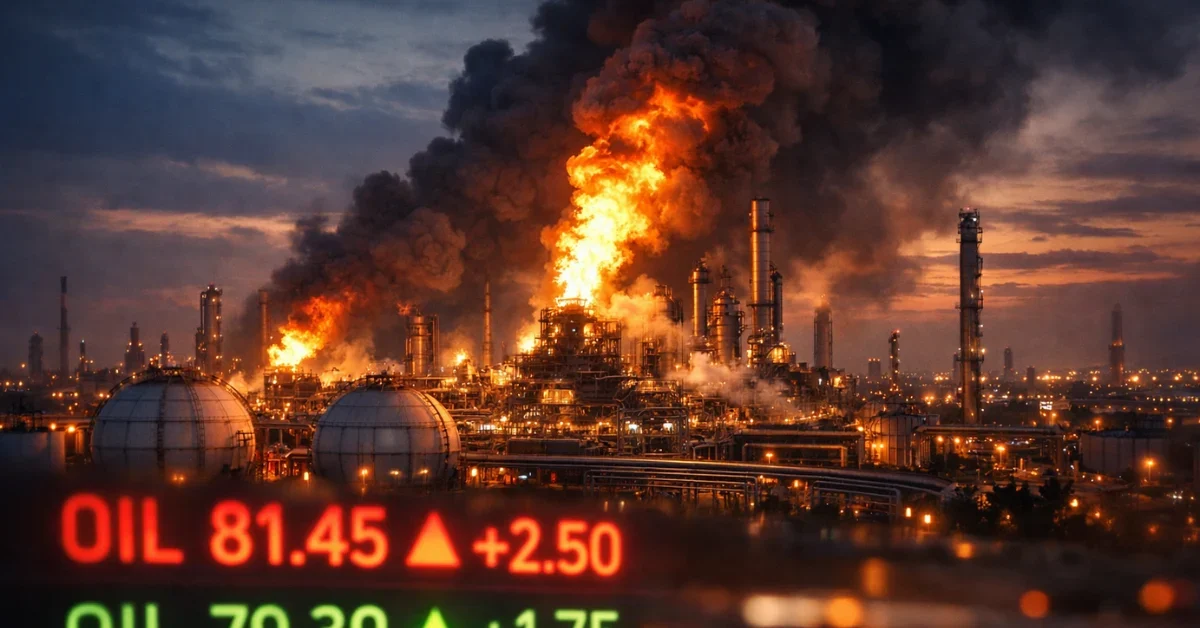
The ongoing Israel-Iran conflict escalated dramatically following overnight Israeli military operations. The strikes resulted in the death of Iran’s intelligence minister and triggered fires at a major Iranian gas facility. Following the attacks, Iranian authorities threatened imminent retaliatory strikes against energy infrastructure across the Gulf. This prompted immediate evacuations and a sharp spike in global oil prices. These rapid developments mark a major increase in regional hostilities. They raise serious concerns about broader stability and the security of global energy supplies.
Assassination of Iran’s Intelligence Chief
Israeli Defense Minister Israel Katz announced that an overnight strike successfully eliminated Esmail Khatib, Iran’s intelligence minister. Khatib is the third high-ranking Iranian official killed within two days. This highlights a rapid acceleration in Israel’s targeted military campaigns.
During a security briefing, Katz confirmed a major shift in military rules. He stated that the Israeli military now has direct permission from him and Prime Minister Benjamin Netanyahu to target senior Iranian leaders. The military no longer needs prior government approval for each individual strike. Katz publicly warned of further escalations, noting that Israel anticipates major surprises across multiple fronts. These actions will intensify the ongoing conflict with both Iran and Hezbollah in Lebanon. He explicitly emphasized that the intensity of Israeli operations within Iran is currently rising.
The Israel Defense Forces (IDF) described the intelligence ministry formerly led by Khatib as the primary intelligence agency of the Iranian government. According to the IDF, the ministry possesses sophisticated capabilities, managing global surveillance, espionage, and covert operations directed primarily against Israel and Iranian citizens. The military also noted that Khatib played a crucial role in the violent suppression of recent anti-government protests inside Iran.
Internationally, Khatib was already a recognized figure. The United States Treasury Department sanctioned him in 2022 for his alleged involvement in cyber activities targeting the U.S. and its allies. His sudden death removes a crucial element from Iran’s political and security hierarchy during a highly critical period. Khatib maintained close ties with Mojtaba Khamenei, the newly appointed supreme leader and son of the late Ayatollah Ali Khamenei. As of the initial reports, Iranian officials had not issued a formal response directly regarding Khatib’s assassination.
Strikes on the South Pars Gas Field
In conjunction with the targeted killings, Iranian state media reported that Israeli forces struck critical energy infrastructure. The strikes hit the South Pars gas field and the Asaluyeh energy sector. South Pars is widely recognized as the world’s largest natural gas field. It is a massive resource covering 9,700 square kilometers that Iran physically shares with neighboring Qatar.
The infrastructure strikes successfully ignited fires at the facilities. However, the full extent of the structural and operational damage remains unconfirmed. While Qatar publicly attributed the facility attacks directly to Israel, the Israeli military has not responded to requests for comment regarding its involvement.
Sweeping Evacuation Orders and Retaliation Warnings
In direct response to the facility strikes, Tehran announced its intention to target various energy sites in Saudi Arabia, Qatar, and the United Arab Emirates. Iran’s Revolutionary Guards escalated the situation by issuing specific evacuation orders for multiple international energy facilities.
The expressly threatened locations include the Jubail Chemical Complex in Saudi Arabia and the Al Hosn Field in the UAE. Iran also threatened Qatar’s Mesaieed Chemical Complex, Mesaieed Holding Company, and the Ras Laffan Refinery. According to sources familiar with the situation, immediate evacuations at the Ras Laffan liquefied natural gas (LNG) facilities have already commenced.
Regional neighbors quickly condemned the escalating violence. A spokesperson for Qatar’s foreign ministry described the initial attack on Iran’s facilities as a dangerous and irresponsible maneuver that severely jeopardizes global energy security. Qatar deliberately noted that they did not observe any United States involvement in the strike. Concurrently, the UAE issued a statement emphasizing the absolute necessity of avoiding military strikes on crucial energy facilities.
Global Energy Markets React
The severe escalation in rhetoric and physical infrastructure damage immediately impacted global financial markets. Brent crude futures surged over 6%, climbing to a session peak just below $110 per barrel as traders reacted to the news.
Industry experts expressed deep concern that Iran might expand its retaliation to target the infrastructure of major global energy companies operating throughout the Gulf. There are also mounting fears that alternative export routes, such as Saudi Arabia’s Red Sea port of Yanbu, could fall under threat. This latest escalation threatens to prolong a regional conflict that has already severely disrupted maritime commercial traffic navigating through the critical Strait of Hormuz.
Tom Purdie, the lead LNG analyst at Energy Aspects, noted that the specific evacuation warnings represent a highly notable escalation regarding energy infrastructure. He highlighted that these threats arrive at a time when the global LNG market is already heavily strained due to various ongoing disruptions.
