

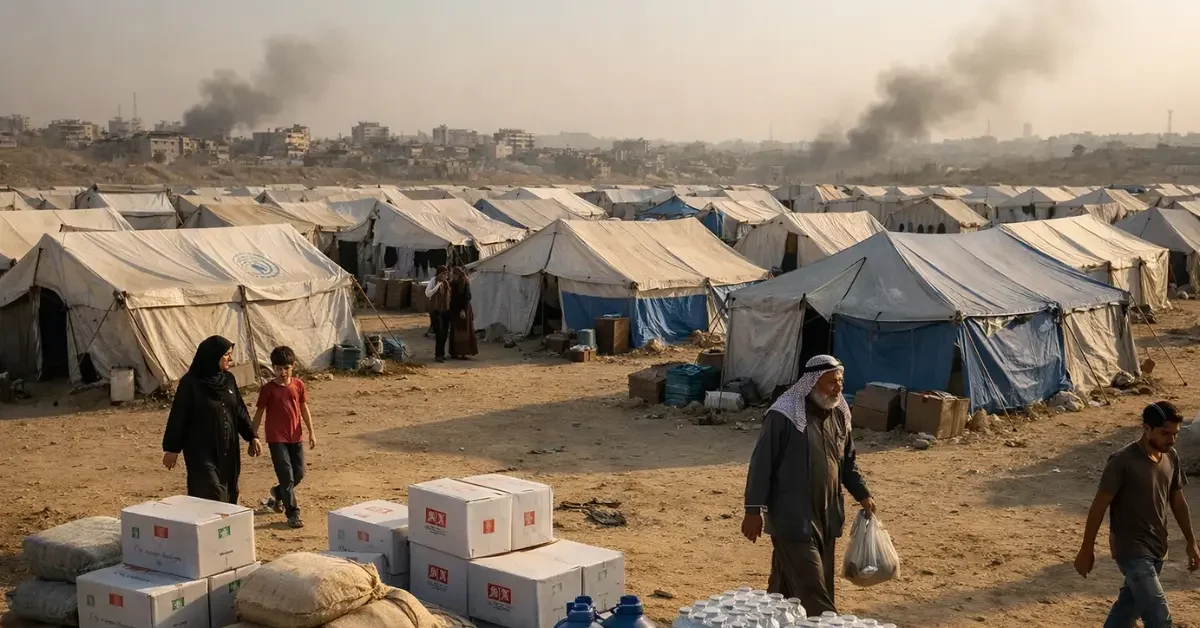
Israeli airstrikes killed at least nine Palestinians across the Gaza Strip on Sunday, Palestinian health officials reported, as violence continued to disrupt efforts to deliver humanitarian aid. The attacks targeted several locations, including a tent camp for displaced people, further complicating a fragile situation in the enclave.
According to medics and health officials in Gaza, an airstrike hit a tent encampment in Al-Mawasi, a coastal area designated as a humanitarian zone, killing four people. Another strike in the northern town of Beit Lahiya killed three people, while two others died in separate incidents in central Gaza. The Israeli military stated it was looking into the reports.
This latest violence comes amidst ongoing struggles to implement a lasting ceasefire and facilitate reconstruction. While diplomatic efforts are underway to secure funds for rebuilding Gaza, the situation on the ground remains volatile.
Humanitarian Aid Blockages Persist
The humanitarian crisis in Gaza continues to worsen due to restrictions on aid entry. The Secretary General of the Gulf Cooperation Council (GCC) has emphasized that unconditional aid entry is a top priority for humanitarian relief. Speaking on the matter, the GCC chief stressed the urgent need to open all crossings to allow food, medicine, and fuel to reach civilians without delay.
International organizations have echoed these concerns, reporting that aid distribution is severely hampered by ongoing military operations and logistical barriers. The United Nations has documented continued attacks and access denials that prevent relief workers from reaching vulnerable populations. A recent situation report highlighted that malnutrition rates are rising, particularly among children, as essential supplies fail to enter in sufficient quantities.
US Push for Reconstruction Faces Hurdles
The United States is spearheading efforts to organize a donor conference for Gaza’s reconstruction, tentatively scheduled for later this year. However, these plans are facing significant challenges. US officials have expressed concern that fundraising efforts are being marred by uncertainty regarding the disarmament of Hamas and the future governance of the strip.
Washington hopes to secure billions of dollars from international donors, particularly from Gulf Arab states and the European Union. However, potential donors are hesitant to commit funds without clear guarantees that rebuilt infrastructure will not be destroyed in future fighting. There is also disagreement over who will manage the reconstruction funds and oversee the projects on the ground.
The European Union has also weighed in, with analysts suggesting that immediate steps toward governance reform are crucial for any ceasefire to hold. EU officials have argued that without a credible political horizon and a unified Palestinian leadership, reconstruction efforts may be futile.
Continued Ceasefire Violations
Despite talk of truce agreements, reports of ceasefire violations have persisted into early 2026. Al Jazeera reported earlier in the year that Israeli strikes had killed dozens in what were described as new violations of agreed-upon pauses in fighting. These incidents have eroded trust between the warring parties and made diplomatic negotiations increasingly difficult.
The United Nations has continued to report on the volatile security situation, noting that airstrikes and ground operations are still occurring regularly. This ongoing hostility has displaced thousands more families, many of whom have already been uprooted multiple times since the conflict began.
As the international community pushes for a resolution, the immediate reality for civilians in Gaza remains grim. With aid stalled and airstrikes continuing, the path to recovery appears long and uncertain.
