

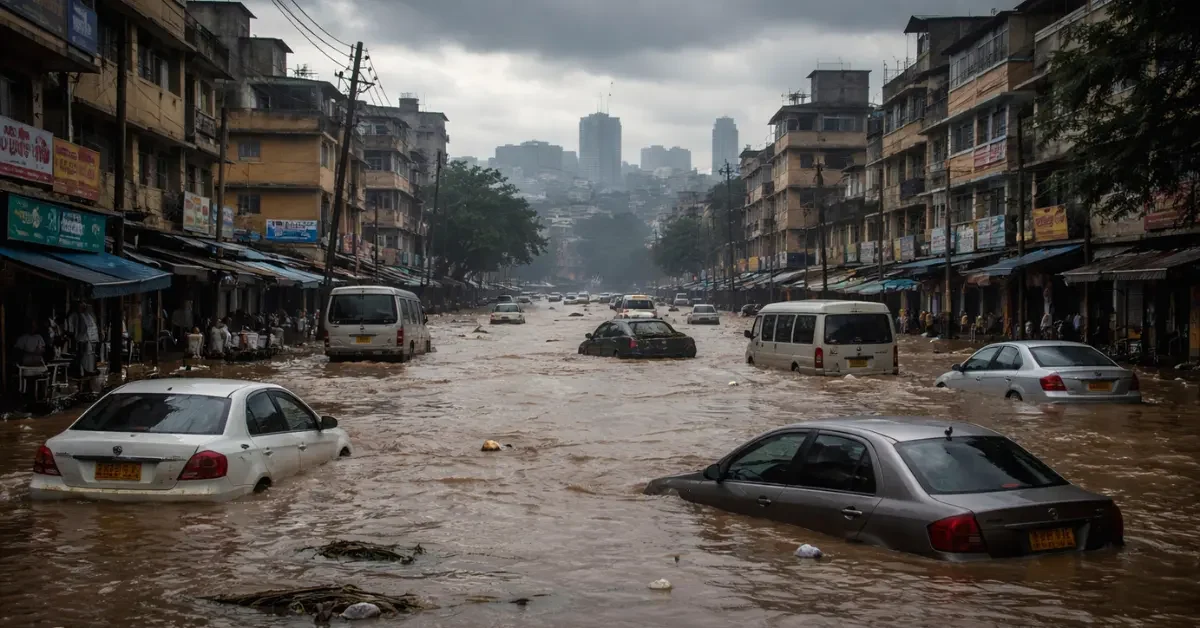
Kenya is grappling with a catastrophic flooding crisis that has claimed at least 62 lives nationwide, including eight children. Triggered by intense and unseasonal rainfall, the severe Kenya floods have submerged neighborhoods, displaced thousands of families, and prompted widespread emergency rescue operations across the country.
The capital city of Nairobi has borne the brunt of the disaster, recording 33 fatalities as floodwaters transformed streets into raging rivers. With rising Nairobi Dam water levels sparking urgent warnings for nearby residents, authorities are scrambling to provide relief while navigating heavily damaged infrastructure and ongoing torrential downpours.
The Human Cost and Rescue Operations
The heavy rains, which began in late February, quickly escalated into deadly flash floods by early March. According to police reports, the national death toll recently jumped to 62, a sharp increase from the 42 fatalities reported just days earlier. The victims include individuals who tragically drowned in the fast-moving waters, as well as several people who were electrocuted by damaged power lines.
Across Kenya, more than 2,600 families have been forced to flee their homes. In Nairobi, low-lying areas and informal settlements were rapidly engulfed. Humanitarian workers from the Kenya Red Cross, alongside military personnel and multi-agency security teams, have been deployed to rescue stranded residents and recover bodies from the debris.
In response to the escalating crisis, President William Ruto dispatched emergency responders to coordinate national disaster recovery efforts. He has directed the government to release relief food from national strategic reserves to support displaced households. Additionally, the government has committed to covering all hospital expenses for individuals injured by the floods and receiving care in public health facilities.
Infrastructure Damage and Economic Impact
The sudden deluge has paralyzed daily life and caused massive economic disruption. The flooding has severely impacted transportation networks, washing away roads and bridges, and causing significant flight disruptions at East Africa’s largest airport in Nairobi. During the peak of the storms, overnight flash floods swept away dozens of cars, leaving more than 70 vehicles trapped or stranded across the capital.
Businesses and local utilities have also suffered catastrophic losses. In Nairobi’s industrial area, a major paper manufacturing company reported losses exceeding 200 million shillings after floodwaters smashed through its main gates. The surging water destroyed expensive machinery and ruined imported raw materials, threatening the livelihoods of over 200 employees. Furthermore, the raging waters destroyed a critical water pipe supplying the Nairobi West neighborhood, leaving residents without access to clean water while repair crews struggle to fix the damage.
Evacuations in the Maasai Mara and Regional Crisis
The devastation is not limited to urban centers. In southwestern Kenya, the world-famous Maasai Mara National Reserve experienced severe flooding after the Mara and Talek rivers burst their banks. The sudden overflow forced authorities to airlift tourists and camp staff to safety. Dramatic footage showed elephants and other wildlife forced to wade through deep water as the natural landscape was temporarily swallowed by the floods.
This extreme weather event is part of a broader crisis wreaking havoc across the entire region. Devastating floods and landslides have severely impacted neighboring countries, bringing the East Africa flood death toll to over 110. In Ethiopia alone, at least 64 people have died, with dozens more missing after saturated highland slopes gave way and triggered massive landslides.
Meteorological Factors and Climate Whiplash
Meteorologists explain that Kenya’s bimodal weather pattern, driven by the seasonal movement of the Intertropical Convergence Zone, typically brings long rains from March to May. However, the sheer volume of this year’s rainfall has shocked experts. A monitoring station in Nairobi recorded a staggering 112 millimeters of rain in just a 24-hour period. This single-day total represents more than 120 percent of the city’s historical average rainfall for the entire month of March.
Scientists and environmental experts point to a phenomenon known as climate whiplash, where regions alternate rapidly between severe droughts and extreme precipitation. A 2024 World Weather Attribution report highlighted that climate change has made these intense, heavy rainfall events in East Africa twice as likely to occur.
While climate change is a major factor, many residents and local leaders argue that human error has worsened the tragedy. Critics have blamed the severe urban flooding on poor city planning, illegal construction along natural waterways, and clogged drainage systems. Locals have expressed frustration, stating that city authorities should have been better prepared by clearing the city’s drainage infrastructure ahead of the anticipated rainy season.
