

The global watchdog responsible for monitoring nuclear explosions has stated that its sensors detected no signs of atomic testing in China, directly contradicting a major accusation leveled by the United States. The International Monitoring System, which operates a vast network of sensors worldwide to enforce test bans, reported that its data showed no unusual seismic or atmospheric activity.
This statement comes just one day after the U.S. State Department formally accused Beijing of conducting secret, low-yield underground nuclear tests. In a detailed compliance report released on Friday, American officials alleged that China has been operating in violation of the “zero-yield” standard, which prohibits any nuclear chain reaction that produces an explosive result. The conflicting reports have intensified an already strained relationship between the two superpowers as they grapple with the future of arms control.
US Claims Violation of Zero-Yield Standard
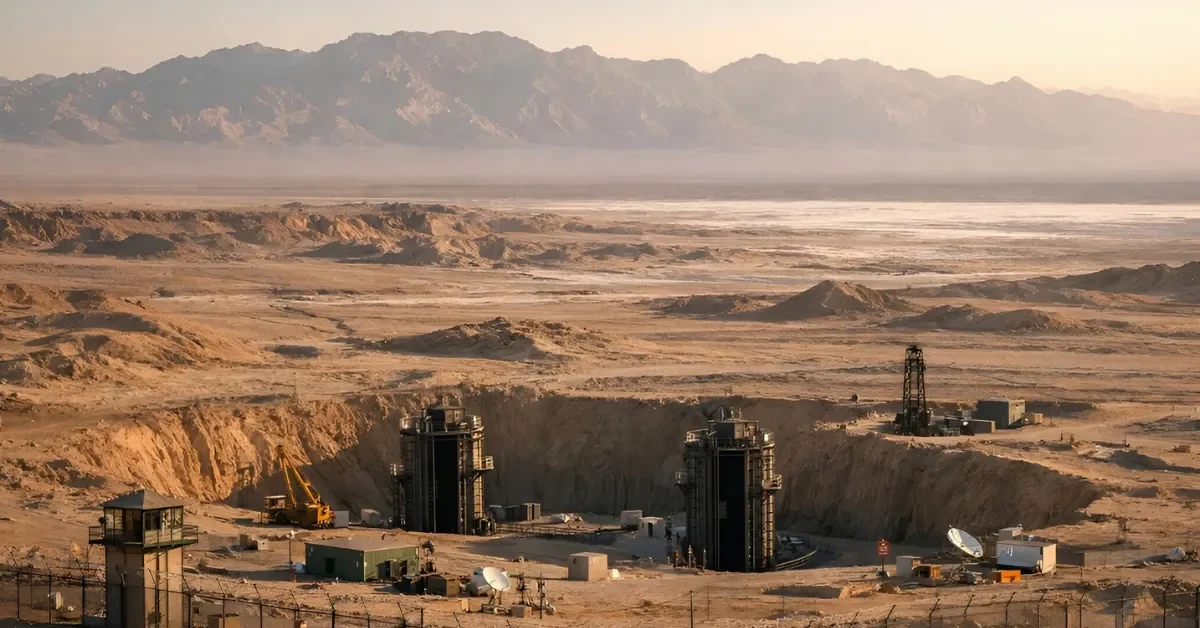
The State Department’s unclassified report outlines specific concerns regarding activities at China’s Lop Nur test site in the Xinjiang region. According to U.S. officials, satellite imagery and intelligence suggest extensive construction and excavation work has been ongoing at the facility since at least 2019. The report claims that Beijing’s preparations include the use of explosive containment chambers and the excavation of vertical shafts suitable for conducting concealed nuclear experiments.
A central pillar of the U.S. accusation is the concept of “zero-yield.” Under the Comprehensive Nuclear-Test-Ban Treaty (CTBT)—which China has signed but not ratified—signatories are expected to refrain from any nuclear explosion, no matter how small. The United States asserts that China’s activities at Lop Nur have likely crossed this threshold. The report suggests that the physical preparations observed at the site are inconsistent with simple maintenance and point toward an active testing program designed to operate undetected.
In addition to physical evidence at the site, the United States has raised alarms about a lack of transparency. The State Department alleges that China has frequently blocked the transmission of data from monitoring stations located within its own borders. By withholding this crucial information from the international community, U.S. officials argue that Beijing is deliberately obscuring its nuclear activities and making it difficult for outside observers to verify its compliance with international norms.
International Monitor Detects No Unusual Activity
Despite the detailed allegations from Washington, the Comprehensive Nuclear-Test-Ban Treaty Organization (CTBTO) has not corroborated the American claims. Robert Floyd, the Executive Secretary of the Vienna-based organization, issued a statement addressing the reports of alleged testing at the Lop Nur site. Floyd confirmed that the organization’s International Monitoring System has been operating normally and has not flagged any suspicious events.
The CTBTO oversees a global network of hundreds of monitoring stations equipped with seismic, hydroacoustic, infrasound, and radionuclide sensors. These technologies are designed to detect the shockwaves, sound waves, and radioactive particles produced by nuclear explosions, even those conducted underground. According to Floyd, the system provides continuous, real-time data to member states, and analysis of this data has revealed no evidence of an explosion in China that would indicate a nuclear test.
Floyd emphasized the reliability of the global alarm system, noting that it is specifically designed to detect even small-scale tests. The absence of corroborating data from this independent international body presents a significant challenge to the narrative presented by the U.S. State Department, raising questions about the nature of the intelligence underpinning the American accusations.
Push for New Arms Control Negotiations
The accusations regarding Lop Nur are part of a broader U.S. strategy to bring China to the negotiating table for nuclear arms control. The Trump administration has been clear about its desire to establish a new framework for limiting nuclear weapons that includes Beijing alongside Moscow and Washington. Currently, China is not a party to the major arms reduction treaties that have historically governed the U.S.-Russia nuclear relationship, such as New START.
U.S. officials have expressed growing concern over the rapid modernization and expansion of China’s nuclear arsenal. By highlighting potential violations of testing moratoriums, Washington aims to increase international pressure on Beijing to engage in transparency measures and binding agreements. The State Department’s report explicitly links the alleged testing activities to a wider lack of openness, arguing that China’s opaque behavior undermines trust and destabilizes global security.
The call for a new treaty reflects anxiety in Washington that the current arms control architecture is outdated and insufficient to manage a three-way nuclear rivalry. However, Beijing has historically resisted joining such talks, arguing that its arsenal is far smaller than those of the United States and Russia. The latest allegations of secret testing are likely to further complicate diplomatic efforts to initiate these high-stakes negotiations.
