

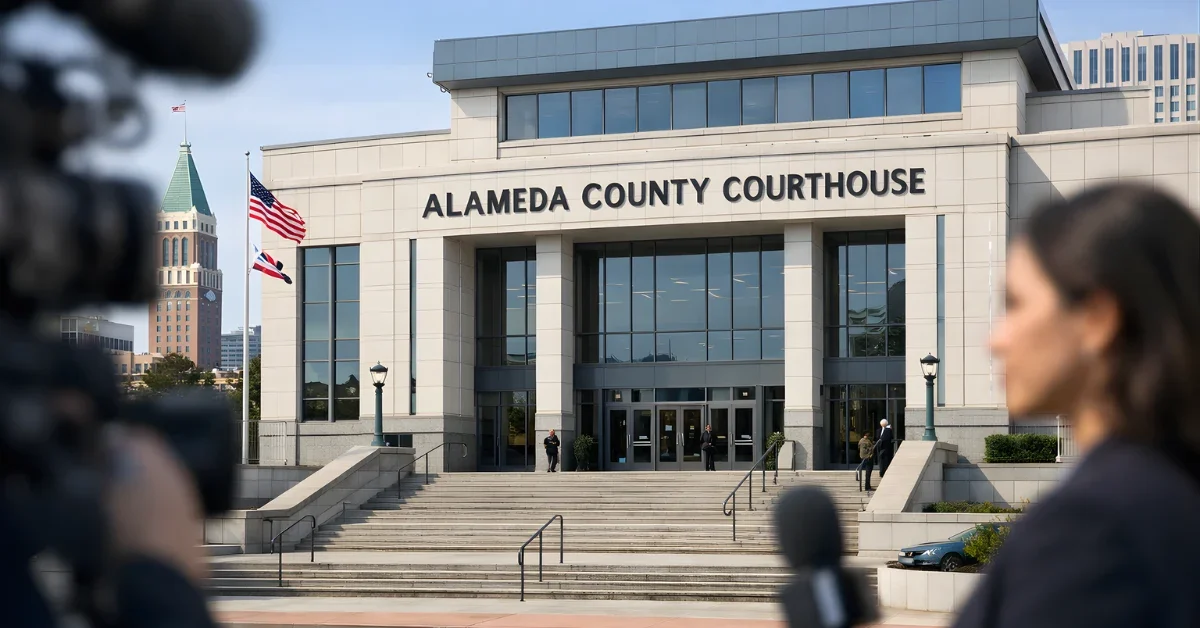
Elon Musk is asking a US court to award him as much as $134 billion in damages from OpenAI and Microsoft, arguing he is entitled to “wrongful gains” tied to his early support of OpenAI. The request is laid out in a court filing that relies on calculations from a financial economist, with a jury trial expected to begin in April in Oakland, California.
Musk’s damages demand ranges from about $79 billion to $134 billion, according to reporting that cites the court filing. He claims OpenAI moved away from its original nonprofit mission and now largely serves Microsoft’s interests, while OpenAI has pushed back strongly on his allegations.
What Musk is seeking
In the filing, Musk says OpenAI gained between $65.5 billion and $109.4 billion in “wrongful gains” linked to his involvement, while Microsoft gained between $13.3 billion and $25.1 billion, based on his expert’s analysis. Musk’s legal team argues that early backers of startups can receive returns far above their original contribution, and that Musk should be able to recover gains he says were obtained through wrongdoing.
The court papers also indicate Musk may seek punitive damages and other remedies, including a possible injunction, if a jury finds either company liable. The filing does not specify what an injunction would require.
How Musk links the claim to OpenAI’s origins
Musk helped found OpenAI in 2015 and later left the organization in 2018, according to reports describing the dispute and the timeline cited in court documents. He says he put in about $38 million—described in the filing as roughly 60% of OpenAI’s early seed funding—and also helped recruit staff, connect founders with key contacts, and add credibility during the startup’s early days.
Musk’s argument centers on the idea that OpenAI was created as a nonprofit focused on developing artificial intelligence for humanity’s benefit, and that it later departed from that purpose. He also claims OpenAI’s relationship with Microsoft reflects that shift.
OpenAI and Microsoft’s response
OpenAI has described Musk’s lawsuit as “baseless” and part of what it calls a pattern of “harassment,” according to statements quoted in multiple reports. A Microsoft representative, as quoted in coverage, said there is no evidence the company “assisted or facilitated” wrongdoing by OpenAI.
OpenAI and Microsoft have also challenged Musk’s damages presentation in their own court filing, asking the judge to limit what Musk’s expert can present to a jury. That submission calls the analysis “fabricated,” “unverifiable,” and “unprecedented,” and argues it would improperly transfer billions from a nonprofit organization to a former donor who is now a competitor.
What happens next
A federal judge rejected OpenAI and Microsoft’s attempt to avoid a jury trial, and the case is set to be heard by a jury with a trial scheduled for April in Oakland, California. The damages calculations cited in the filings come from financial economist C. Paul Wazzan, who is identified as an expert witness supporting Musk’s claims.
Musk now runs xAI, which is positioned as a rival to OpenAI, and he has referenced the upcoming trial publicly, saying on X that he “can’t wait to start the trial” and that “the discovery and testimony will blow your mind.”
