

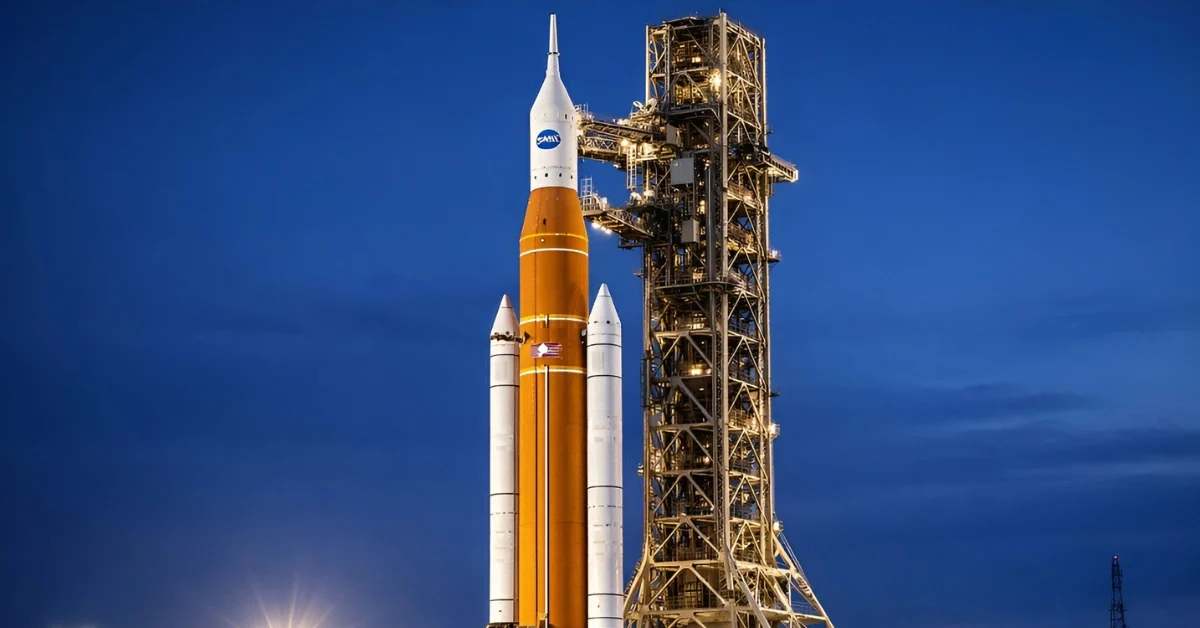
NASA has postponed the launch of its Artemis II moon mission to March after a liquid hydrogen leak forced mission controllers to terminate a critical fueling test early. The space agency announced the delay on February 3, 2026, following the incomplete wet dress rehearsal that was stopped just over five minutes before its simulated launch time.
The countdown was halted at the T-5:15 minute mark due to a liquid hydrogen leak detected at the interface of the tail service mast umbilical on the Space Launch System rocket. This same component had experienced high concentrations of liquid hydrogen earlier during the countdown, according to NASA officials. The launch control team immediately began working to ensure the massive rocket was in a safe configuration and started draining its propellant tanks.
Fueling Test Encounters Multiple Setbacks
The two-day wet dress rehearsal began on January 31 when operators were called to their stations, approximately 49 hours ahead of a simulated launch time scheduled for 9 p.m. EST on February 3. Despite multiple interruptions, NASA successfully completed fueling both stages of the Space Launch System rocket with liquid oxygen and liquid hydrogen propellants on February 2.
However, the test faced several challenges throughout the process. Mission teams stopped loading cryogenic liquid hydrogen into the core stage at 1:32 p.m. EST on February 2 for troubleshooting while continuing to load liquid oxygen. Engineers eventually resumed the fast fill operation for the hydrogen fuel and managed to fully fuel the rocket, moving into a replenish phase to replace boil-off hydrogen.
The persistent hydrogen leak at the tail service mast umbilical raised concerns among mission managers. Although engineers initially deemed the small leak within acceptable limits during the fueling phase, the issue worsened as the countdown progressed toward the simulated launch time.
Launch Window Shifts to March
As a result of the incomplete test, NASA decided to forgo launch attempts during the mission’s first window of February 8 through February 11. The agency is now targeting March for the historic crewed flight, with specific launch dates of March 6 through 9 or March 11 being considered. If the mission cannot launch during those dates, additional windows open in April with potential launch dates on April 1, April 3 through 6, and April 30.
The delay means NASA will need to conduct another wet dress rehearsal before attempting to launch four astronauts on humanity’s first crewed voyage to lunar orbit in more than 50 years. The wet dress rehearsal simulates a full mission countdown, including loading cryogenic propellants into the rocket’s tanks, conducting launch countdown procedures, demonstrating the ability to recycle the countdown clock, and practicing scrub procedures by draining the tanks.
Recurring Technical Challenge
The hydrogen leak issue represents a familiar problem for NASA’s Artemis program. Similar leaks of liquid hydrogen propellant troubled the Artemis I mission during its test preparations before that uncrewed mission finally launched in late 2022. NASA had implemented troubleshooting procedures following those earlier experiences, and engineers utilized those same procedures to address the current fueling issue.
The Space Launch System rocket stands 322 feet tall at Launch Pad 39B at Kennedy Space Center in Florida. During the wet dress rehearsal, mission teams loaded more than 700,000 gallons of liquid oxygen and liquid hydrogen into the core stage alone. The fueling process occurs over a series of different propellant loading milestones to fill, top off, and replenish the tanks.
The Artemis II mission will send four astronauts on a 10-day trip around the moon aboard the Orion spacecraft. This mission represents a crucial step in NASA’s broader Artemis program, which aims to establish a sustained human presence on and around the moon as a stepping stone for future deep space exploration.
