

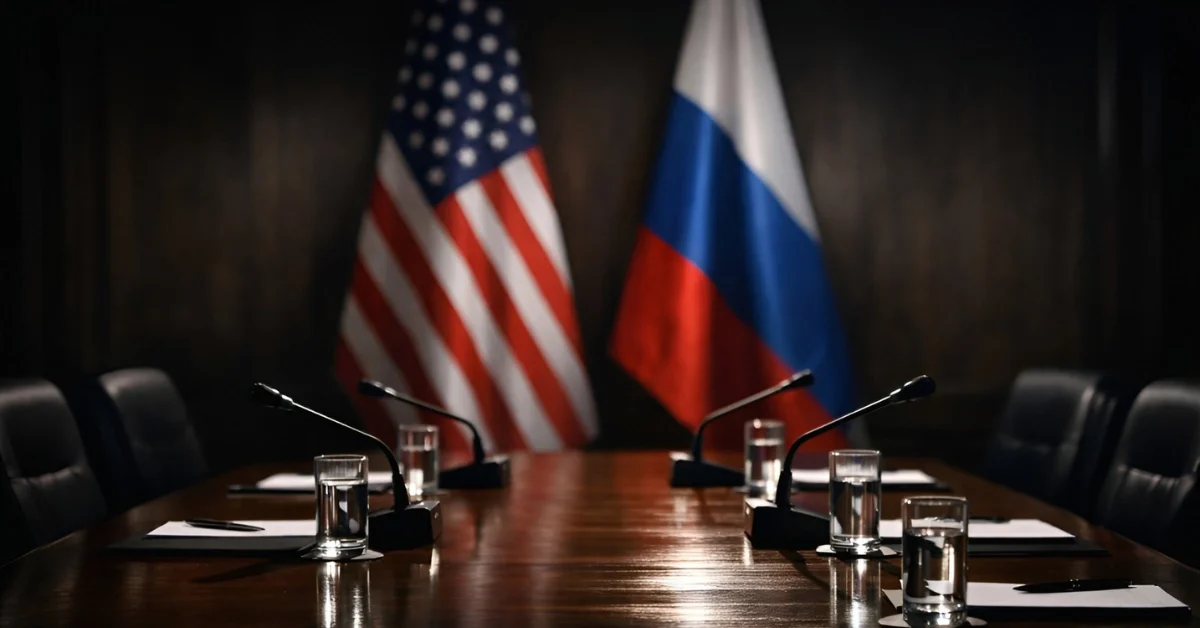
The New START treaty, the last remaining nuclear arms control agreement between the United States and Russia, officially expired on Thursday, February 5. Its expiration marks the end of a 50-year framework of bilateral treaties designed to limit the strategic nuclear arsenals of the world’s two largest nuclear powers. With no replacement pact in place, the path forward for global strategic stability remains uncertain as both nations face a new era without formal constraints on their deployed warheads.
The treaty, which limited the number of deployed strategic nuclear warheads and launchers, ceased to be effective as of Thursday. The expiration comes amid heightened geopolitical tensions and follows months of speculation regarding the future of arms control. While fears of an immediate arms race have surfaced, officials from both Moscow and Washington have issued statements suggesting a degree of continued caution, though the binding legal mechanisms to verify compliance are now gone.
Russia Pledges Responsibility Despite Expiration
In the wake of the deadline, the Kremlin addressed the treaty’s end by emphasizing its intent to maintain a stable strategic posture. Kremlin spokesperson Dmitry Peskov confirmed the expiration to journalists on Thursday, stating, “Today marks the end of the day, and the treaty will lose its effectiveness.” Despite the lack of a formal agreement, Peskov asserted that Russia does not intend to aggressively ramp up its nuclear posture immediately.
“Regardless, the Russian Federation will uphold its responsible and careful stance concerning strategic stability in nuclear armament, prioritizing its national interests,” Peskov said. He also noted that Russia had previously proposed a voluntary extension of the treaty’s terms to allow time for further negotiations. According to Russian officials, this proposal for a temporary extension did not receive a formal response from U.S. President Donald Trump.
The expiration removes the caps that had kept both nations’ deployed strategic arsenals in check since the treaty entered into force in 2011. Without these limits, transparency measures such as data exchanges and on-site inspections—which had already been paused or suspended in recent years—are now formally defunct.
Trump Seeks New Deal With China
President Donald Trump, who was reelected in November 2024, has maintained that any future arms control framework must be broader than the bilateral deals of the past. The White House indicated this week that President Trump would determine the future U.S. approach to nuclear arms control on his own schedule. Trump has previously argued that the Cold War-era model of U.S.-Russia treaties is outdated because it fails to account for China’s growing military capabilities.
In remarks reported earlier in January, President Trump appeared resigned to the treaty’s conclusion if his conditions for a broader deal were not met, telling the New York Times, “If it expires, it expires.” His administration has consistently pushed for Beijing to be included in any successor agreement. The U.S. views China as a primary global competitor and has argued that leaving China’s arsenal unconstrained while limiting U.S. and Russian forces is strategically unsound.
Global Reaction: China and NATO
The expiration has drawn concern from international leaders and security organizations. China’s Ministry of Foreign Affairs expressed disappointment on Thursday regarding the treaty’s collapse. Chinese Foreign Ministry spokesperson Lin Jian stated, “China regrets the end of the New START treaty, as it is crucial for maintaining global strategic stability.”
Despite the U.S. push for trilateral negotiations, Beijing has repeatedly rejected invitations to join arms control talks with Washington and Moscow. Chinese officials argue that their nuclear arsenal is significantly smaller than those of the United States and Russia, making parity-based reduction talks premature. Lin added that the end of the treaty could have adverse effects on the international nuclear order.
NATO officials also weighed in on the development. An official from the alliance, speaking anonymously, urged both the United States and Russia to demonstrate “responsibility and restraint” to uphold global security. The official highlighted that the alliance would continue to take necessary measures to ensure its defense in an environment where both Russia and China are enhancing their capabilities.
A History of Control
The New START treaty was signed in 2010 by then-U.S. President Barack Obama and Russian President Dmitry Medvedev during a period of attempted diplomatic “reset” between the two nations. It replaced the 1991 START I treaty and limited both sides to 1,550 deployed strategic warheads and 700 deployed missiles and bombers.
The agreement was eligible for only one extension, which occurred in 2021 under President Joe Biden and President Vladimir Putin. That five-year extension kept the limits in place until February 5, 2026. With the treaty’s legal architecture now expired, the world enters uncharted territory regarding the regulation of strategic nuclear weapons.
