

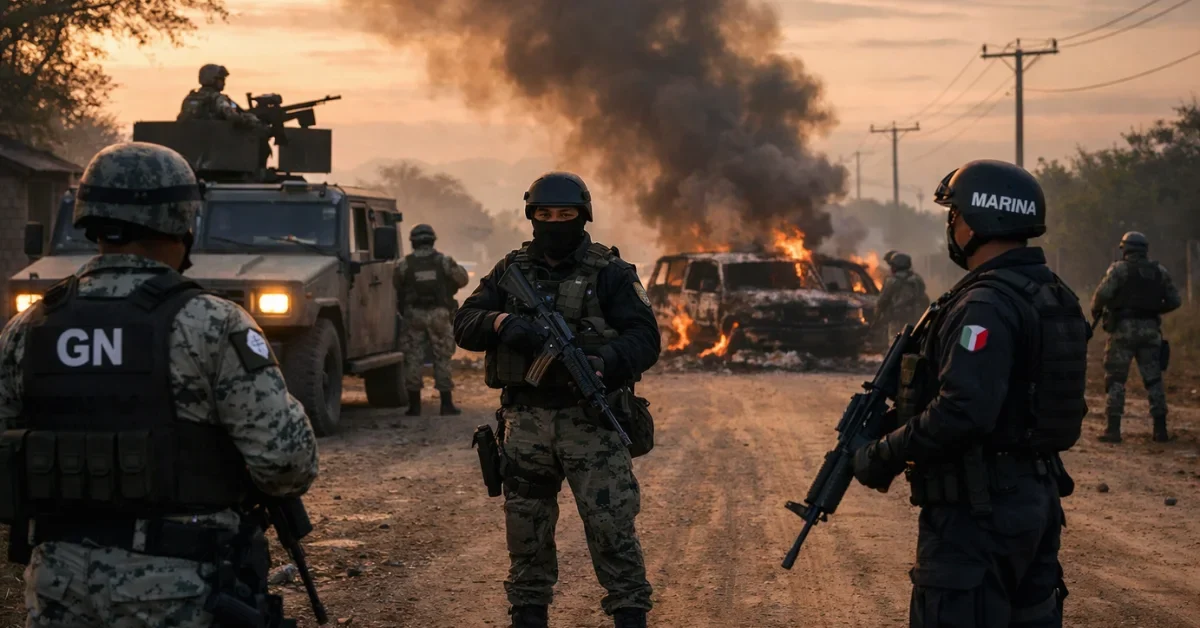
Mexican security forces have killed Nemesio Rubén Oseguera Cervantes, widely known as “El Mencho,” during a military operation on Sunday. As founder and leader of the Jalisco New Generation Cartel (CJNG), the 59-year-old was one of Mexico’s most wanted fugitives and a primary target for U.S. law enforcement.
The raid occurred in Tapalpa, a town of approximately 20,000 residents located in the central-western state of Jalisco. The Mexican Defense Ministry confirmed that troops moved into the area specifically to apprehend the cartel leader, which immediately sparked a fierce firefight. El Mencho sustained severe injuries during the confrontation and died while being airlifted to Mexico City for urgent medical treatment.
The operation marks a massive blow to organized crime networks operating in Mexico. It comes as the Mexican government deliberately intensifies its crackdown on powerful drug cartels, motivated in part by mounting diplomatic pressure and threats of direct military intervention from U.S. President Donald Trump.
Details of the Military Raid
The assault was a coordinated effort led by the Mexican Defense Ministry, supported by crucial complementary intelligence provided by U.S. authorities. During the shootout, four suspected cartel members died at the scene. El Mencho and two associates were wounded and died in transit, bringing cartel fatalities to seven.
Armed forces successfully detained two other cartel members at the scene and seized a massive cache of weaponry, including heavily armored vehicles. Authorities also reported discovering specialized rocket launchers that were fully capable of destroying armored vehicles and downing aircraft.
The intense confrontation left three members of the Mexican security forces injured, and they are currently receiving medical treatment.
Widespread Violence and Retaliation
Following the news that El Mencho was killed, brutal cartel violence and unrest quickly swept across five Mexican states: Jalisco, Guanajuato, Nayarit, Michoacán, and Tamaulipas. Organized crime groups retaliated by erecting roadblocks and setting buses, trucks, and cars on fire. In Jalisco alone, authorities recorded over 20 burning blockades and the destruction of several state-operated Welfare Bank branches.
The violence paralyzed Guadalajara, Jalisco’s capital and a future host city for the FIFA World Cup. Residents fled the streets and transit hubs fearing reprisals. By Sunday afternoon, the city was notably quiet, with gas stations and businesses closed as people sheltered indoors.
Jalisco Governor Pablo Lemus Navarro took to X to urge the public to remain home until the situation was controlled. Meanwhile, the U.S. Embassy in Mexico issued strict shelter-in-place advisories for multiple states due to widespread criminal activity.
Mexican President Claudia Sheinbaum initially deferred confirming the death to her Security Cabinet but later issued a statement calling for calm. She reassured the public that governments were coordinated, noting daily activities were proceeding normally in most of the country.
The Legacy of El Mencho
Oseguera Cervantes began his career as an avocado farmer and local police officer. After serving three years in prison, he was released on parole and climbed the ranks of the Milenio Cartel. He later established the CJNG, transforming it into Mexico’s most violent criminal syndicate over the past decade.
Under his command, the CJNG aggressively expanded its territory, rivaling the infamous Sinaloa Cartel. The organization dominated illegal enterprises ranging from extortion and fuel theft to large-scale drug manufacturing. U.S. officials identified the CJNG as a major supplier of heroin, cocaine, methamphetamine, and fentanyl to the United States. The U.S. State Department had offered a massive $15 million reward for information leading to his arrest.
El Mencho orchestrated relentless violence against rival organizations and Mexican law enforcement, instilling fear in communities nationwide.
What Happens Next?
The death of El Mencho leaves a massive power vacuum in the criminal underworld. Security analyst Vanda Felbab-Brown noted that the CJNG may enter a period of sharp decline, potentially shifting the balance of power toward rival Sinaloa Cartel factions or allowing new contenders to rise. She cautioned that the immediate violence mirrors the chaos seen in Sinaloa in 2019 following the capture of Ovidio Guzmán López.
Future escalation depends heavily on the cartel’s internal structure. If the CJNG lacks a clear succession plan, Oseguera’s death could trigger severe fragmentation and prolonged bloodshed as rival lieutenants fight for control. For now, Mexican authorities remain on high alert as they navigate the volatile aftermath of taking down the nation’s most feared drug kingpin.
