

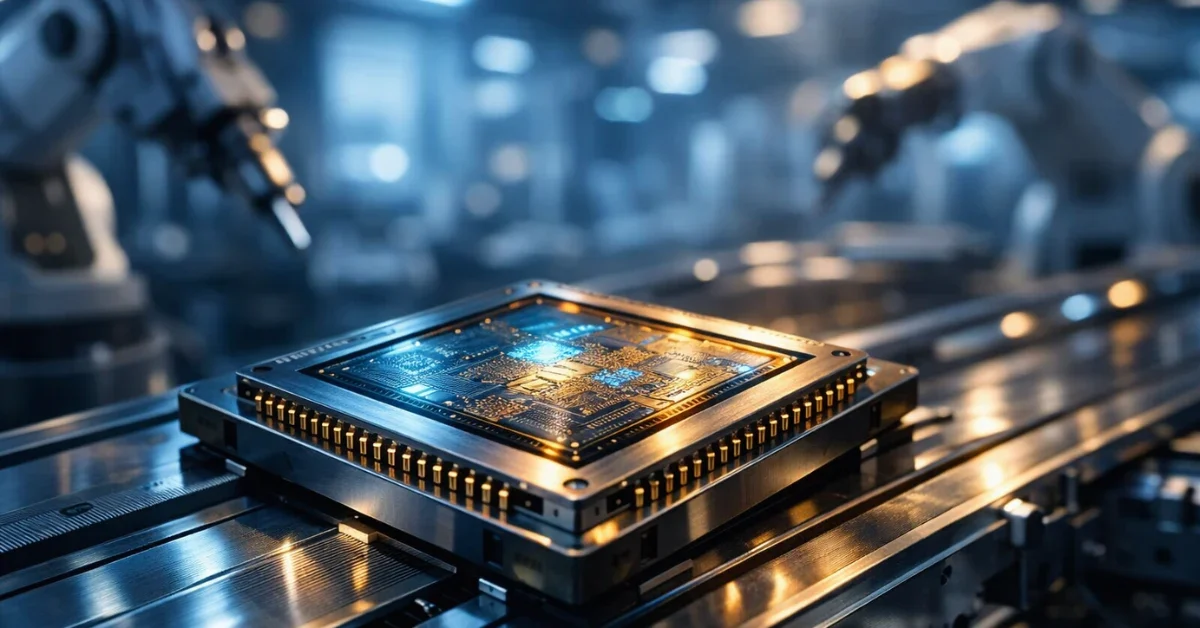
The market for Nvidia AI chips is undergoing sweeping adjustments as the semiconductor manufacturer navigates tightening international trade restrictions and soaring industry demands. Facing strict export controls, the company has officially halted production of its H200 processors specifically designed for the Chinese market. Concurrently, the tech giant is reallocating its global manufacturing resources, investing billions in emerging photonics technologies, and developing a new class of hardware tailored to accelerate AI processing speeds.
Export Controls Halt China-Bound Production
According to reports from the Financial Times, the manufacturer has completely stopped producing H200 Nvidia AI chips intended for Chinese customers. Leadership made this decision based on expectations that ongoing regulatory actions and trade barriers established by both Washington and Beijing will continue to block technology sales into the world’s second-largest economy.
In response to these trade roadblocks, Nvidia requested that its primary contract manufacturer, Taiwan Semiconductor Manufacturing Company, immediately shift its production focus. The manufacturing capacity previously dedicated to producing the H200 hardware has now been fully reallocated to build the company’s next-generation Vera Rubin platform.
During a recent earnings call, executives confirmed that they have not generated any revenue from H200 sales in China. This marks a sharp reversal from previous expectations; the company had initially anticipated receiving over one million orders from Chinese clients and had ramped up its supply chain to meet that expected demand. While a small number of products were initially approved by the United States government, management noted profound uncertainty regarding any future import permissions.
New Processors to Speed Computing
Even as it scales back its overseas offerings, Nvidia is moving aggressively to maintain its dominance in the domestic computing market. According to the Wall Street Journal, the company plans to introduce a new processor designed to help major clients like OpenAI build faster, more efficient artificial intelligence systems.
This new hardware initiative marks a notable shift toward inference computing. While much of the industry’s early focus has been on training foundational data, inference is the specific type of processing that allows artificial intelligence models to actively respond to user queries in real time.
Industry sources indicate that this upcoming inference platform will incorporate a specialized chip designed by the startup Groq. The company is scheduled to officially unveil the new system next month during its annual GTC developer conference in San Jose.
Multibillion-Dollar Investments in Photonics
To support the massive data transfer speeds required by next-generation computing, the semiconductor leader is also making substantial external investments. The company recently announced a nonexclusive agreement to invest $2 billion in Lumentum, a startup focused on advanced optical and laser technologies.
This partnership includes a multibillion-dollar purchase commitment and future capacity access rights. Lumentum will use the funding to construct a new manufacturing facility in the United States, supporting research and expanding operational capacity. Following the announcement, Lumentum’s market valuation reached $50 billion. Corporate leadership emphasized that integrating sophisticated silicon photonics is essential for building future gigawatt-scale data centers.
Furthermore, Nvidia is finalizing direct financial investments in leading artificial intelligence developers. The company is reportedly concluding a $30 billion investment in OpenAI—down from an initially considered $100 billion—alongside a $10 billion investment in Anthropic. Executives indicated that these will likely be the final private investments of this scale, as both startups are expected to pursue initial public offerings in the near future.
Broader Industry Growth and Military Contracts
The ripple effects of the ongoing technology boom are visible across the broader sector. Broadcom, a major designer of custom accelerators and networking equipment, recently issued a highly optimistic financial outlook. The company projected its second-quarter revenue to reach approximately $22.0 billion, comfortably surpassing Wall Street estimates of $20.56 billion. Within that total, Broadcom expects its artificial intelligence semiconductor revenue to hit $10.7 billion, driven by aggressive infrastructure spending from major cloud providers.
Meanwhile, the intersection of advanced technology and national defense remains highly volatile. Anthropic is currently contesting a United States Defense Department designation that labeled the startup a national security supply chain risk. Company leadership stated they have no choice but to challenge the label legally. Despite this conflict, and following the dramatic collapse of a previous agreement, Anthropic has re-engaged in discussions with the Pentagon in an attempt to revive a military contract.
