

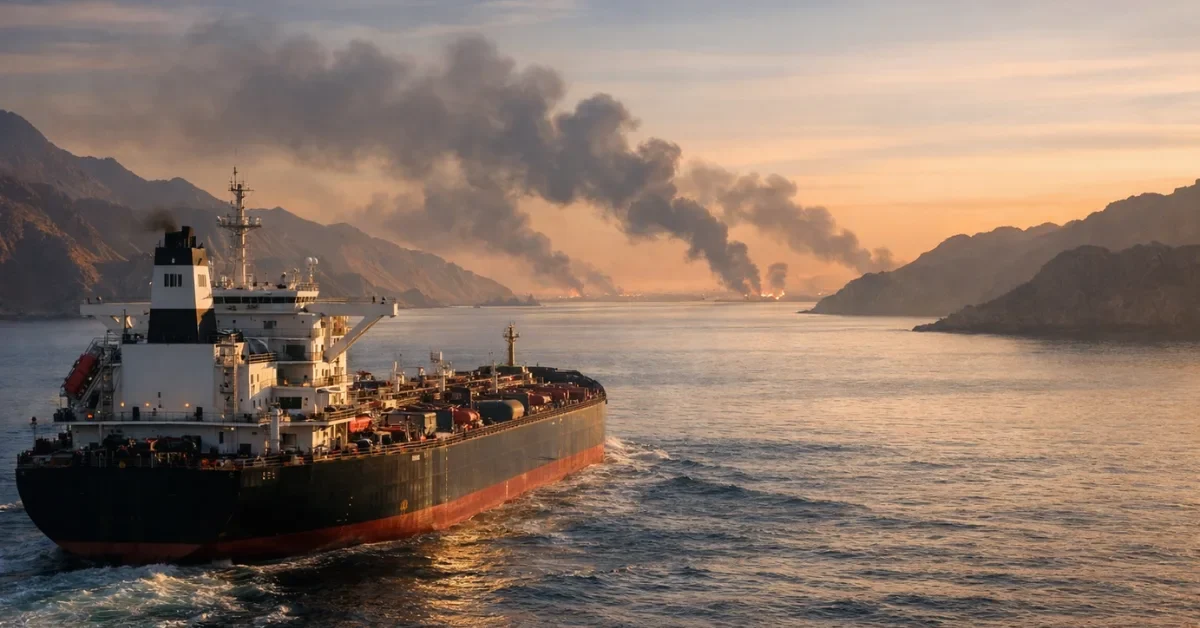
Oil prices jumped sharply as fighting involving Iran intensified and the Strait of Hormuz became a major pressure point for global energy flows. Brent crude and U.S. West Texas Intermediate briefly surged to about $119 a barrel before easing back, reflecting what the reports described as a fast-moving supply and shipping shock.
The Iran conflict has expanded into energy infrastructure and shipping disruption, raising fears of a wider and longer-lasting hit to supply. Multiple reports said strikes and retaliation have affected oil and gas sites and added new risks for tankers moving through the Gulf region.
Prices whipsaw as supply fears rise
In early trading, Brent briefly reached about $119.50 a barrel and WTI about $119.48, levels described as the highest since mid-2022, before both later slipped below $100. GoodReturns reported crude had traded near $70 a barrel before the U.S. and Israel began the war against Iran on Feb. 28, and said prices remained well above pre-war levels even after the pullback.
The Debrief described the market move as a real-time jolt tied to the conflict widening into the region’s “energy plumbing,” with damage and fires reported at fuel depots and storage sites. It also said Group of Seven leaders and finance ministers were discussing emergency oil releases coordinated with the International Energy Agency as the price spike fed broader inflation concerns.
Strait of Hormuz disruption deepens
A central driver has been the Strait of Hormuz, a narrow channel repeatedly described as close to shut down or “effectively choked” as fears of drones, missiles, and broader attacks disrupted tanker movements. GoodReturns said shipping through the strait nearly halted and described the waterway as carrying about a fifth of global oil on a normal day, citing Rystad Energy estimates of roughly 15 million barrels moving through daily.
Lloyd’s List provided a snapshot of the slowdown, reporting that only four ships—equal to 346,037 deadweight tons—transited the Strait of Hormuz on March 3. It also said two Greek-owned ballast tankers disabled their Automatic Identification System data while passing through the strait, underscoring the security concerns affecting navigation and transparency.
As shipping slowed, producers faced storage constraints and export bottlenecks, and reports described output being curtailed because cargoes could not move reliably. The Debrief cited Reuters reporting that Iraq’s main southern fields saw output fall by about 70% to roughly 1.3 million barrels per day because exports could not move freely.
Attacks, force majeure, and wider spillover
Reports from the weekend described strikes and damage affecting not only Iran’s fuel depots but also infrastructure across Gulf states, with energy facilities increasingly treated as front-line targets. GoodReturns said Iran, Israel, and the U.S. struck oil and gas sites and that oil depots in Tehran were smouldering after Sunday strikes by Israel.
Both GoodReturns and The Debrief reported that Bahrain accused Iran of hitting a desalination plant tied to drinking water and that Bahrain’s national oil company declared force majeure after an attack set its refinery complex ablaze. The Debrief described force majeure as a legal step that can free companies from contractual obligations due to extraordinary circumstances.
Lloyd’s List said container carriers including MSC, Cosco, CMA CGM, and others accelerated steps to withdraw from Middle East Gulf trades amid deteriorating security, leading to booking suspensions, voyage terminations, and shifting supply chains. It also reported widespread Global Navigation Satellite System interference in the Middle East Gulf and Gulf of Oman since the onset of the war in Iran, with Lloyd’s List Intelligence tracking hundreds of affected vessels and a sharp rise in daily incidents by early March.
Political signals and response options
On the political front, GoodReturns said Iran named Ayatollah Mojtaba Khamenei as successor to his late father as supreme leader, describing the move as defiant amid bombardment by the U.S. and Israel. The Debrief also reported the leadership change and quoted President Donald Trump describing ending the war as a “mutual” decision with Israel’s prime minister.
Governments have discussed strategic stockpiles while weighing how long shipping disruption and production cuts could last. GoodReturns reported the Group of Seven said it would not tap strategic reserves yet and quoted French Finance Minister Roland Lescure saying, “We’re not there yet,” while also noting Trump downplayed use of the U.S. Strategic Petroleum Reserve.
Lloyd’s List reported Trump announced that, if necessary, the U.S. Navy would begin escorting tankers through the Strait of Hormuz, but said the plan had not been followed by details and that some shipping officials were skeptical about immediate availability. It also said two shipowners with tankers stuck inside the Middle East Gulf told Lloyd’s List that escorts would not persuade them to transit while combat operations were still taking place.
