

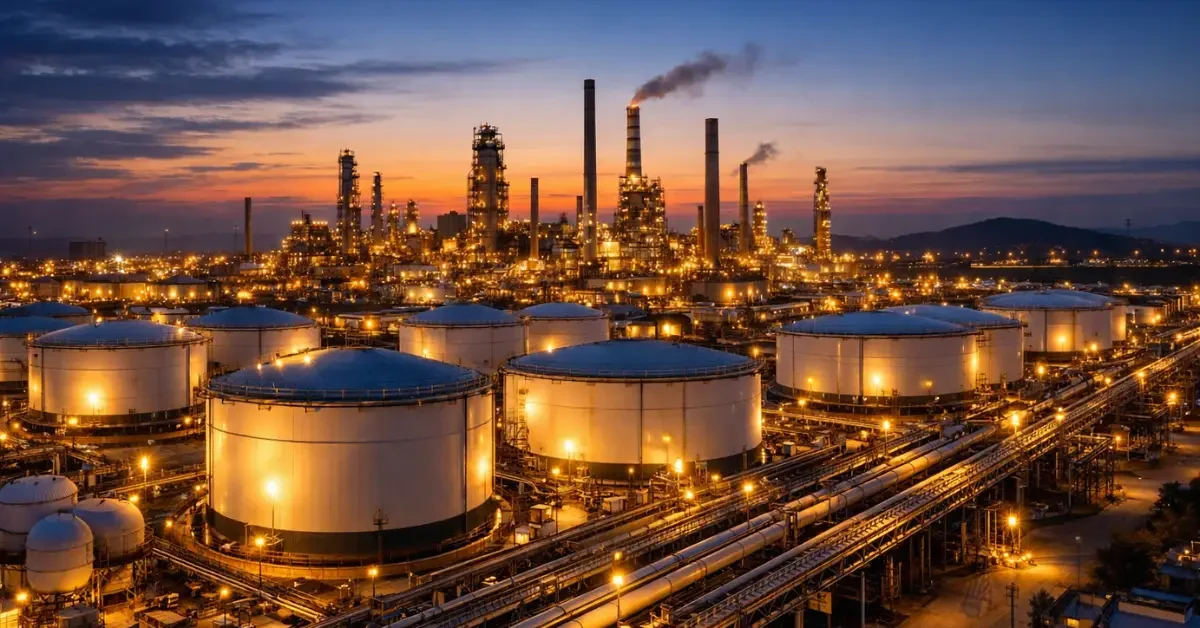
The International Energy Agency (IEA) has agreed to a historic 400 million-barrel oil reserve release to address severe supply disruptions caused by the Iran war and broader Middle East conflict. This emergency measure is the largest in the agency’s history and aims to stabilize global energy markets. The crisis stems from the near-total halt of shipping through the Strait of Hormuz, a critical maritime route that normally handles 20% of the world’s seaborne oil flows.
Despite the unprecedented scale of the response, financial and energy market experts remain divided on whether this massive oil reserve release can effectively tame soaring prices and offset the structural damage to global supply chains.
Unprecedented Market Disruptions
The shipping freeze in the Middle East has triggered a massive bottleneck in global energy logistics. According to Moneycontrol, Iraqi security officials reported that Iranian explosive-laden boats recently struck two fuel-oil tankers, causing regional oil ports to completely halt operations.
Consequently, storage tanks across Persian Gulf nations are filling rapidly. Major producers like Saudi Arabia, the United Arab Emirates, and Iraq are deepening supply cuts, removing roughly 6% of global output. Citigroup estimates the Persian Gulf is currently losing between 11 million and 16 million barrels of daily supply.
While the crisis has clearly impacted global markets, reports conflict regarding the exact pricing of crude. Bloomberg reported that oil soared to nearly $120 per barrel in London earlier in the week before dipping after the IEA announcement. Conversely, Moneycontrol noted that crude surged past $100 a barrel, and Business Insider stated that Brent crude hovered just above $90 per barrel.
These elevated prices heavily burden oil-importing countries like India by fueling inflation. This volatility dragged down Indian financial indices, with the Nifty and Sensex falling over 1%, and the volatility index rising 6%. Adding to economic anxieties, the US recently launched unfair-trade investigations into 16 nations to reinstate tariff pressures under President Donald Trump.
Historic IEA Response and Contributions
IEA Executive Director Fatih Birol described the current oil market challenges as unparalleled in scale. He praised member countries for organizing an emergency collective action of an unprecedented size. French President Emmanuel Macron confirmed that the physical discharges of oil will be organized in the coming days.
Several nations have already outlined their specific commitments to the plan. Japan, which is highly vulnerable to oil price shocks, will release about 80 million barrels. South Korea plans to contribute 22.5 million barrels, while Germany, France, and the UK will release 19.5 million, up to 14.5 million, and 13.5 million barrels respectively.
Overall, 32 IEA members hold over 1.2 billion barrels in public stockpiles and 600 million barrels in mandated industry stocks, fulfilling their requirement to hold at least 90 days of net oil imports.
The United States maintains the largest buffer through its Strategic Petroleum Reserve (SPR), which currently holds roughly 411 to 415 million barrels—just over half of its total capacity. Established in the 1970s following the Arab oil embargo, the SPR stores oil in deep underground caverns along the Gulf of Mexico. However, drawing from this reserve is not instantaneous; it takes 13 days for SPR oil to reach the open market after a presidential decision, and the maximum drawdown rate is capped at 4.4 million barrels per day.
Disagreements on Effectiveness
The specifics of the agreement have generated differing viewpoints among market watchers. While Bloomberg reported that the IEA decision was unanimous, Business Insider highlighted a warning from former JPMorgan quant chief Marko Kolanovic, who noted that an objection from even one country could scuttle the entire plan.
Many financial analysts doubt the intervention will provide lasting relief. Analysts at JPMorgan stated that a coordinated release would only provide initial relief. They argued that releasing 1.2 million barrels daily would be insufficient to counter potential losses of 12 million barrels a day within two weeks.
George Noble, a veteran Wall Street fund manager, called the reserve plan a historic mistake. He pointed out that the previous US administration released 180 million barrels in 2022, which only saved consumers about 18 cents per gallon. Noble warned that the current disruption is structurally larger, geographically more dangerous, and lacks any visible end date. Kolanovic echoed this sentiment, suggesting the move delays a real solution and acts more as a political favor to Trump than a benefit to consumers.
Furthermore, Daniel Ghali of TD Securities criticized the plan as strategically ambiguous. He noted that global reserves are not distributed equally, meaning barrels released in the US might not reach the Asian markets that desperately need them. With Asian importers typically taking the largest share of Hormuz flows, the immediate impact in that region is expected to be severe. Meanwhile, Europe is facing its own localized crises, particularly in the jet fuel market, where premiums have skyrocketed to nearly $90 a barrel due to dire supply shortages.
Ultimately, while this marks the largest intervention since the 183 million barrels released during the 2022 invasion of Ukraine, the IEA concedes that the most critical factor for market stability remains the resumption of safe transit through the Strait of Hormuz.
