

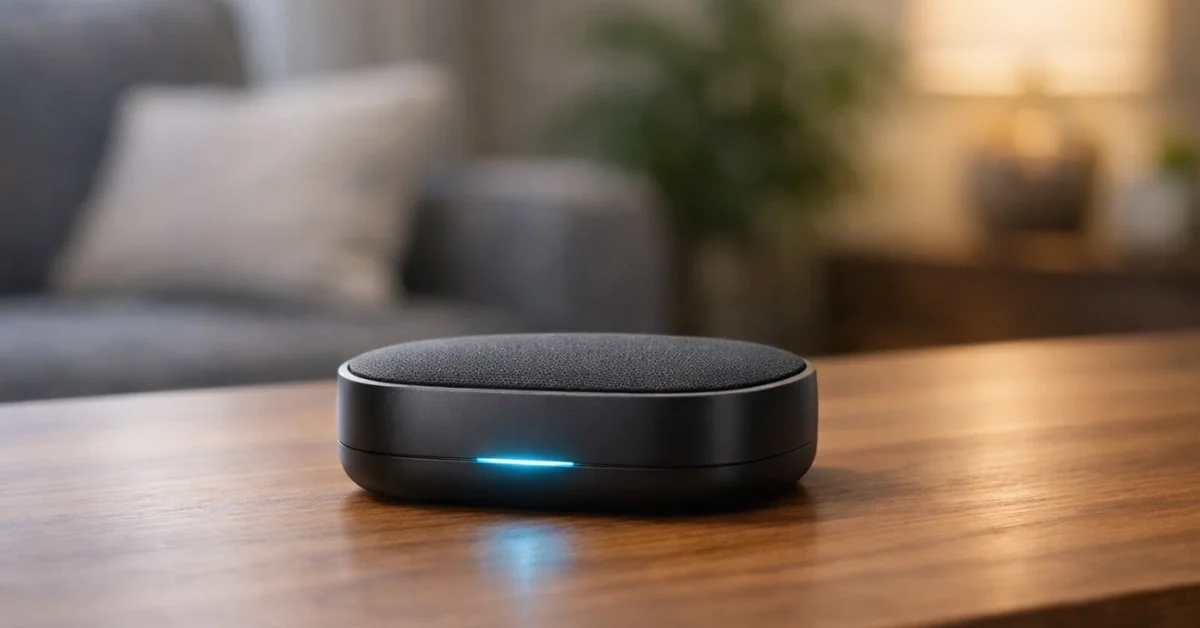
OpenAI is making a significant push into the consumer hardware market, assembling a dedicated team of over 200 employees to develop a new lineup of artificial intelligence gadgets. The centerpiece of this initiative is an ambitious OpenAI smart speaker, alongside early plans for smart glasses and a smart lamp.
Developed in partnership with renowned former Apple designer Jony Ive, the highly anticipated OpenAI smart speaker is currently projected to launch in early 2027. The first physical product to emerge from this hardware venture is expected to carry a retail price ranging between $200 and $300, with current plans pointing to a release no earlier than February 2027.
Advanced Camera and Facial Recognition Features
According to internal descriptions and leaked details, the device will prioritize environmental awareness and seamless integration into daily life. Rather than featuring a traditional display, the pocket-sized device will rely heavily on an advanced integrated camera and sophisticated microphone arrays to interact with its users.
This onboard camera is designed to continuously gather contextual information about the user’s surroundings. It will be capable of identifying specific objects placed on nearby surfaces, such as items resting on a table. Additionally, the camera will feature biometric facial recognition technology that functions similarly to Apple’s Face ID.
This advanced visual system will securely authenticate users, allowing them to verify and complete direct purchases through the hardware. Beyond visual tracking, the speaker’s audio sensors are built to listen in on nearby conversations, providing the AI with a continuous stream of contextual data to better serve the user.
Proactive AI Assistant Capabilities
Once processed, this environmental data will allow the OpenAI smart speaker to act as a highly proactive digital assistant. In internal presentations, employees were told the device would quietly observe daily routines and independently suggest helpful actions to help users meet personal goals. For example, the system might recognize an upcoming morning meeting on a schedule and proactively suggest an earlier bedtime the night before.
During a previous employee meeting, OpenAI CEO Sam Altman and Jony Ive described their shared vision for the hardware, referring to it as an active participant that remains peaceful rather than annoying. The creators expressed a desire to build something that brings users joy, with Altman referring to the upcoming gadget as the coolest piece of technology the world has ever seen.
Jony Ive’s Influence and Apple Connections
The hardware initiative relies heavily on Jony Ive, who famously shaped Apple’s design philosophy from the 1990s until his departure in 2019. Reports vary slightly on the exact corporate structure of this partnership. One technology publication states that OpenAI acquired Ive’s AI-focused startup, io Products, for $6.5 billion in the previous year.
Another outlet reports that OpenAI acquired Ive’s hardware firm, simply called io, in May 2025. This second report notes that his primary design company, LoveFrom, remains an independent entity that only provides hardware designs to OpenAI. Regardless of the exact financial structure, Ive is reportedly making the final call on nearly all design choices. He is joined by several other former Apple executives, including industrial design lead Evans Hankey, hardware engineer Tang Tan, Scott Cannon, and software developer Adam Cue.
Internal Tensions and Development Hurdles
Despite the high-profile talent attached to the project, the development process has encountered several notable roadblocks. The hardware team is currently navigating complex technical challenges, severe privacy concerns, and logistical hurdles related to securing the immense computing power required to mass-produce advanced AI devices.
Furthermore, industry observers suggest that consumers may exhibit extreme hesitance toward adopting a product equipped with cameras and microphones that constantly observe and listen to their private lives.
Internally, the development cycle has also faced friction. Employees at OpenAI have reportedly expressed frustration regarding the partnership with LoveFrom. Complaints highlight the external design firm’s intense secrecy and sluggish pace when turning around necessary design revisions, leaving OpenAI’s internal engineers waiting to implement required changes.
Future OpenAI Hardware and Market Competition
While the smart speaker remains the immediate priority, OpenAI’s roadmap extends deeper into the decade. The company is actively exploring AI-enabled smart glasses, a category currently dominated by Meta, though mass production for the eyewear is not expected until 2028 at the earliest.
The team has also built prototypes for a smart lamp, but this project remains in the very early stages of development. Hardware development outside the speaker is still in its infancy, and it is entirely uncertain if the smart lamp concept will ever reach the consumer market or if it will be canceled.
As OpenAI navigates these internal and external challenges, competitors are not standing still. Apple is actively developing its own home hub device slated for this year, featuring an integrated camera, video calling capabilities, smart home controls, and deep integration with an upgraded version of Siri. Meanwhile, Google is preparing to ship its updated smart speaker hardware, opting for a tamer approach focused on delivering its Gemini AI experience.
