

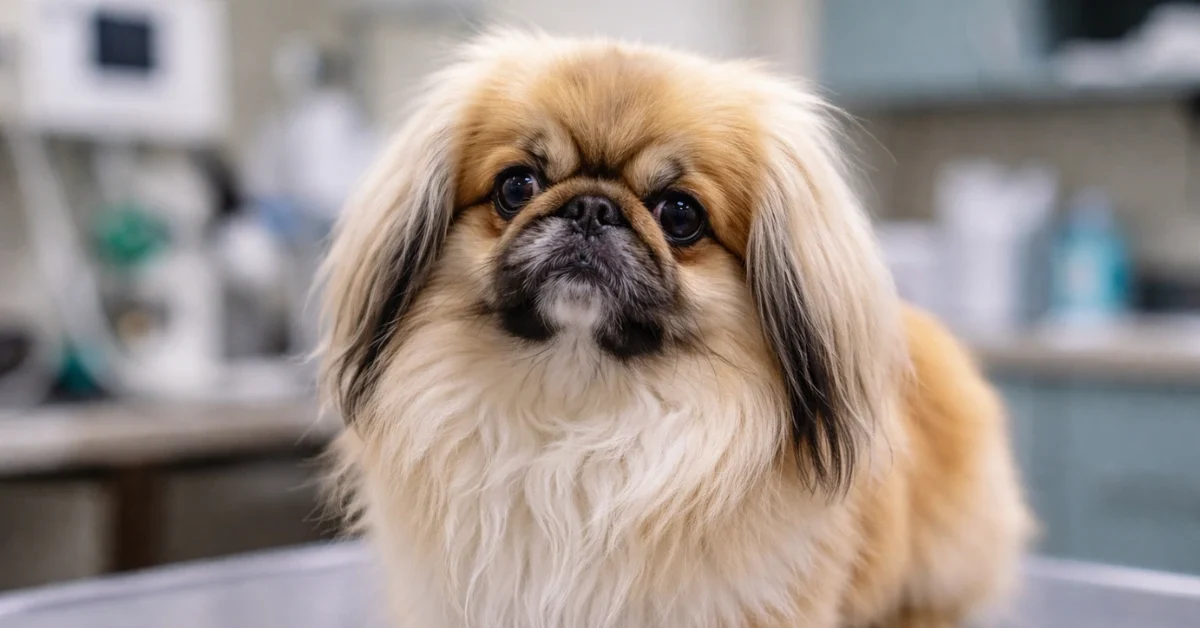
A new study has revealed that 12 dog breeds beyond the well-known pugs and bulldogs are at risk of serious breathing difficulties, with Pekingese and Japanese Chin dogs facing especially high danger. The research, published February 18, 2026 in the journal PLOS One, examined nearly 900 dogs across 14 flat-faced breeds to identify which animals struggle most with a condition called Brachycephalic Obstructive Airway Syndrome.
Scientists from the University of Cambridge Veterinary School led the groundbreaking study, which found that only 11 percent of Pekingese and about 17 percent of Japanese Chin could breathe freely. These rates match or exceed the breathing problems seen in bulldogs and pugs, breeds already well-known for respiratory issues.
What Is Brachycephalic Obstructive Airway Syndrome
Brachycephalic Obstructive Airway Syndrome, known as BOAS, affects dogs with shortened skulls and flat faces. Parts of the airway become blocked or narrowed, making breathing difficult for affected animals. Dogs with this condition often wheeze and resort to labored breathing after playing or exercising.
The syndrome exists on a spectrum of severity. Some dogs experience only mild symptoms, while those at the severe end face significant quality of life reductions and serious welfare concerns. In extreme cases, the condition can require surgical treatment.
Breeds at Moderate and Mild Risk
The Cambridge researchers found that five breeds faced moderate risk of BOAS. Between half and three-quarters of King Charles spaniels, Shih Tzus, Griffon Bruxellois, Boston terriers, and Dogue de Bordeaux showed some level of breathing abnormality.
Several breeds fell into the mild risk category, with about half displaying some degree of noisy breathing but only a few showing clinically significant disease. These included Staffordshire bull terriers, Cavalier King Charles spaniels, Chihuahuas, boxers, and Affenpinschers. Pomeranians and Maltese dogs in the study showed no clinical signs of the condition.
Key Risk Factors Identified
The research team assessed almost 900 dogs during individual appointments at the Queen’s Veterinary School Hospital in Cambridge, at dog shows, and at breed-specific health testing days between September 2021 and April 2024. They graded each dog on a scale of zero to three for BOAS, with zero indicating few symptoms and three meaning the dog had difficulty exercising and getting enough air.
Having a very flat face emerged as a major risk factor. Dogs with wider, shorter head shapes showed increased likelihood of developing BOAS. Nostrils that collapsed when breathing in also played a significant role. The two highest-risk breeds, Pekingese and Japanese Chin, had high rates of nostril narrowing, with only about six percent and 18 percent respectively having open nostrils.
Being overweight proved to be a significant risk factor for Cavalier King Charles spaniels, Shih Tzus, and Affenpinschers. Weight management could potentially serve as a tool to reduce BOAS risk in these breeds.
Breed-Specific Characteristics
The study uncovered unique risk patterns within individual breeds. In both Shih Tzus and Staffordshire bull terriers, shorter tails correlated with increased BOAS risk. Affected Staffordshire bull terriers had tails averaging 1.5 centimeters shorter, and those with longer tails were roughly 30 percent less likely to have the condition.
Dogs with proportionately thicker necks showed higher BOAS rates among Boston terriers and Staffordshire bull terriers. This link mirrors findings in bulldogs and French bulldogs, which makes sense given the close genetic relationship between these breeds.
Chihuahuas and King Charles spaniels with relatively longer bodies and shorter height were more likely to be affected. However, the researchers noted that weight, nostril narrowing, and skull shape only accounted for 20 percent of variation in BOAS status across different breeds.
Implications for Breeders and Owners
Dr. Fran Tomlinson, who co-led the study, explained that BOAS is hereditary and much remains to be learned about reducing risk in future generations. The research team hopes their findings will encourage greater awareness and testing among flat-faced dog breeds.
Understanding these risk factors can help breeders and prospective owners select dogs less likely to suffer from breathing problems. The information could also guide judges in deciding which features harm health, ensuring that characteristics associated with BOAS are not rewarded in show rings, particularly since winning dogs often become popular breeding animals.
The researchers emphasized that each breed has its own risk profile for BOAS with different contributing factors. Their findings support taking a breed-specific approach when working to reduce the disease on a population level. For now, a breathing assessment remains the most accurate way to determine BOAS status and identify which dogs should be selected for breeding or would benefit from veterinary intervention.
The authors noted that their data came from volunteer dogs and that comparative BOAS grades for pugs, French bulldogs, and bulldogs came from a 2016 study. Breeders might have since improved these breeds’ health as awareness of respiratory issues in short-snouted breeds has grown significantly in recent years.
