

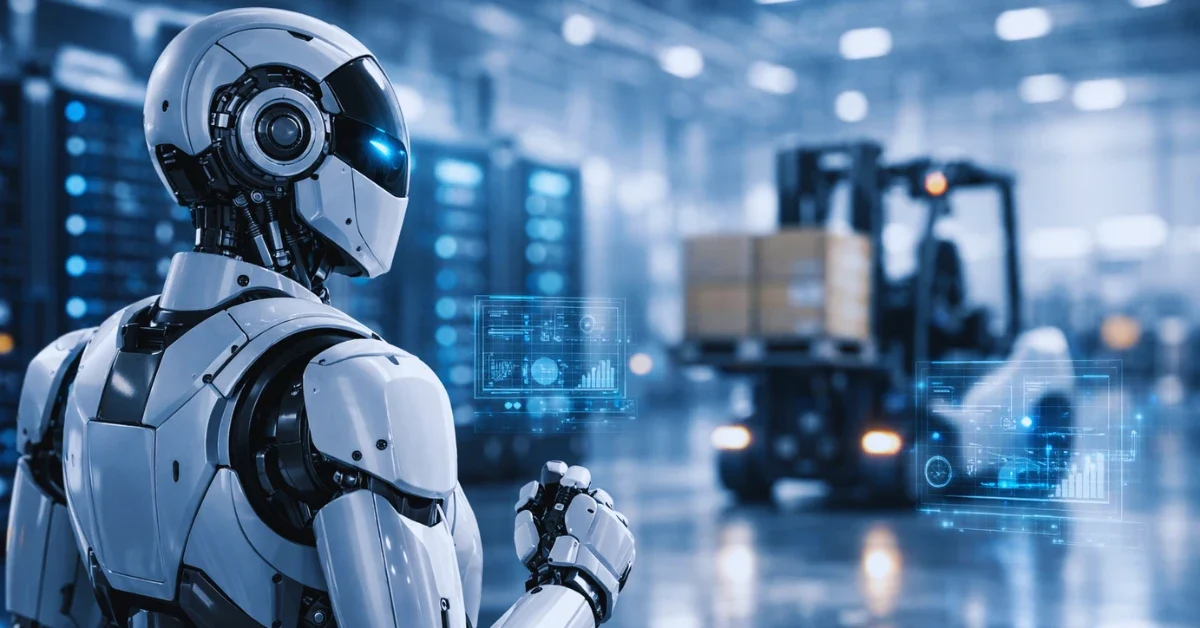
The landscape of physical artificial intelligence (AI) and robotics is rapidly transitioning from virtual environments to full-scale industrial operations. Across the globe, demographic pressures and major technological advancements are accelerating the adoption of autonomous machines. From national government initiatives in Japan to cuttingedge software platforms unveiled by Nvidia and strategic expansions by World Wide Technology (WWT), physical AI is becoming a foundational element for the future of manufacturing, logistics, and critical infrastructure.
In Japan, the push toward physical AI is driven largely by necessity. The country is facing a severe demographic crunch, with its population declining for a 14th consecutive year in 2024. Currently, the working-age population constitutes just 59.6 percent of the total, a demographic that experts project will shrink by nearly 15 million over the next two decades. Consequently, a 2024 survey identified labor shortages as the primary force compelling Japanese firms to adopt artificial intelligence to maintain continuous operations.
Driven by Demographic Pressures in Japan
Recognizing this national urgency, the Japanese government, under Prime Minister Sanae Takaichi, has committed approximately $6.3 billion to bolster core capabilities, integrate robotics, and support industrial systems. The Ministry of Economy, Trade and Industry announced in March 2026 its goal to capture a 30 percent share of the global physical AI market by 2040. Japan already maintains a dominant position in industrial robotics hardware, having accounted for about 70 percent of the global market in 2022.
The Japanese tech ecosystem is evolving into a hybrid model where established corporations collaborate with agile startups. Industrial giants like Toyota Motor Corporation, Mitsubishi Electric, and Honda Motor offer manufacturing scale and deep customer relationships. Meanwhile, startups such as Mujin, WHILL, and Terra Drone are driving innovation in orchestration software, autonomous mobility, and defense platforms. For example, Mujin has developed software that enables industrial machines to handle logistics and picking tasks autonomously, while WHILL is creating integrated platforms for autonomous personal mobility vehicles.
Simulating AI Factories and Synthetic Data
While Japan focuses on addressing its labor shortages, global technology leaders are providing the foundational software and simulation platforms required to scale these robotic systems globally. During the recent GTC 2026 event, Nvidia highlighted that robots, vehicles, and factories are moving beyond isolated pilot programs into sophisticated enterprise workloads. The company introduced new frontier models for physical AI, including Cosmos 3, Isaac GR00T N1.7, and Alpamayo 1.5.
A major bottleneck in robotics development has historically been the collection of real-world data, which is often unpredictable and difficult to scale. To address this, Nvidia launched the Physical AI Data Factory Blueprint. Available on cloud platforms like Microsoft Azure and Nebius, this open reference architecture transforms computing power into large-scale, high-quality training data. Built on the Cosmos open-world foundation models, the blueprint allows developers to generate diverse datasets from limited real-world inputs.
Furthermore, Nvidia unveiled the Omniverse DSX Blueprint, a reference architecture designed to unify simulation across every layer of an AI factory through a single digital twin. This technology allows operators to optimize mechanical systems, thermals, power grids, and network loads in a virtual environment before physical installation. Similarly, the Mega Omniverse Blueprint provides enterprises with tools to design and test robot fleets within physically accurate facility digital twins. Companies like KION, in collaboration with Accenture and Siemens, are utilizing this blueprint to build warehouse digital twins that train autonomous forklifts for GXO, a major contract logistics provider.
The open-source community is also contributing to this shift. Frameworks like OpenClaw are extending the technology stack into daily operations, enabling autonomous assistants to manage data pipelines and execute tasks using tools, memory, and messaging interfaces.
Expanding Ecosystems and IT Service Partnerships
The successful deployment of these complex systems requires extensive implementation services and robust channel partnerships. World Wide Technology (WWT), an IT solution provider ranked No. 9 on the 2025 Solution Provider 500 list, is actively expanding its capabilities in this sector. WWT recently received three Americas Nvidia Partner Awards, including honors for AI excellence and enterprise software.
WWT executive Mike Trojecki noted that the company is heavily investing in the physical AI market by hiring experts in robotics, digital twins, and computer vision. Trojecki emphasized that deploying a robot requires building a digital twin and integrating advanced vision systems, creating a massive services opportunity around the implementation of automated data centers. This includes addressing the intense power and cooling requirements necessary to launch modern computing factories.
Guided by CEO Jim Kavanaugh’s strategy to prioritize artificial intelligence, WWT has partnered with several robotics distributors and is conducting proofs of concept with bipedal robots. WWT also collaborates with infrastructure specialist teams to offer services in planning, design, deployment, testing, and validation. As the market expands, this collaborative approach ensures that the complex integration of hardware, software, and simulation tools can be effectively managed to transform global industries.
