

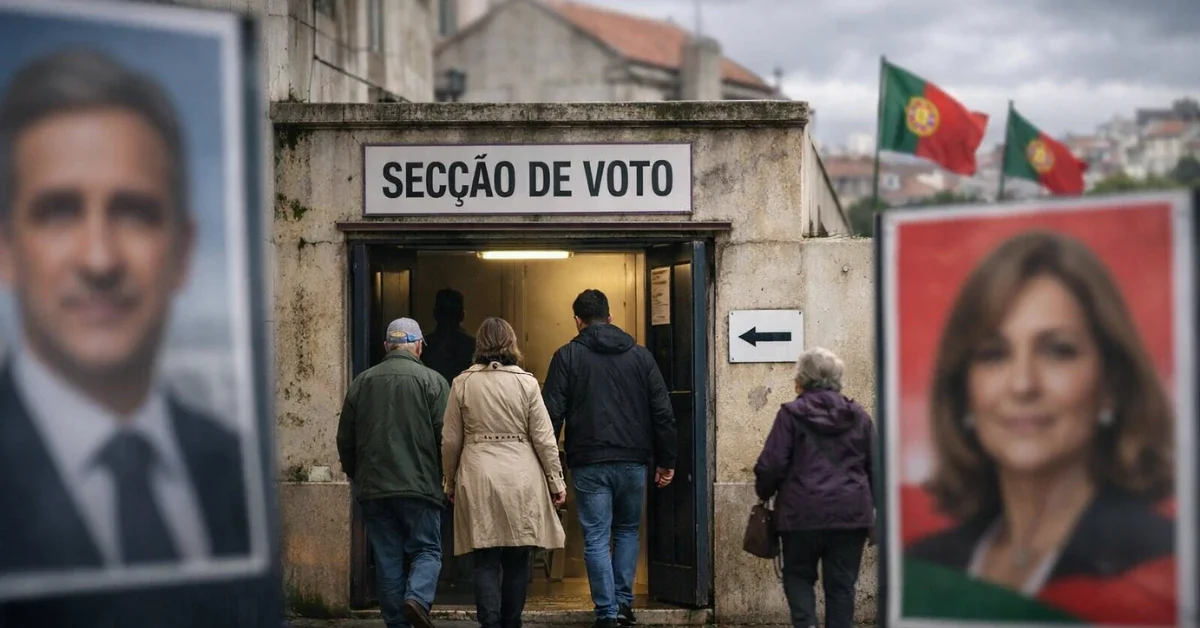
Portugal held a presidential election runoff on Sunday, with centre-left Socialist candidate António José Seguro widely seen as the favourite against hard-right populist André Ventura. The contest has been framed as a major test of how far Ventura’s confrontational, anti-establishment style can go in a country where presidents are expected to rise above day-to-day party politics.
Opinion polls cited ahead of the vote suggested Seguro could win by a wide margin. The Associated Press report said recent polling indicated Seguro could receive roughly twice as many votes as Ventura, while a WION report cited one major survey putting Seguro on 67% compared with Ventura’s 33%.
A runoff with high stakes
The runoff was triggered after last month’s first round failed to produce a winner with more than 50% of the vote. In the WION report’s transcript, Seguro was described as leading the first round with just over 31%.
Even so, simply reaching the runoff was described as a milestone for Ventura and his Chega (“Enough”) party, which the AP report said has rapidly become a significant force in Portuguese politics amid a broader European shift to the right. The AP report also said Chega was founded less than seven years ago and that its surge helped make it the second-largest party in Portugal’s parliament after the May 18 general election.
What the president can do
Portugal’s president is “largely a figurehead with no executive power,” according to the AP report, but the role still carries influence. The AP report said the president can veto legislation passed by parliament, though lawmakers can overturn that veto.
The AP report added that the president also holds what Portuguese political jargon calls an “atomic bomb”: the ability to dissolve parliament and call early elections. With Portugal having held its third general election in three years in May, the AP report said a key challenge for the next president will be helping steady the country after its worst bout of political instability for decades.
Seguro’s moderate pitch vs Ventura’s combative style
Seguro, described by the AP as a longstanding Socialist politician, has presented himself as a moderate willing to cooperate with Portugal’s centre-right minority government. The same report said Seguro has pushed back against Ventura’s anti-establishment approach and what it called Ventura’s anti-immigrant tirades.
Ventura, described by the AP as an eloquent and theatrical politician, has taken a more combative stance and focused heavily on immigration. The AP report said Ventura has argued Portugal faces “excessive immigration” and quoted him saying, “Portugal is ours.”
During the campaign, the AP report said Ventura’s billboards included messages such as “This isn’t Bangladesh” and “Immigrants shouldn’t be allowed to live on welfare.” The WION report also described the runoff as being dominated by a broad push to block the far-right candidate, while noting that some conservative figures had “reluctantly” backed Seguro to keep Ventura out of office.
Storms and the handover ahead
The WION report said “deadly storms” and a “state of calamity” disrupted the campaign in its final days and prompted calls for a delay. It also said the vote would go ahead as planned, with authorities insisting weather conditions alone were not grounds to postpone the democratic process.
Whoever wins will replace President Marcelo Rebelo de Sousa, and the AP report said the centre-right incumbent is leaving office after reaching the limit of two five-year terms. The AP report also said the winner will take over in March.
