

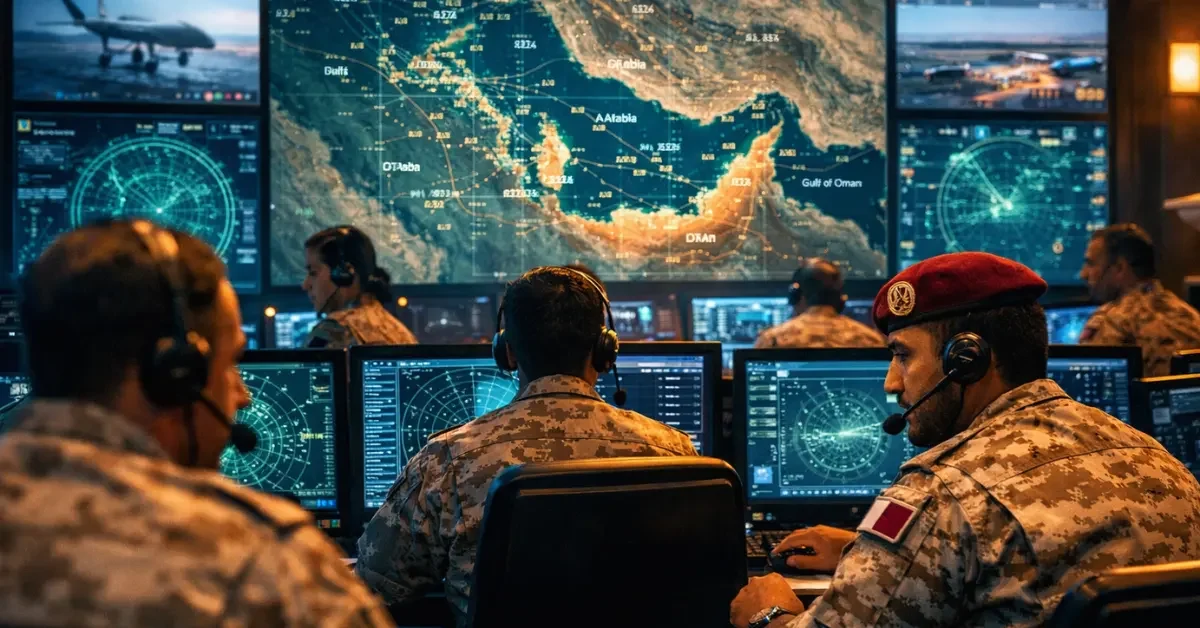
The Middle East faces a severe military escalation after Qatar announced its armed forces successfully intercepted a major aerial assault launched by Iran. On Monday, the Qatari Defense Ministry confirmed that its military shot down two Iranian fighter jets and destroyed a dozen additional projectiles, including ballistic missiles and drones. This significant confrontation marks a dangerous new phase in the expanding regional crisis, following recent military engagements involving the United States, Israel, and Iran.
The downing of the Iranian fighter jets represents a critical moment in the ongoing Gulf conflict. Qatari officials condemned the offensive as a reckless and irresponsible act of aggression against their sovereign territory. As tensions multiply across the broader Middle East, the swift military response by Doha highlights the heightened state of alert among Gulf nations.
Comprehensive Aerial Defense Operation
The aerial attack on Qatar involved multiple types of military hardware targeting various locations across the country. According to the Qatari Defense Ministry, the incoming threat included two Sukhoi Su-24 fighter jets approaching from Iranian airspace. The Qatar Amiri Air Force engaged and successfully downed both of the advancing aircraft in a decisive defensive maneuver.
In addition to the fighter jets, the Iranian assault featured a coordinated barrage of unmanned aerial vehicles and high-speed missiles. Qatari air defense systems tracked and intercepted seven ballistic missiles before they could strike their intended targets. Furthermore, five drones were destroyed through a joint effort by the air force and the Amiri Naval Forces. The simultaneous deployment of naval and air assets highlights the integrated nature of the nation’s defense grid.
Military officials stated that the complex threats were addressed immediately upon detection. The defense forces executed pre-established operational plans to neutralize all twelve projectiles and the two jets high in the sky. The Defense Ministry confirmed that no missiles or drones reached their destinations, preventing potential widespread damage to civilian infrastructure or loss of life.
Regional Retaliation and Expanding Crisis
This aggressive military maneuver by Tehran did not occur in isolation. The assault on Qatar is part of a broader wave of retaliatory strikes executed by Iran throughout the region. These Iranian counterattacks are a direct response to recent military assaults carried out by the United States and Israel against Iranian military installations. Those US-Israeli strikes, which began over the weekend, resulted in numerous casualties across Iran.
Rather than limiting its response to a direct conflict with Washington and Jerusalem, Tehran has expanded its offensive operations across the Gulf. In recent days, Iran has launched similar strikes targeting sovereign territories in Saudi Arabia, the United Arab Emirates, and other neighboring nations. This widespread retaliation has fueled deep concerns that the current hostilities could spiral into a comprehensive regional war.
Military analysts and regional correspondents have noted the severe implications of the Monday interceptions. Reporting from Doha, Al Jazeera’s Zein Basravi described the downing of the Sukhoi Su-24 aircraft as a massive military escalation. Basravi pointed out that the introduction of air-to-air combat signifies a serious intensification of a conflict that has rapidly deteriorated over just three days.
International Condemnation and Domestic Reassurance
The expanding scope of the conflict has drawn sharp criticism from the international community. On Sunday, a coalition of regional nations and the United States issued a collective statement denouncing Tehran’s military actions. The coalition labeled the barrage of drone and missile strikes as indiscriminate and reckless.
The joint statement emphasized that Iran’s unwarranted aggression directly endangers civilian populations and threatens to damage essential infrastructure across the Middle East. The allied nations firmly affirmed their inherent right to self-defense in the face of these continuous cross-border attacks.
Domestically, the Qatari government has moved to reassure its population following the unprecedented aerial engagement. The Defense Ministry emphasized that the Qatar Armed Forces possess the complete military capabilities required to protect the nation’s borders, safeguard its sovereignty, and respond firmly to any external threats.
Authorities have urged all citizens, residents, and visitors within the country to remain calm as the situation develops. The government advised the public to strictly follow instructions issued by state security agencies and to rely exclusively on official channels for updates regarding the conflict.
