

Israel’s military says it has recovered and identified the remains of Ran Gvili, an Israeli police sergeant described as the last hostage held in Gaza. The recovery followed a search operation in northern Gaza and came as Israel’s leaders framed the moment as the end of the country’s long-running hostage crisis and a turning point heading into the next phase of the Gaza ceasefire.
Gvili’s remains were recovered on January 26, according to a report that cited an Israel Defense Forces (IDF) statement. The same report said the process of identification was completed in Israel by the Israeli National Institute of Forensic Medicine.
What Israel says happened
A report on the recovery said Israeli forces found Gvili’s body in northern Gaza, and that the IDF had been searching for him throughout January. It said the IDF’s 3rd Alexandroni Brigade, a reserve infantry unit, led the search along with elements of the Yahalom engineering unit, citing an Israeli media report.
The operation began over a weekend in the Shuja’iyya area, according to that same account, which also said more than 250 bodies were examined during the activity. It added that 20 military dentists took part in examining bodies in the area of a cemetery.
The report said the return of Gvili came 843 days after Hamas began the war with an attack on Israel on October 7, 2023, and described him as one of 251 hostages held in Gaza. It also said US President Donald Trump had stated on January 21 at a White House briefing that “we think we know” the location of Gvili’s remains.
Ceasefire phase and Rafah crossing focus
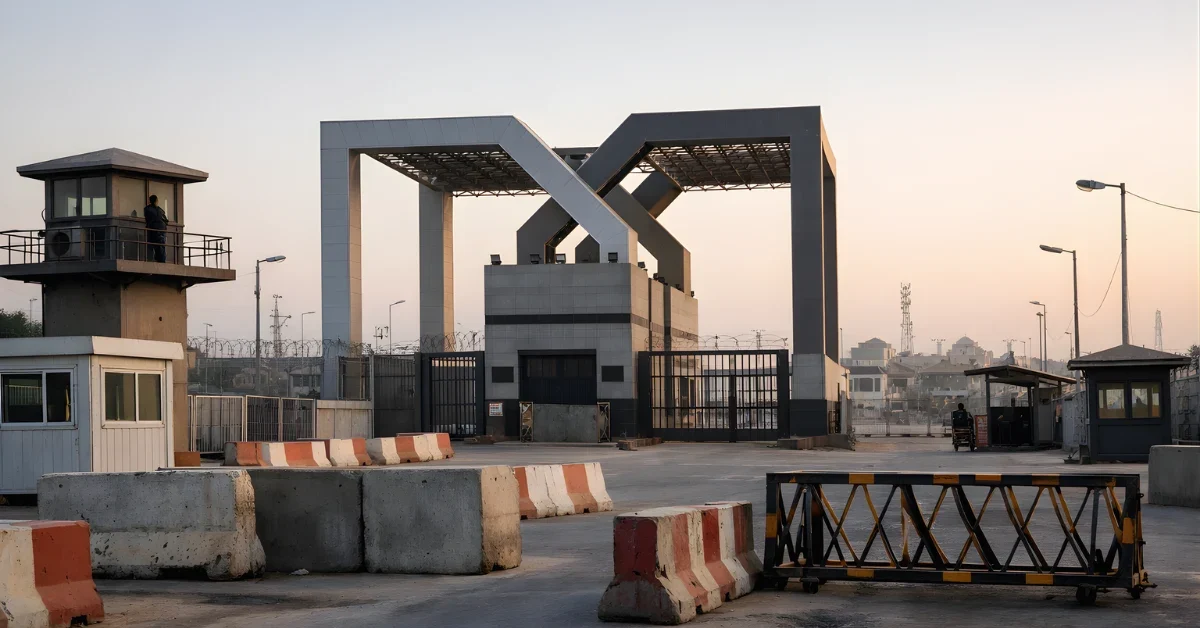
The same report said Gvili’s recovery “sets the stage” for a second phase of the ceasefire, and highlighted the Rafah crossing on Gaza’s border with Egypt as a key element. It said the crossing has been closed since the war began in 2023, and reported that the IDF has controlled the Gaza side since May 2024 after Israeli forces pushed Hamas out of Rafah.
It also quoted the office of Israeli Prime Minister Benjamin Netanyahu as saying Israel had agreed to a limited reopening of the Rafah Crossing for pedestrian passage only, subject to a full Israeli inspection mechanism, as part of President Trump’s “20-point plan.” The same report said Nikolay Mladenov, described as the Board of Peace’s Gaza envoy, wrote on X on January 22 that an agreement had been reached regarding preparation for reopening Rafah.
In a separate press conference described as taking place on Tuesday evening after the return of Gvili’s body, Netanyahu said the Rafah Border Crossing “will be open in both directions” when it resumes operations soon. He said he did not know the exact number of pedestrians who would be allowed into Gaza each day, but estimated “50 people plus family members coming in.”
Netanyahu also said Israel would not prevent anyone from leaving, while stressing that the crossing would not be opened for goods and that those who pass through would be checked “thoroughly” by Israel. He said the opening was agreed to under Trump’s Gaza plan and was conditional on Hamas meeting its obligations in the first phase, which he said had now been achieved with the return of Gvili.
Netanyahu’s line on rebuilding Gaza
At the same press conference, Netanyahu repeated that Israel would not allow Gaza’s reconstruction before armed groups in the Strip disarm. He said Israel was now focused on what he called two remaining missions: dismantling Hamas’s weapons and demilitarizing Gaza of arms and tunnels.
Netanyahu said further Israeli troop withdrawals from Gaza are tied to Hamas’s disarmament and the demilitarization of the enclave under the plan, and he insisted that reconstruction can only happen after demilitarization. He described two possible routes to Hamas disarmament—an “easy way” or a “hard way”—and said that, in his view, it would happen either way.
Netanyahu also said Israel would maintain security control over Gaza and the West Bank, describing that control as extending “from the Jordan River to the sea,” and said a Palestinian state in Gaza “will not happen.” He further said he would not allow Turkish or Qatari soldiers into Gaza, in comments tied to a body meant to oversee postwar governance.
US-linked plans and next steps
A report on the recovery said the return of Gvili’s body came about a week and a half after the White House announced that the Gaza ceasefire was moving to a new phase, and several days after the formation of a new US-backed Board of Peace that it said is expected to play a role in rebuilding Gaza. The same report also cited an Axios interview in which Trump said Hamas helped locate the remains of the last Israeli hostage, and it said Trump called on Hamas to follow through on a commitment to disarm.
It also reported that US envoys Jared Kushner and Steve Witkoff arrived in Israel on January 24 for a meeting with Netanyahu, and said Kushner presented details of a Gaza reconstruction plan that it attributed to businessperson Yakir Gabay. That account said the plan envisioned Gaza being transformed through construction and city planning, including the creation of a new airport and new port facilities.
Netanyahu used the press conference to address domestic politics as well, discouraging early elections amid a coalition crisis and criticizing investigations involving close aides. He also repeated a warning that Israel would respond with force if attacked by Iran, and he commented on reports and speculation around US decisions regarding Iran without detailing specific actions.
On the hostage issue, Netanyahu thanked multiple Israeli security bodies and President Trump, and said he believed a combination of military and diplomatic pressure could bring all hostages home. In the same report, opposition leader Yair Lapid criticized Netanyahu for taking credit and said those seeking credit must also take responsibility for the dead and for what he called the greatest disaster to befall the Jewish people since the Holocaust, referring to the October 7, 2023, attack.
The press conference report also said Israel released about 4,000 Palestinian security prisoners and other detainees, along with bodies of Palestinian terrorists, in exchange for Israeli hostages returned by Hamas. Another report on developments said Reuters noted that Hamas is seeking to integrate its police forces into a new police force expected to emerge in the territory.
