

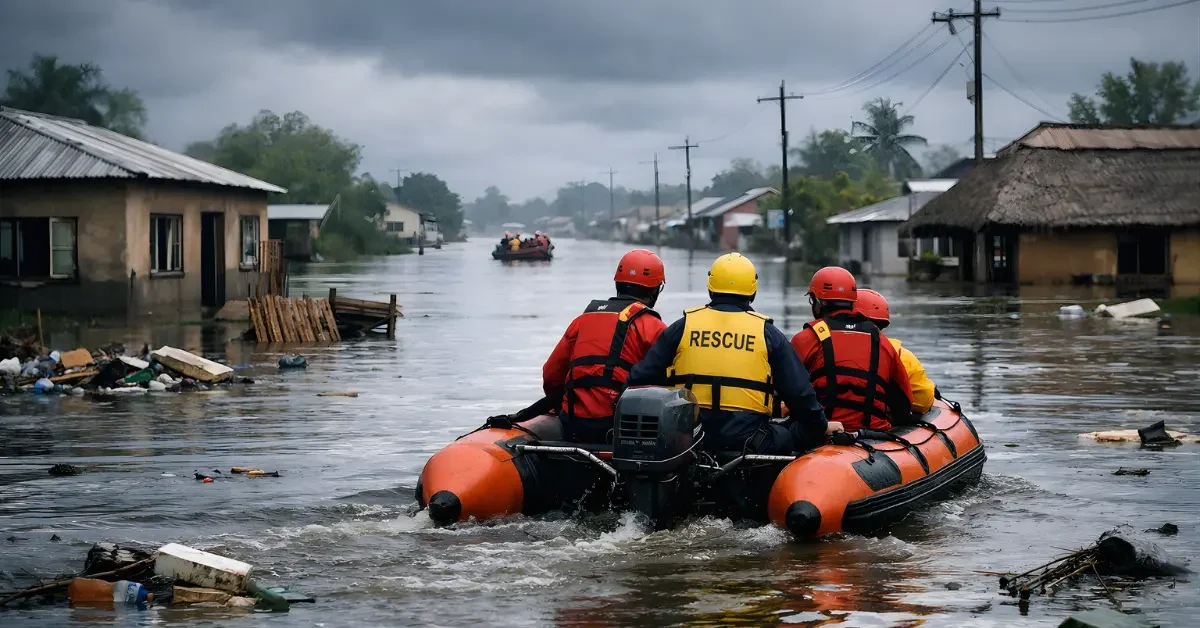
Torrential rain and widespread flooding have killed more than 100 people across southern Africa, triggering evacuations and rescue operations as officials warn that more destructive weather may still be ahead. Weeks of heavy rainfall have hit South Africa, Mozambique, and Zimbabwe, overwhelming rivers and infrastructure and leaving some communities cut off.
In South Africa, authorities said flooding in the northern provinces of Limpopo and Mpumalanga killed at least 30 people. Rescue efforts have included army helicopters, with residents reported trapped on rooftops and in trees as swollen rivers moved through towns and villages.
Death tolls reported across the region
Officials in Zimbabwe said at least 70 people have died since the start of the year, with more than 1,000 homes destroyed and damage reported to schools, roads, and bridges. Mozambique’s disaster management authorities reported 103 deaths during an unusually severe rainy season since late last year, including deaths linked to flooding, lightning strikes, infrastructure collapse, and a cholera outbreak connected to contaminated water supplies.
Weather services across southern Africa have issued further alerts, raising concerns about additional flooding in the coming period. The United States Famine Early Warning System said flooding was reported or expected in at least seven southern African countries and noted it may be linked to the La Niña phenomenon, which often brings heavier rainfall to the region.
South Africa: rescues and damage in Limpopo
Flooding in Limpopo and Mpumalanga has driven emergency responses, including deployments to reach people stranded by rising water. The report also said security personnel were evacuated from a border checkpoint with Zimbabwe after floodwaters surrounded the area.
South African President Cyril Ramaphosa toured affected parts of Limpopo on Thursday and said the province received about 400 millimetres (16 inches) of rain in less than a week. He also described one district where he said 36 houses were “wiped away from the face of the earth.”
Limpopo Premier Phophi Ramathuba said more than 1,000 homes were damaged across the province. She described the situation as “so terrible,” according to the report.
Zimbabwe: homes, schools, and roads hit
Zimbabwe’s government disaster management agency reported widespread destruction alongside the rising death toll since the start of the year. It said more than 1,000 homes were destroyed and that schools, roads, and bridges collapsed under the force of the floods.
These impacts have added pressure on communities as floodwaters disrupt travel, access to services, and day-to-day life. Authorities across the region have warned that conditions could worsen if more heavy rain arrives.
Mozambique: severe season and growing needs
Mozambique has been described as the hardest hit, with authorities reporting 103 deaths since late last year during an unusually severe rainy season. The report said that figure includes deaths tied not only to flooding, but also to lightning strikes, infrastructure collapse, and a cholera outbreak linked to contaminated water supplies.
The World Food Programme said more than 200,000 people have been affected across Mozambique, with thousands of homes damaged and tens of thousands facing evacuation. It also warned that flooding submerged more than 70,000 hectares (173,000 acres) of crops, worsening food shortages for small-scale farmers.
Kruger park evacuations and wider climate risks
South Africa’s Kruger National Park was also hit, with about 600 tourists and staff evacuated from flood-affected camps. Park authorities said no deaths or injuries were reported there, but large areas remained inaccessible after rivers burst their banks.
The report said southern Africa has faced a series of extreme weather events in recent years, ranging from deadly cyclones to severe droughts. It also described the region as vulnerable to climate-driven disasters and fragile infrastructure.
