

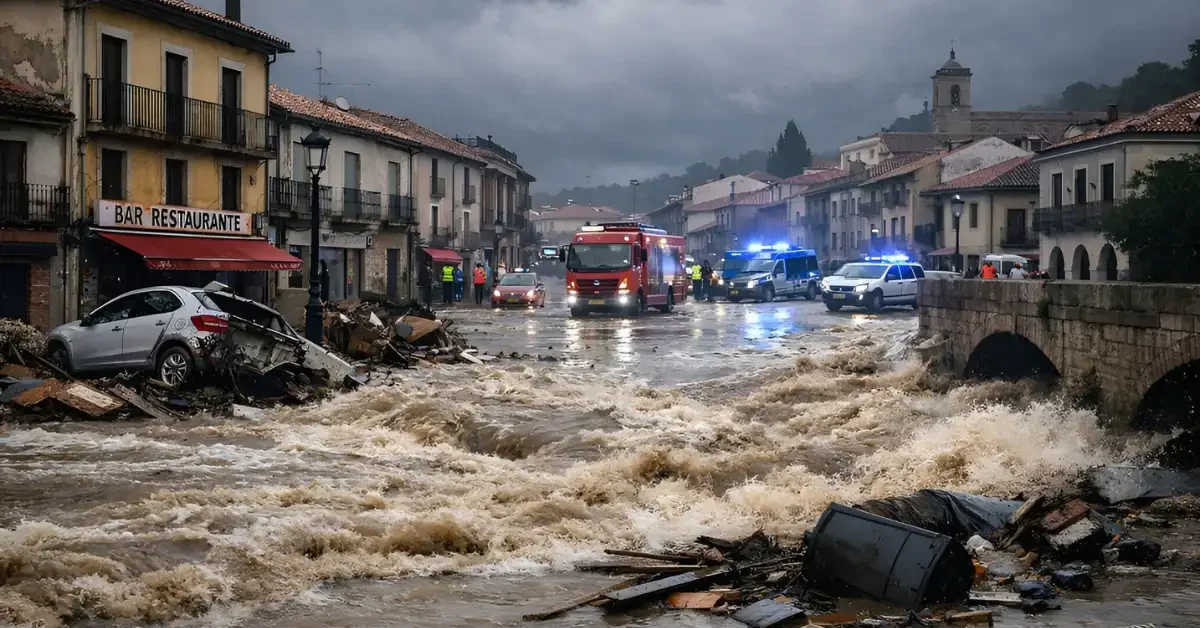
Spain and Portugal are preparing for the arrival of Storm Marta this weekend, just days after severe flooding devastated the region. Authorities have issued weather warnings as the Iberian Peninsula faces a fresh onslaught of heavy rain and strong winds. The upcoming storm threatens to worsen conditions in areas already struggling with the aftermath of torrential downpours that have claimed lives and displaced thousands of residents.
The recent flooding has already resulted in two fatalities in Portugal. One victim, a 55-year-old man, was swept away by floodwaters in the northern district of Aveiro. Another death occurred near Lisbon, where a woman died after her car was submerged in a flooded underpass. Across the border in Spain, while no deaths have been reported directly linked to this specific weather event so far, the damage has been extensive.
Widespread Displacement and Damage
The scale of the displacement is significant, with approximately 11,000 people forced to leave their homes across both nations. In Portugal alone, civil protection officials reported dozens of evacuations as rivers burst their banks. The situation is particularly critical in the central and northern regions, where the ground is already saturated from days of relentless rain.
Infrastructure has taken a heavy hit. In Spain, the Ebro River basin is a major area of concern. The rising waters have threatened towns and agricultural lands, leading to preemptive evacuations. Emergency services have been working around the clock to rescue stranded motorists and residents trapped in their homes. Roads and rail lines in both countries have been severed, causing travel chaos and isolating some communities.
Storm Marta Approaches
Meteorological agencies in Spain (AEMET) and Portugal (IPMA) have named the incoming system Storm Marta. It is expected to make landfall on Saturday night into Sunday, bringing with it a new round of hazardous weather. Forecasters predict heavy rainfall, strong gales, and rough seas along the Atlantic coast.
The primary concern is that the new rainfall will fall on ground that cannot absorb any more water. This significantly increases the risk of flash floods and landslides. River levels, which were beginning to stabilize in some areas, are expected to rise again, potentially exceeding the peaks seen earlier in the week. The risk is high for urban areas with poor drainage systems, as well as rural communities located near major waterways.
Emergency Response and Climate Context
Governments in Madrid and Lisbon have mobilized additional resources to deal with the potential impact of Storm Marta. Emergency shelters have been set up to accommodate those who cannot return home. Civil protection agencies are urging citizens to remain vigilant, avoid unnecessary travel, and stay away from coastal areas and swollen rivers.
This latest severe weather event fits a pattern of increasing extreme weather phenomena in southern Europe. Experts point out that the Mediterranean region is warming at a rate faster than the global average, which contributes to more intense and frequent storms. The succession of storms hitting the Iberian Peninsula highlights the growing challenge nations face in adapting to a volatile climate. As recovery efforts continue from the initial floods, the immediate focus remains on ensuring public safety as Storm Marta makes its presence felt.
