

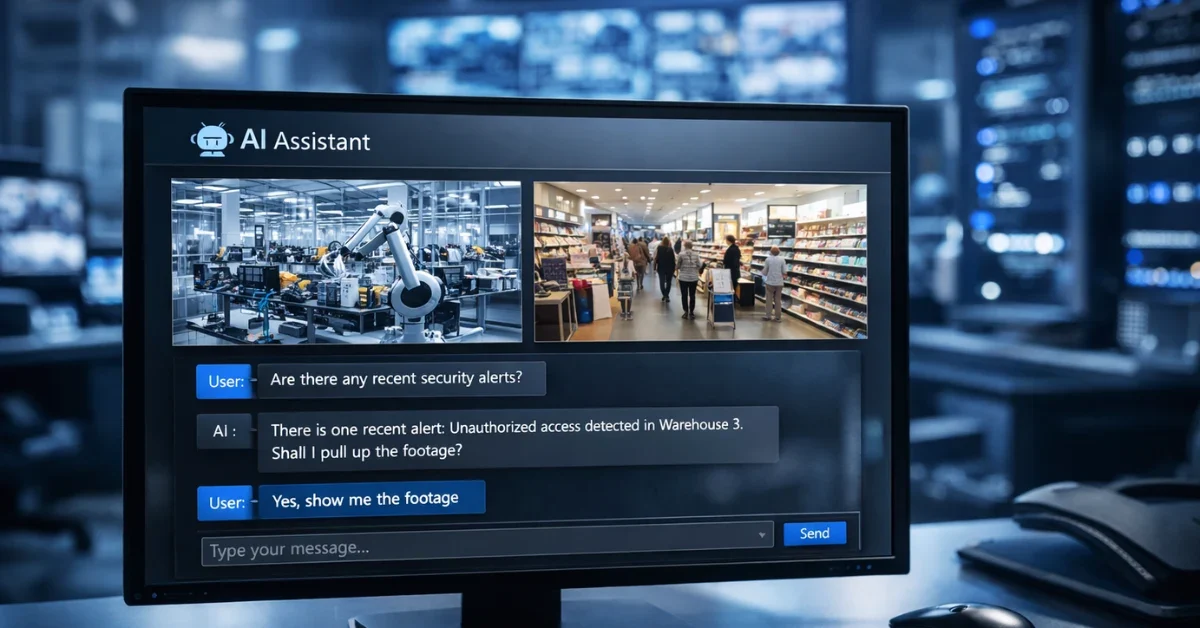
Spot AI has announced the launch of Iris, a conversational platform designed to function as the world’s first universal AI agent builder for enterprise security cameras . The no-code interface allows businesses to create customized video artificial intelligence agents using natural language prompts . “What ChatGPT did for text, Iris does for video—making powerful AI capabilities accessible without requiring technical expertise,” stated Rish Gupta, CEO and Co-Founder of Spot AI . Targeted at sectors such as manufacturing, healthcare, retail, construction, and logistics, the software is engineered to transform standard passive video feeds into proactive monitoring systems . By removing the need for coding, Iris enables facility managers to directly configure AI models tailored to their operations .
The introduction of this universal builder expands upon Spot AI’s previous release of prebuilt agents for safety and operations in the fall of 2024 . While earlier models were pre-trained to handle common workplace issues—such as missing protective equipment or unattended workstations—Iris provides the flexibility to address highly specific, mission-critical scenarios . Users train their custom agents using reinforcement learning, providing the system with positive and negative examples to refine accuracy . Once deployed, these agents do more than simply observe; they trigger immediate physical actions . Depending on custom parameters, the system can automatically halt machinery, lock access doors, or send real-time alerts when anomalies are detected .
One of the primary benefits of the new platform is the drastic reduction in deployment time for machine learning models . Previously, creating specialized video detection algorithms required dedicated artificial intelligence engineering teams with advanced degrees, thousands of manually annotated images, and weeks of complex backend development . With the conversational interface, users can now build a functional model using as few as 20 training images . However, reports vary regarding the exact timeframes involved in this technological shift . According to Spot AI’s official blog, the previous development cycle took six to eight weeks and has now been reduced to just 10 minutes . Conversely, other industry publications report that the original development time was strictly eight weeks, and the new process takes only eight minutes . In either case, the conversational approach fundamentally changes the accessibility of enterprise video analytics .
The flexibility of the platform has led to diverse use cases across multiple commercial sectors . In the manufacturing industry, companies like Silver Bay Seafoods utilize the agents to monitor production lines for product backups and fluid leaks, triggering automatic halts based on severity to prevent equipment downtime . For warehousing and distribution, Tidewater Fleet Supply relies on the technology to flag unsafe pallet stacking and unauthorized access, which has reportedly reduced both internal theft and near-miss accidents . Retail organizations, such as Bridge33 Capital, use the system to standardize surveillance across numerous properties, identifying low inventory on store shelves and spotting unauthorized after-hours entry .
Educational institutions and automotive services have also adopted the system . Eureka College uses the platform to flag unusual nighttime activity and enhance campus safety protocols, thereby reducing the time needed to resolve incidents . Meanwhile, Camel Express Car Wash relies on the agents to monitor vehicles throughout the washing process, allowing staff to quickly access relevant footage to resolve customer damage claims and disputes . Healthcare facilities use the technology to visually distinguish between patients and medical staff wearing scrubs, optimizing hallway traffic flow and reducing cross-contamination risks . Security teams can also program the system to recognize theft tools like bolt cutters in parking areas .
A key structural advantage of the platform is its compatibility with existing IP camera networks, allowing businesses to upgrade their surveillance capabilities without financing a complete hardware overhaul . Spot AI processes the video feeds on-site using its proprietary hardware, sending only essential data to the cloud . This localized processing approach minimizes latency, accelerates response times, and ensures that sensitive visual data remains secure . This security framework is particularly relevant for organizations operating under strict data compliance policies, such as hospitals and schools . With over 100 million enterprise cameras currently installed across the United States, Spot AI intends to convert this massive volume of passive recording devices into active, intelligent tools .
Spot AI, founded by former research leaders from Cisco Meraki and Samsara, serves over 1,000 corporate customers and processes daily video volumes rivaling YouTube’s upload rates . The company has secured $93 million in funding from investors including Redpoint Ventures, Bessemer Venture Partners, and Scale Venture Partners . Earlier this year, the firm introduced the Remote Security Agent, combining AI video monitoring with automated deterrence to address retail crime . Looking ahead, the company plans to update Iris with API integrations and multilingual voice command support . Spot AI Chief Executive Officer Rish Gupta will officially discuss the conversational interface during a media roundtable at the Google Cloud Next conference on April 9 .
