

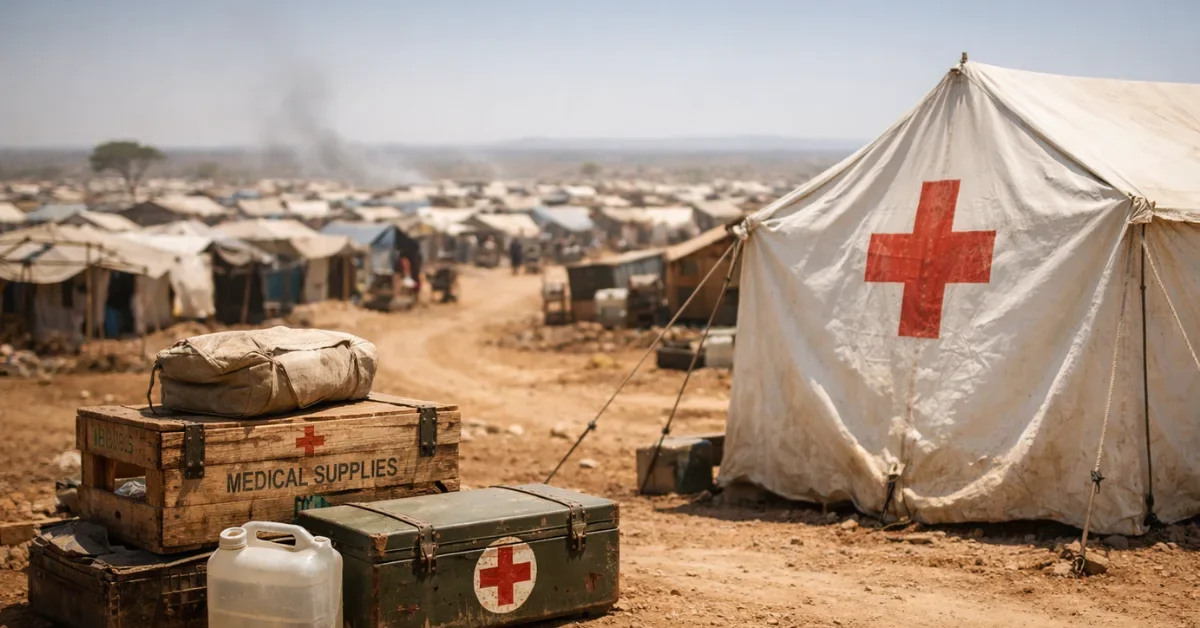
The humanitarian emergency in Sudan is deteriorating as the expanding conflict in the Middle East severely disrupts global supply chains. With vital aid deliveries delayed and funding shrinking, international organizations are issuing urgent warnings. The three-year conflict in Sudan has displaced millions, creating one of the world’s largest humanitarian crises. The ripple effects of international tensions now threaten to cut off essential healthcare and support for vulnerable populations inside Sudan and across neighboring countries.
Medical Supply Chain Disruptions
The expanding United States and Israeli war on Iran has caused significant logistical hurdles, including airspace closures and halted shipping routes through the Strait of Hormuz. These global supply chain disruptions have a direct impact on humanitarian operations. United Nations aid chief Tom Fletcher noted that the Middle East conflict is straining global humanitarian supply chains, with sub-Saharan Africa and Gaza under particular pressure.
Save the Children has warned that medical supplies designated for clinics in Sudan could run out within weeks unless shipments are rapidly rerouted. Currently, approximately $600,000 worth of essential medical supplies are stuck in ports in Dubai. These stranded supplies include critical items such as antibiotics, antimalarials, pain and fever medication, and pediatric injectable drugs.
Normally, these life-saving medicines enter via Port Sudan and are transported by road to areas like the Darfur region. However, current delays mean the clock is ticking. Willem Zuidema, global director of supply chain for Save the Children, emphasized that the organization has only a couple of weeks to implement alternative routing before the country’s medical stocks are exhausted.
Imminent Threat to Clinics
The potential supply shortage poses a severe threat to the Sudanese healthcare system. Approximately 90 government-run clinics rely entirely on the supply of medicines, vaccines, and nutritional treatments provided by Save the Children. These facilities serve roughly 400,000 patients who currently have no in-country alternative for medical care. Zuidema warned that once existing buffer stocks run out, these patients will lose access to basic healthcare support.
The World Health Organization (WHO) has also raised alarms regarding the growing shortage of medical supplies. WHO regional director Hanan Balkhy described the situation as a massive crunch in Sudan, noting a significant shortage of medical commodities reaching specific provinces.
Rising Logistics Costs and Shrinking Budgets
Compounding the crisis are skyrocketing transportation costs and reductions in donor funding. As some shipping firms reroute vessels around the Cape of Good Hope to avoid conflict zones, container freight rates have increased by 25 to 30 percent. This massive detour adds weeks to standard delivery times.
According to Zuidema, the freight disruption and financial impact could be worse than disruptions experienced during the early stages of the COVID-19 pandemic and the Ukraine war. The humanitarian system has very little buffer left following recent aid cuts. Save the Children’s country budget for Sudan was slashed by $4 million this year to $98 million. Zuidema expressed concern that while demand for assistance rises, the financial means to respond are shrinking as fuel prices drive up operational costs.
Regional Spillover of the Crisis
The conflict in Sudan has transformed into a massive regional emergency. The International Federation of Red Cross and Red Crescent Societies (IFRC) warns that the crisis is spilling over, placing immense pressure on fragile local systems in neighboring nations.
Danielle Brouwer, an IFRC communications coordinator in Juba, South Sudan, stated that the crisis is spreading across the entire region. Nearly 4.5 million people have fled Sudan, seeking refuge in Chad, Egypt, Ethiopia, South Sudan, and Uganda. Brouwer highlighted the extreme hardships faced by displaced individuals, sharing the story of a mother who walked 500 kilometers from Khartoum with two children to find safety.
Aid Delays in Neighboring Countries
Global supply disruptions from the Middle East are also delaying relief efforts for refugees in these host countries. The IFRC reported that vital shelter materials, such as tents stored in Dubai, are facing significant shipping delays. Additionally, special cholera treatment kits cannot currently be delivered to Chad.
In another instance, an IFRC food shipment intended for Sudan could not be delivered to Port Sudan. Instead, it was routed all the way through Egypt. Brouwer noted that changing the delivery route is much more costly and means people in desperate need must wait even longer to receive food.
The situation is expected to become even more dire soon. The approaching rainy season in South Sudan raises severe concerns about the increased risk of flooding and disease among refugee populations. Humanitarian organizations are calling for urgent international action, warning that without immediate support, the lives of thousands of refugees remain at extreme risk.
