

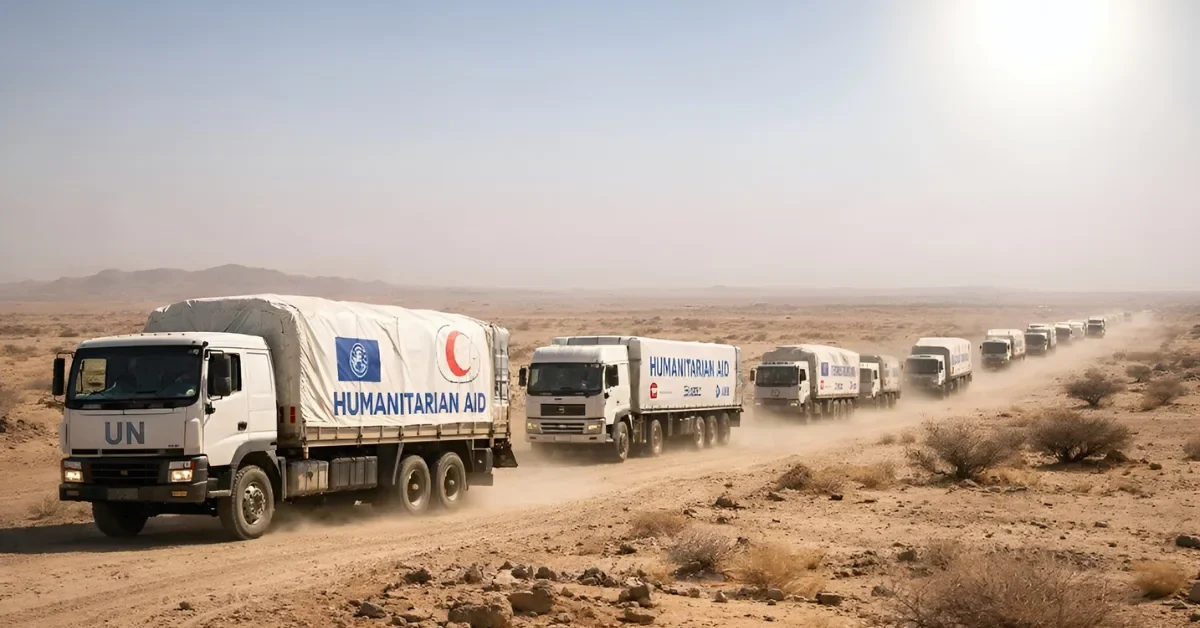
Paramilitary drone strikes in Sudan have killed at least 24 civilians and targeted convoys delivering essential food supplies, sparking international outrage. The attacks, carried out by the Rapid Support Forces (RSF), struck North Kordofan state, a region already grappling with severe instability. Among the dead were eight children, highlighting the devastating toll the ongoing conflict continues to take on vulnerable populations trying to flee the violence.
The violence unfolded in the Al-Rahad area of North Kordofan, where drones targeted a commercial truck transporting displaced families. At the same time, reports confirmed that humanitarian operations were also in the crosshairs, with drone strikes hitting trucks loaded with life-saving food assistance. The United Nations and the United States have swiftly condemned the actions, warning that targeting relief efforts will only deepen the catastrophic hunger crisis gripping the nation.
Civilians Fleeing Safety Zone Targeted
The incident in Al-Rahad involved a commercial vehicle that was carrying dozens of civilians attempting to escape the fighting. According to local authorities and statements from the Sudanese Foreign Ministry, the drone attack on this vehicle resulted in 24 confirmed deaths. The victims included eight children who were traveling with their families in search of safety.
In addition to the fatalities, at least 17 other people sustained injuries in the strike. The injured were rushed to nearby medical facilities, though the healthcare system in the region remains severely compromised due to the prolonged war. The attack on a vehicle clearly transporting non-combatants has drawn sharp criticism, with officials describing it as a flagrant violation of international laws designed to protect civilians during wartime.
The Sudanese government has squarely blamed the Rapid Support Forces for the massacre. The Foreign Ministry released a statement detailing that the victims were displaced persons, emphasizing that they were unarmed civilians fleeing a conflict zone when they were struck.
Humanitarian Aid Convoys Under Fire
Beyond the direct loss of life, the recent wave of drone strikes also targeted the very lifeline keeping millions of Sudanese people alive. The United Nations Resident and Humanitarian Coordinator in Sudan, Clementine Nkweta-Salami, confirmed that drones had attacked trucks transporting food supplies. These convoys were carrying nutrition supplies intended to help populations facing famine conditions.
The disruption of these deliveries comes at a critical moment. Aid organizations have faced repeated obstacles in reaching isolated areas where hunger is most acute. Attacks on clearly marked humanitarian convoys force agencies to halt movements, delaying vital assistance to communities that have been cut off from food and medical care for months.
Nkweta-Salami issued a strong rebuke of the incidents, stating that attacking assistance meant for vulnerable people is unacceptable. She emphasized that these supplies are often the only thing standing between civilians and starvation. The UN has repeatedly called for safe, unhindered access for aid workers, a plea that continues to be ignored as the fighting intensifies in key transit regions like North Kordofan.
International Condemnation Mounts
The international community has reacted with alarm to the escalation in attacks against both displaced people and aid workers. The United States State Department joined the UN in condemning the RSF’s actions. State Department spokesperson Matthew Miller described the attacks on humanitarian operations as unacceptable, noting that they directly hinder efforts to alleviate the suffering of the Sudanese people.
Diplomatic officials have stressed that targeting humanitarian assets constitutes a violation of international humanitarian law. The US and other global powers continue to call on both the Sudanese Armed Forces and the Rapid Support Forces to protect civilians and facilitate the flow of aid. However, the use of drones to strike commercial and relief vehicles suggests a dangerous shift in tactics that places non-combatants at even greater risk.
A Deepening Humanitarian Crisis
These attacks occur against the backdrop of a brutal war that erupted in April 2023 between the Sudanese military and the paramilitary RSF. The conflict has transformed Sudan into the site of one of the world’s worst humanitarian disasters. Millions of people have been displaced from their homes, creating the largest displacement crisis globally.
The fighting has devastated the country’s infrastructure and economy, pushing vast sections of the population to the brink of famine. North Kordofan, located between the capital Khartoum and the troubled Darfur region, has become a key battleground and transit route. As vital roads become unsafe due to drone strikes and ambushes, the ability of families to flee and aid organizations to operate is rapidly diminishing.
With the conflict showing no signs of abating, the targeting of those trying to escape and the food meant to sustain them marks a grim new chapter in the war. Aid agencies warn that without immediate guarantees of safety for humanitarian corridors, the death toll from hunger and disease could eventually surpass that of the violence itself.
