

In a major breakthrough for environmental science and medicine, researchers have directly observed the elusive tetroxide molecule for the first time . Scientists from Sweden and the United States successfully detected this short-lived, oxygen-rich species, overturning decades of theoretical assumptions . The discovery provides concrete proof of a chemical process that fundamentally shapes atmospheric chemistry, combustion, and cellular biology .
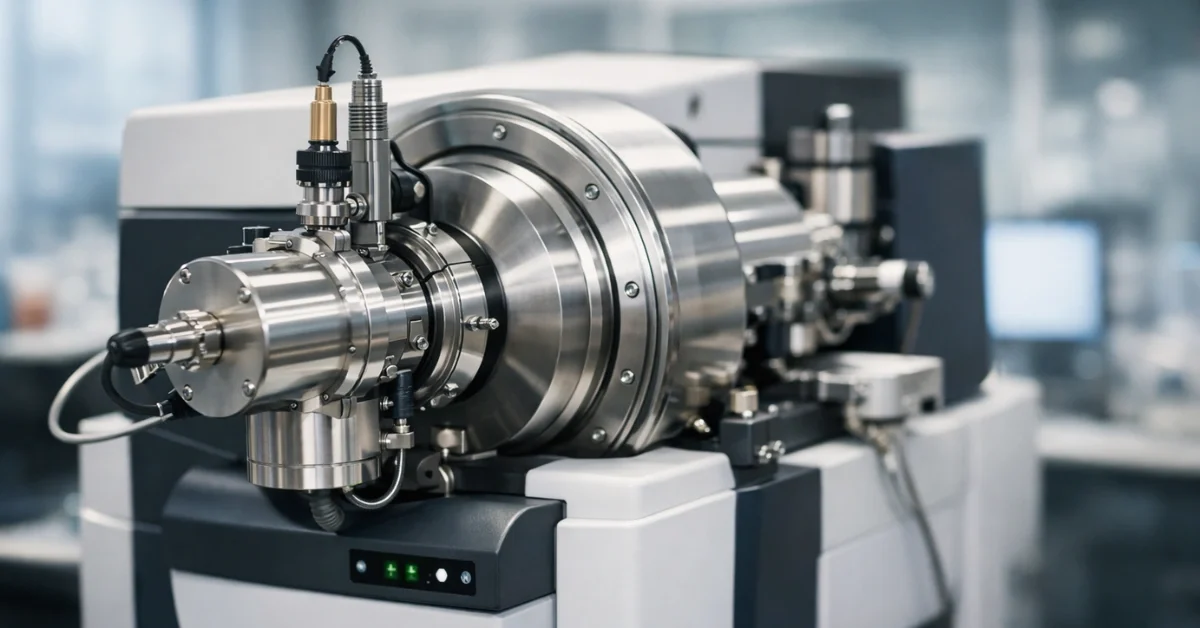
The groundbreaking findings were published in the journal Science Advances . Led by Barbara Nozière, a professor of physical chemistry at the KTH Royal Institute of Technology in Stockholm, the research team included experts from Kinetic Chemistry Research in Mountain View, California . Together, they deployed a highly refined mass-spectrometric technique to capture these unstable molecules in gas-phase radical reactions without destroying them .
The Higgs Boson of Oxidation Chemistry
Tetroxides are characterized by four consecutive oxygen atoms linking organic fragments . While their existence has been heavily theorized since the 1950s, they had never been seen directly under normal ambient conditions . Past evidence was entirely indirect, contradictory, or restricted to extreme, cold laboratory environments .
“This compound is the equivalent of the Higgs boson for oxidation chemistry,” Nozière stated . “Its existence was assumed for decades but nobody had ever seen it .”
The direct observation of the tetroxide molecule validates the decades-old Russell mechanism . Proposed in the 1950s, this chemical pathway suggests that when two organic peroxy radicals interact, they briefly form a tetroxide intermediate . This transient structure then rapidly decomposes into oxygenated products and singlet oxygen, a reactive form of oxygen that drives oxidation and energy transfer processes .
Unexpected Stability in Atmospheric Conditions
Surprisingly, the researchers discovered that tetroxides possess remarkable stability under ordinary atmospheric conditions . Instead of instantly disintegrating in warmer environments as previously assumed, these molecules can persist for measurable lifespans ranging from 0.2 to 200 milliseconds .
While this duration seems incredibly brief on a human scale, it is considered a long time in the realm of chemical kinetics . This extended lifespan allows the molecules to engage in dynamic chemical transformations in the air we breathe and inside living organisms .
“The study confirms that tetroxides can exist at room temperature, in air, without needing extremely cold conditions used in earlier experiments,” Nozière explained .
Measuring the exact lifespan of these transient intermediates helps scientists determine the speed of specific chemical reactions and identify the secondary compounds they produce . This new understanding has profound implications across multiple scientific disciplines .
Environmental and Climate Impacts
In atmospheric chemistry, the presence of relatively stable tetroxides could redefine how experts model air pollution and the lifecycle of atmospheric aerosols . Because these molecules can follow unexpected reaction steps, they may yield previously unknown oxidation products .
This insight could alter predictions about how long common pollutants, such as volatile paint solvents or particulate matter from smoke, linger in the atmosphere . These atmospheric processes directly influence climate modeling and air quality forecasts . The discovery also sheds light on everyday combustion processes . Tetroxides play an important role whenever organic compounds or carbohydrates are burned in contact with air, applying to everything from industrial car engines to the simple flame of a burning candle .
Advancements in Medical Science
Beyond the environment, the confirmation of the tetroxide molecule penetrates deeply into biochemical pathways and medical research . Inside biological systems, the Russell mechanism is integral to the generation and control of reactive oxygen species . These reactive species mediate oxidative stress, a cellular state closely linked to various diseases, including cancer and neurodegeneration .
Observing tetroxides in conditions that closely mimic physiological environments allows researchers to build more accurate models of cellular oxidative damage . According to Nozière, the findings present significant implications for medical science . The Russell mechanism is already being explored in new therapeutic approaches, and this discovery could pave the way for targeted cancer treatments that leverage controlled oxidation pathways .
Bridging a Gap in Experimental Chemistry
By capturing these transient species in real time without fragmentation, the specialized mass spectrometer utilized by the team bridged a critical gap in experimental chemistry . The methodological breakthrough will likely inspire revisions to academic textbooks, computational simulations, and kinetic models across diverse scientific fields .
The pioneering research was made possible through a grant from the European Research Council . By proving the existence of the tetroxide molecule, scientists have finally illuminated a hidden but critical molecular actor that governs the oxidative processes fundamental to life and the environment .
