

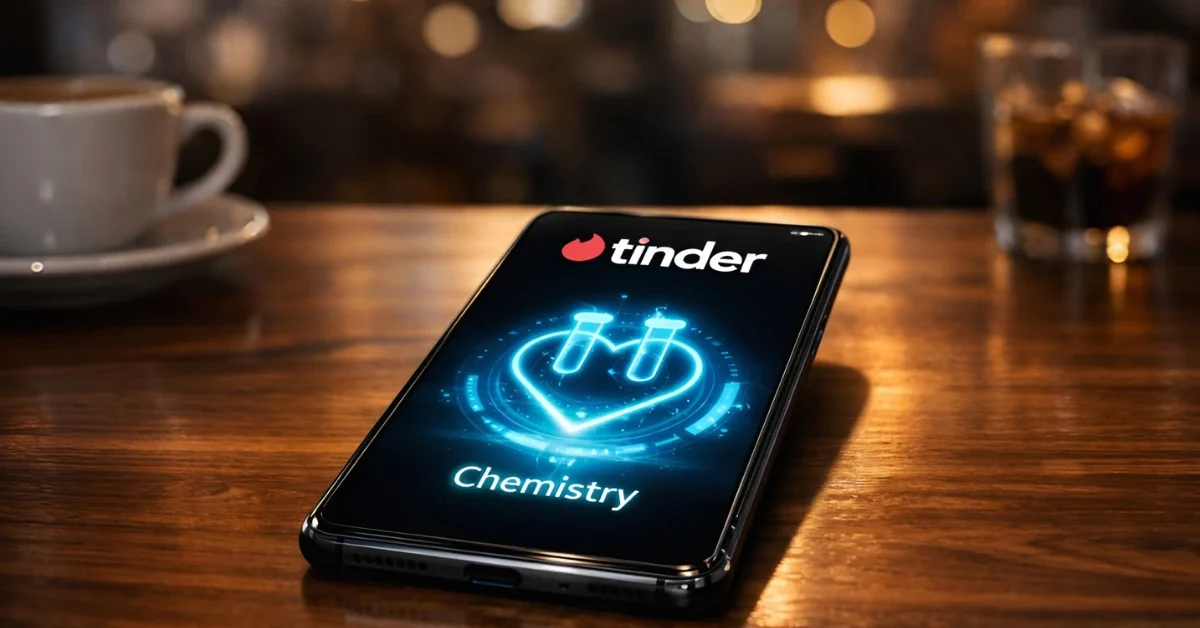
Tinder is betting on a major shift in how users connect, introducing a new artificial intelligence tool designed to combat the growing problem of “swipe fatigue.” The popular dating app, owned by Match Group, has begun testing a feature called “Chemistry” that moves away from the traditional endless swiping model. Instead, the new Tinder AI feature aims to provide a more curated experience for users who are feeling burned out by the lack of meaningful results on the platform.
Match Group CEO Spencer Rascoff announced the development during the company’s fourth-quarter 2026 earnings call, signaling a strategic pivot for the app. The “Chemistry” feature is currently being tested in Australia and represents one of the company’s most significant attempts to address declining engagement numbers and user complaints about the repetitive nature of online dating.
How the “Chemistry” Feature Works
The “Chemistry” tool functions differently from Tinder’s classic interface. Rather than presenting users with an overwhelming stack of profiles to swipe left or right on, the feature uses artificial intelligence to learn about a user’s personality and interests in greater depth.
According to reports, the feature gathers insights through a series of questions posed to the user. Additionally, with the user’s explicit permission, the AI can access the photo “Camera Roll” on their device to better understand their lifestyle and preferences. Based on this data, “Chemistry” generates a limited number of highly targeted profile recommendations.
Spencer Rascoff described this approach as an “AI way to interact with Tinder.” He explained that instead of swiping through large volumes of profiles, users receive “just a single drop or two” of curated matches. This method is designed to mimic a more natural introduction process and reduce the decision fatigue associated with modern dating apps.
Addressing the “Illusion of Choice”
The introduction of this feature comes at a critical time for Tinder, which has faced struggles with user retention and growth. The company acknowledges that the traditional swipe method—which Tinder itself popularized—often creates an “illusion of choice.” While users feel they have endless options, the reality of needing a mutual match to connect, combined with the sheer volume of profiles, has led to significant burnout.
Recent data highlights the urgency of this shift. In the fourth quarter, Tinder saw a 9 percent decline in monthly active users compared to the previous year. New registrations also fell by 5 percent. The company attributes these drops to users becoming more selective and weary of the time-consuming nature of the app. By offering fewer, more relevant matches, Tinder hopes to improve the “outcomes” for daters, particularly Gen Z users who prioritize authenticity and relevance over volume.
Financial Turnaround and Strategic Shifts
Despite the challenges in user growth for its flagship app, Match Group reported strong financial results that beat Wall Street expectations. The company posted fourth-quarter revenue of $878 million, surpassing analyst estimates of roughly $871.3 million. Following the news, Match Group shares surged in extended trading. Reuters reported the stock rose about 12 percent, while other sources noted gains of over 7 percent.
Looking ahead, the company forecast first-quarter revenue between $850 million and $860 million, a range that also sits above market predictions. Spencer Rascoff, who took over as CEO about a year ago, stated that while the company expects year-over-year direct revenue declines for Tinder in 2026 to be similar to 2025, these product changes are essential for long-term sustainable growth.
Hinge and International Growth
While Tinder reworks its core experience, Match Group’s other major app, Hinge, continues to be a bright spot in the portfolio. Hinge saw its paying user base grow by 17 percent to 1.9 million in the fourth quarter. The app has benefited from successful international expansions, including recent launches in Mexico and Brazil in 2025.
The company plans to continue this momentum in 2026, with Hinge set to expand into Argentina, Chile, and Peru. Additionally, Match Group intends to increase its investment in the Indian market for Hinge, capitalizing on the app’s resonance with users looking for serious relationships.
Enhancing Safety and Trust
Beyond the new matching algorithms, Match Group is also investing heavily in safety features to rebuild user trust. The company highlighted the success of its “Face Check” verification system, which uses facial recognition to confirm user identities. According to the company, this feature has led to a reduction of more than 50 percent in interactions with “bad actors” on the platform.
This focus on safety, combined with the new AI-driven “Chemistry” feature, reflects a broader strategy to improve the quality of the dating ecosystem. As the company navigates a turnaround, the success of these initiatives will be key to reversing the trends of swipe fatigue and subscriber decline.
