

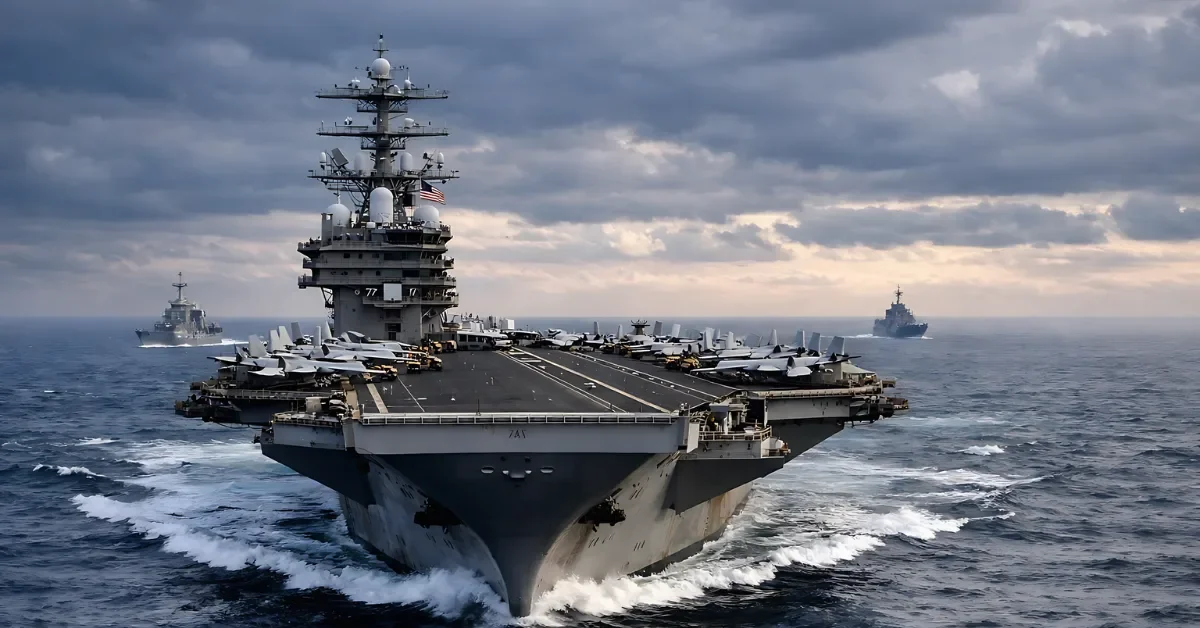
President Donald Trump is weighing possible U.S. action toward Iran as protests and government crackdowns continue to draw global attention, with options ranging from military strikes to cyber and information operations. Several reports also describe a growing U.S. military presence in the region, including the arrival of the aircraft carrier USS Abraham Lincoln in the U.S. Central Command area of responsibility.
The debate inside Washington includes whether military action would help or hurt Iran’s protest movement, according to accounts that describe disagreement among officials. One report says some in the Trump administration believe major kinetic action now could undercut the protests, even as strikes on Iranian targets are among the options being discussed.
Military and non-military options on the table
A report citing two senior U.S. officials says Trump is considering “several options” to support protests in Iran and increase pressure on the country’s leadership. That same report says U.S. military strikes on Iranian targets are among the options under discussion, while other ideas include cyberattacks and information operations targeting the Iranian government.
In a separate TV segment, a senior White House correspondent said the president is “keeping all of the military options on the table,” describing choices that could include cyber actions and more sanctions. The segment also said Trump is watching the situation closely and is concerned about the loss of life.
Protests and disputed death tolls
One report says Israeli and U.S. officials believe the true death toll from the protests is likely “several times higher” than the 116 reported by the Human Rights Activists News Agency (HRANA) on a Saturday referenced in that story. The same report quotes an Israeli defense official as saying that “after Thursday” the Iranian regime was significantly concerned and reassessed the situation.
Accounts differ on the scale of deaths described in other coverage. In the TV segment, one message relayed by the correspondent said “hundreds” of protesters had been killed, while a guest on the program said that “by some accounts” the regime had already killed 3,000 people.
U.S. deployments and Iran warnings
One video report says the USS Abraham Lincoln aircraft carrier entered the U.S. Central Command area of responsibility by January 26, and that it was accompanied by three warships equipped with Tomahawk missiles. The same report also says the U.S. has sent about a dozen F-15E fighter jets to the Middle East and dispatched additional Patriot and THAAD air defense systems to protect U.S. troops.
The Jerusalem Post also reports that the USS Abraham Lincoln and its strike group have arrived in the U.S. Central Command area of responsibility to provide Trump with capabilities and options as he considers how to act against Iran. The Hindustan Times video report further says Iran has warned it is keeping “total surveillance” of American assets and claims there would be “no element of surprise,” while also describing a threat to sink the USS Abraham Lincoln if the U.S. launches military action.
Pressure tactics and protest timing
The Jerusalem Post reports that one challenge for Trump is that protests have “significantly diminished” after weeks of killings by the regime inside Iran. The same article says Trump has requested a “focused and meaningful operation” and indicates he has no desire to become embroiled in prolonged warfare, adding: “no boots on the ground.”
Among options, the Jerusalem Post reports that striking Basij facilities and individuals who ordered killings and suppression of protests is being considered. It also reports that the administration is examining a possible naval blockade to prevent Iran from exporting oil, arguing that economic pressure could encourage demonstrations and destabilize the regime from within.
The Jerusalem Post additionally notes that, in a few days, Iranians will mark the 40th day since the deaths of relatives and friends killed during the suppression, describing the day as Arbaeen in Shi’ite Islam and saying it has symbolic importance. It points to the case of Mahsa Amini—described in the same article as having been beaten to death for not wearing her hijab properly—and says protests on the 40th day in her case were far more intense, suggesting unrest could return.
