

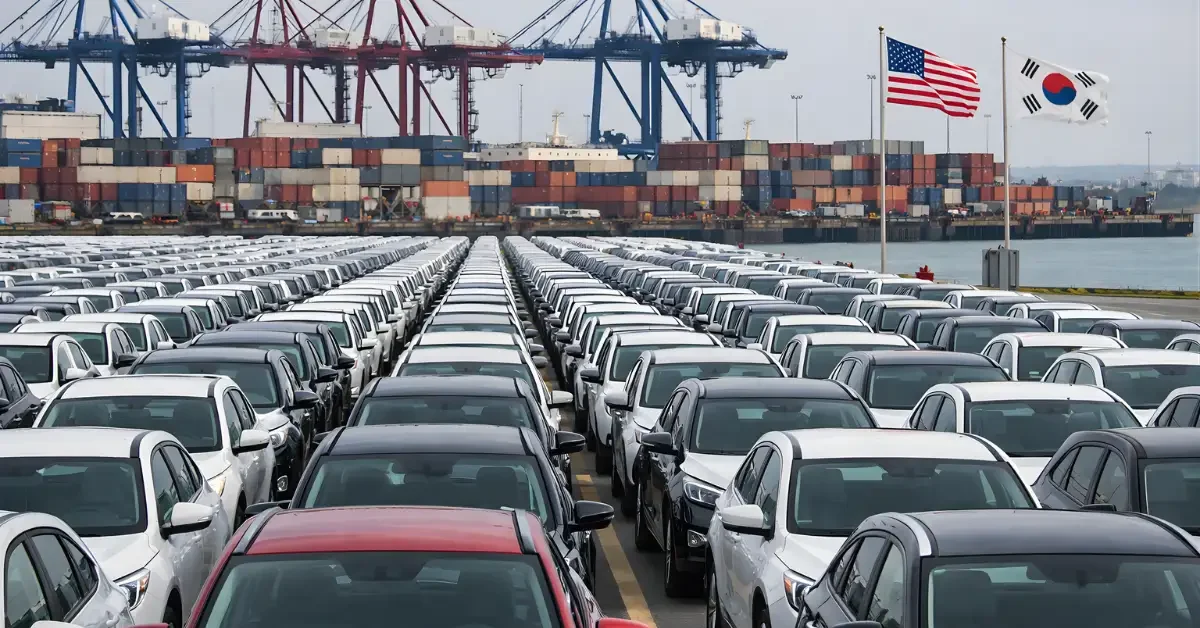
President Donald Trump says the United States is raising tariffs on certain South Korean imports to 25%, up from 15%, pointing to what he described as delays by South Korea’s legislature in approving a trade agreement. The move targets categories Trump listed as autos, lumber and pharmaceuticals, and he also referred to “all other reciprocal tariffs” in his public post.
Trump announced the tariff increase on social media, saying South Korea’s legislature was “not living up” to its deal with the United States. Reuters reported that Trump wrote he was raising the tariffs to 25% on goods tied to automobiles, lumber and pharmaceuticals.
It is not yet clear whether the new 25% tariff rate has already taken effect. CNN reported that this point was uncertain following Trump’s announcement.
What Trump said and what’s covered
In his message, Trump tied the tariff hike directly to the South Korean legislature’s handling of the trade agreement. He said the legislature had not enacted what he called a “Historic Trade Agreement,” and he framed the tariff increase as a response.
The items Trump mentioned include automobiles, lumber and pharmaceuticals. The BBC also described the tariff change as applying to “various items,” including automobiles, timber and pharmaceuticals, and said Trump described the new level as 25%, up from 15%.
South Korea’s response and request for talks
South Korea said it had not received an official notification about a tariff increase on specific goods, according to the BBC. The BBC also reported that South Korea asked for quick discussions with Washington after Trump’s announcement.
This response suggests there may still be direct talks ahead, even as the tariff announcement drew attention in both countries. The BBC did not describe any detailed outcome from the request, and it said the tariff notice had not been formally delivered to South Korea at the time of its report.
The trade deal at the center of the dispute
The tariff dispute is closely tied to a trade agreement reached last year between Washington and Seoul. The BBC reported that the agreement was finalized in October and included a commitment from South Korea to invest $350 billion in the United States, with a portion set aside for shipbuilding.
The BBC also reported that, the following month, the two countries agreed the US would lower tariffs on certain products once South Korea began the approval process for the deal. According to the BBC, the agreement was presented to South Korea’s National Assembly on November 26 and was still under review, with local media predicting passage in February.
CNN described an earlier milestone as well, reporting that Trump had announced a trade agreement with South Korea in July that prevented tariffs from rising from 10% to 25%. CNN said that agreement included favorable rates for imported vehicles, among other products.
How tariffs are applied and what happens next
Tariffs are paid by companies that import goods, not by the exporting country’s government directly. The BBC explained that, in this case, American businesses importing products from South Korea would face a 25% levy.
CNN also reported that Trump’s broader authority to impose wide-ranging, country-specific tariffs may be affected by a major tariff case under review by the US Supreme Court. CNN said the case is expected to examine whether Trump had the legal authority to enforce extensive tariffs on a country-by-country basis, and it noted that an adverse ruling could make it harder for the administration to quickly change tariff rates across all products from particular countries.
Reuters’ report included a photo description showing Kia Motors vehicles positioned for export at a port in Pyeongtaek, South Korea, underscoring the importance of autos in the trade relationship. For now, the key open questions remain whether the higher 25% rate is already in effect and how quickly Washington and Seoul will move into formal talks after South Korea’s request for discussions.
