

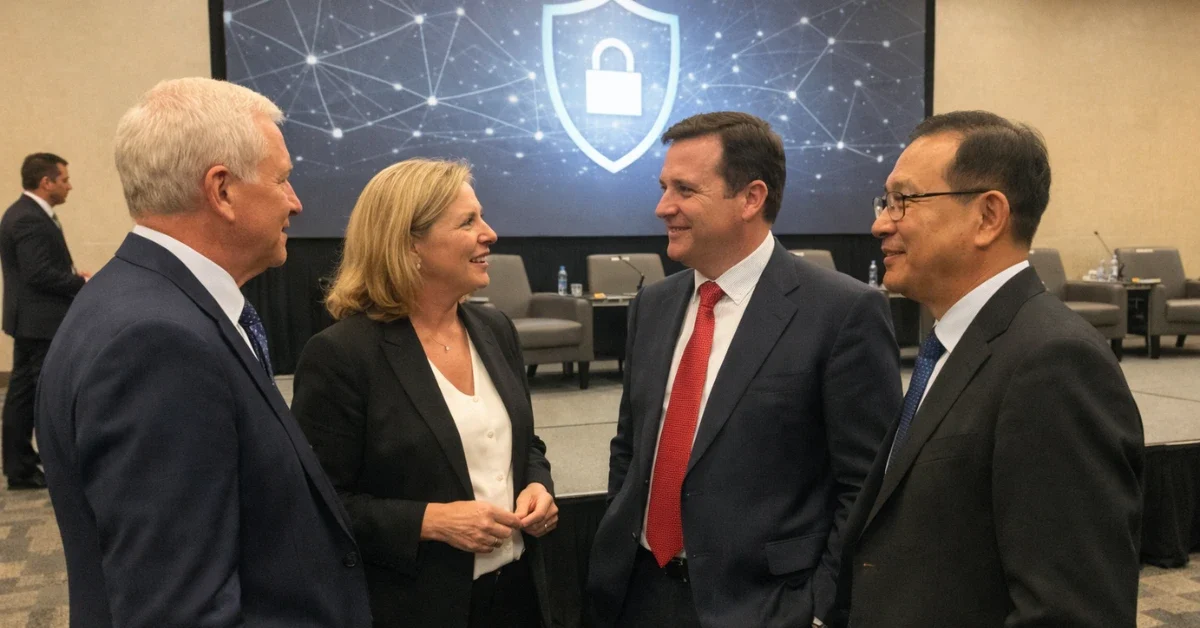
Microsoft and Ericsson are leading a new group called the Trusted Tech Alliance (TTA), launched on Feb. 13 at the Munich Security Conference by 15 companies from Africa, Asia, Europe, and North America. The companies say the alliance is built around shared principles meant to define a “trusted technology stack,” spanning areas from connectivity and cloud infrastructure to semiconductors, software, and AI.
The alliance’s stated goal is to set common commitments on transparency, security, and data protection, regardless of a supplier’s nationality. The launch comes as governments and customers seek more reliability and resilience from technology providers, while skepticism about digital technologies and their potential negative impact continues, according to the alliance’s announcement.
What the alliance says it will do
TTA members say they will work across borders and align on “clear, verifiable practices and principles” that show how technology can be secure, reliable, and responsibly operated wherever it is built or deployed. The companies also say they plan to work with governments and customers so the benefits of emerging technologies can support broader public trust, while also driving job creation and economic growth.
The alliance lists five principles that participating companies have agreed to follow. Those principles cover transparent corporate governance and ethical conduct; operational transparency, secure development, and independent assessment; robust supply chain and security oversight; an open, cooperative, inclusive, and resilient digital ecosystem; and respect for the rule of law and data protection.
In the Microsoft announcement, Brad Smith, vice chair and president of Microsoft, said the effort is “based not on the nationality of the provider but on shared commitments to customers.” In the same statement, Ericsson CEO Börje Ekholm said, “No single company or a country can build a secure and trusted digital stack alone,” adding that trust and security “can only be achieved together.”
Who is in the group
As of the launch, the alliance’s signatories are Anthropic, AWS, Cassava Technologies, Cohere, Ericsson, Google Cloud, Hanwha, Jio Platforms, Microsoft, Nokia, Nscale, NTT, Rapidus, Saab, and SAP. The companies describe the group as spanning the full tech stack, including connectivity, cloud infrastructure, semiconductors, software, and artificial intelligence.
Several member executives framed the alliance around trust, resilience, and openness in how technology is developed and operated. Jio Platforms CEO Kiran Thomas said Jio is joining to “advance common standards and verifiable practices across the technology stack,” and described a focus on strengthening resilience and building confidence in next-generation connectivity, cloud, and AI systems.
Nokia President and CEO Justin Hotard said AI is “raising the bar for trust,” and that networks and critical infrastructure must be “secure, resilient, and interoperable by design.” Google Cloud, Amazon, SAP, and other signatories also shared statements in the launch announcements describing goals tied to customer choice, sovereignty requirements, collaboration, and trust.
Why digital trust is a growing issue
In a Reuters interview published by Channel News Asia, Smith said the world is in a period when “many governments and countries are feeling pressure to create stronger technology borders” and to focus more on “digital sovereignty.” The same report said the initiative is a concerted move by global companies to address concerns about where data is stored, and it linked those concerns to a more isolationist United States under U.S. President Donald Trump, which has sharpened Europe’s and Asia’s focus on digital sovereignty.
The Channel News Asia report also noted that governments have considered new regulations and domestic investment strategies to reduce digital dependence on the United States and other foreign suppliers. Ekholm, in comments reported by Reuters, questioned how “sovereignty” is used in technology debates and said, “There are no countries on this planet that alone can be fully sovereign.”
How the alliance plans to work
The Reuters report said Microsoft and Ericsson began discussing the alliance’s formation in the middle of last year. Smith told Reuters that companies joining the alliance will self-attest to adhering to the principles, and he said the principles also include provisions for independent assessments.
In the alliance announcements, the companies say the commitments require strong governance and ethical conduct, secure development, responsible lifecycle management, and contractually binding security and quality assurances with suppliers. The group also says members will hold suppliers to strong global security standards, support an open digital environment, and continue growing the community around a trusted, interoperable, and open technology stack.
