

Global outrage is rapidly intensifying following a devastating airstrike that destroyed the Shajareh Tayyebeh girls’ elementary school in southern Iran. The catastrophic Iran school bombing took place in the city of Minab on February 28, claiming the lives of at least 168 children and leaving only three surviving students.
The deadly incident occurred on the opening day of a broader military campaign initiated by the United States and Israel. In response to the escalating violence, an independent United Nations fact-finding mission has launched a probe, officially declaring the military strikes a clear violation of the UN Charter and international humanitarian law.
Casualties and Devastation in Minab
The missile strike leveled a learning facility that primarily served young girls between the ages of seven and twelve. According to Iranian state media and the UN’s education agency, the explosion killed over 160 students and teachers. Official government spokespeople reported that the blast also severely injured at least 95 other people in the immediate vicinity.
The human toll of the attack has shocked the international community. On-the-ground reports confirm the horrifying reality that only three students managed to survive the direct hit on the Minab facility. In addition to the southern strike, Iranian news agencies noted that three other students lost their lives in separate bombings that hit the capital city of Tehran and regions in northern Iran.
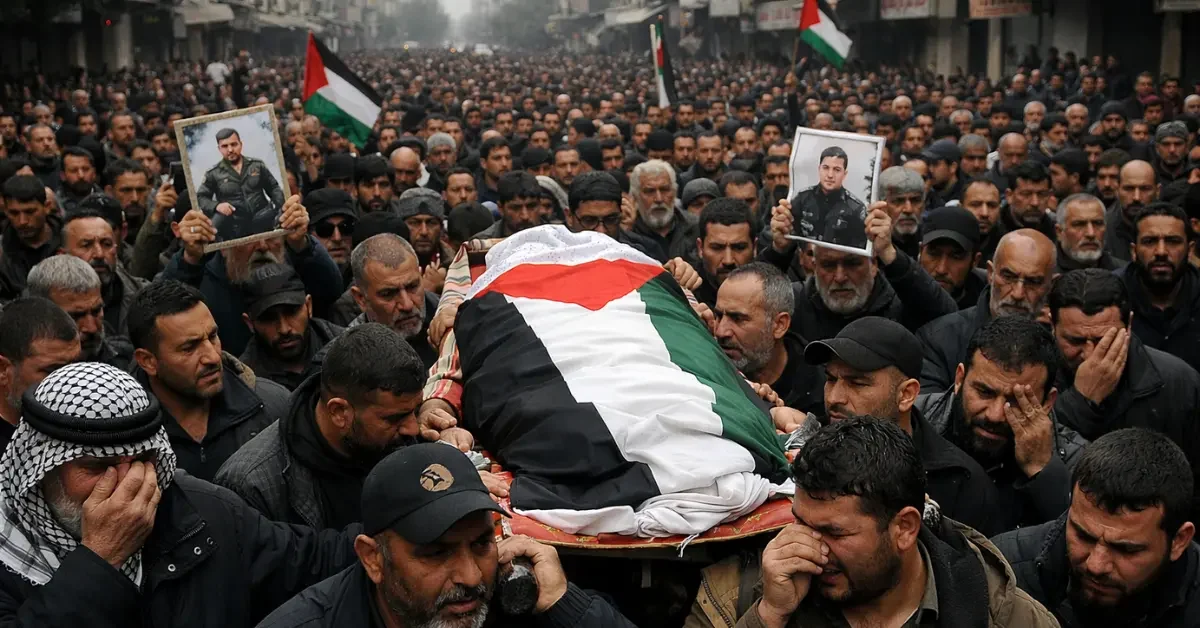
In the harrowing aftermath, thousands of grieving citizens gathered in the streets for emotional funeral processions. Video footage broadcast by state news agencies captured men weeping openly as they carried the victims to their final resting places. Many mourners were seen holding the Iranian flag alongside portraits of Supreme Leader Ayatollah Ali Khamenei, who was also killed during the initial wave of attacks.
UN Probe Condemns the Attacks
An independent United Nations fact-finding mission released a scathing report assessing the legality of the escalating Middle Eastern conflict. The UN declared that the initial US and Israeli airstrikes, which targeted Iranian nuclear facilities, military installations, and senior leadership, fundamentally breached the UN Charter. The UN Charter strictly prohibits the use of force against the territorial integrity of any state.
The UN probe did not solely focus on the actions of the United States and Israel. Investigators also condemned Iran’s subsequent retaliatory actions. Following the death of Ayatollah Ali Khamenei, Iran launched widespread missile barrages targeting American assets and regional allies. The UN deemed these retaliatory strikes equally unlawful under international regulations.
Addressing the Minab tragedy specifically, UN High Commissioner for Human Rights Volker Türk demanded a thorough and impartial investigation. He stressed that the burden of proof rests entirely on the military forces that carried out the attack. Legal experts supporting the UN probe argued that the US-Israeli military operation lacked any valid justification under international law, noting the absence of UN Security Council authorization or proof of an imminent threat.
Global Outrage and Humanitarian Pleas
International education and child protection agencies have expressed deep alarm over the deliberate destruction of civilian infrastructure. UNESCO issued a powerful statement warning that the killing of pupils in a dedicated place of learning constitutes a grave violation of the protections afforded to schools under international humanitarian law. The agency emphasized that attacking educational institutions permanently undermines the fundamental right to education.
Advocacy groups worldwide are repeating urgent demands for the protection of innocent lives. Save the Children CEO Inger Ashing highlighted the severe impact on youth, stating that the world cannot stand by and watch children be killed or injured. She firmly asserted that every war ultimately becomes a war on children.
The broader humanitarian crisis in the region continues to deteriorate. The UN fact-finding mission warned that Iranian civilians are trapped between a massive military campaign and a government with a history of human rights abuses. Thousands of detainees arrested during previous protests remain locked in facilities like Evin prison, where a British couple is currently held. Detainees reported massive explosions shaking the prison walls, causing structural damage and endangering their lives.
Responses from the US and Israel
Despite mounting international pressure, the United States and Israel have largely avoided directly addressing the UN’s legal findings. During a recent emergency session at the UN Security Council, most member states refrained from explicitly criticizing the American and Israeli governments. Instead, the discourse focused heavily on urging diplomatic restraint while placing blame on Iran’s controversial nuclear pursuits and domestic repression.
American officials have provided limited commentary regarding the Minab school tragedy. US Secretary of State Marco Rubio addressed the issue briefly, stating that the United States would not deliberately target a school. He deferred further inquiries to the Pentagon for a comprehensive military investigation.
Similarly, US War Secretary Pete Hegseth faced questions regarding the specific munitions deployed during the school attack. Hegseth sidestepped inquiries about accountability, simply reiterating that the matter is currently under review. Meanwhile, an Israeli military spokesperson briefly acknowledged the situation, stating only that their forces were checking the reports of the strike on the educational facility.
