

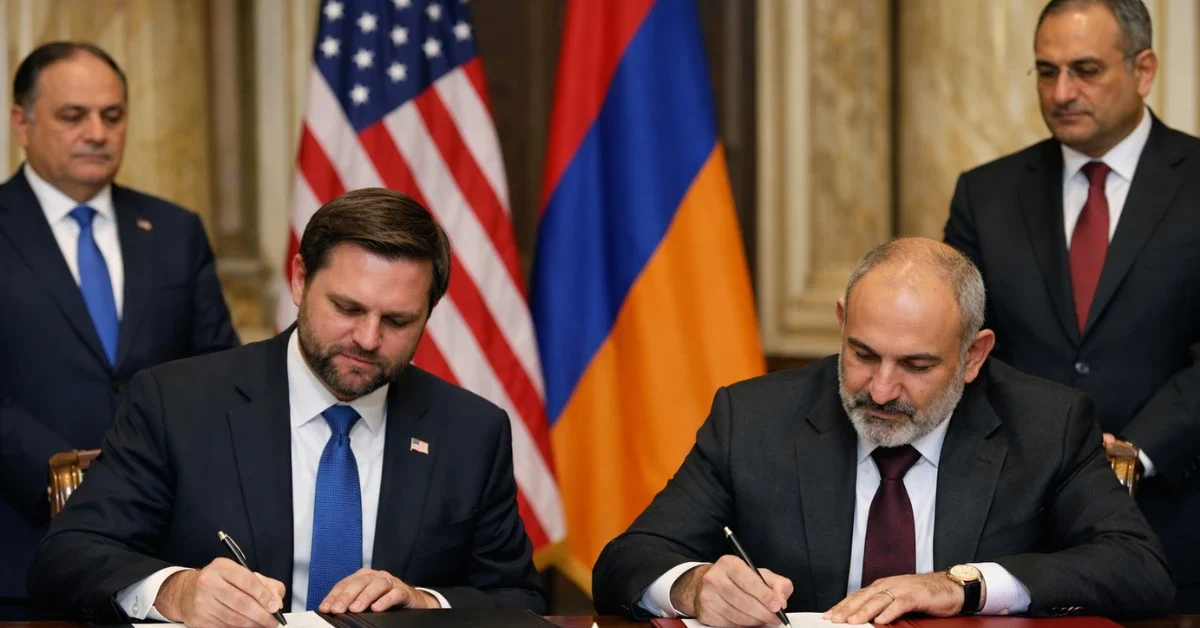
In a landmark move for the Caucasus region, the United States has signed a historic civil nuclear cooperation agreement with Armenia. This US-Armenia nuclear deal, finalized in February 2026, involves a massive $9 billion commitment aimed at transforming the small nation’s energy landscape. Vice President J.D. Vance represented the Trump administration during the signing, marking a significant pivot in Armenia’s international alliances and energy security strategy.
The agreement, known technically as a Section 123 Agreement, establishes the legal framework for the United States to share sensitive nuclear technology, materials, and expertise with Armenia. By securing this pact, the United States aims to help Armenia transition away from its long-standing dependence on Russian energy. This shift is viewed as a major geopolitical development, as Armenia has historically been one of Russia’s closest allies in the post-Soviet space.
Strengthening energy independence and security
For decades, Armenia has relied almost entirely on Russian technology and fuel to power its electrical grid. The center of this reliance is the Metsamor nuclear power plant, which was built during the Soviet era. Currently, Metsamor provides roughly 40 percent of Armenia’s electricity, but the facility is aging and scheduled to be decommissioned in the coming years. By signing this deal, the United States is positioning itself as the primary partner to help Armenia build a modern and safe replacement.
Vice President Vance emphasized that the $9 billion pledge is a cornerstone of the Trump administration’s “peace dividend” strategy for the region. The funds are expected to support the deployment of advanced American nuclear technology, including Small Modular Reactors (SMRs). These smaller plants are often seen as more flexible and cost-effective than traditional large-scale reactors, making them a practical choice for a nation the size of Armenia.
Addressing the nine billion dollar pledge
The $9 billion figure announced by the Vice President has become a focal point of international discussion. While many initial reports characterized the amount as a direct investment or grant, some regional observers have pointed out that the figure represents the projected value of United States exports in nuclear services and technology. This massive financial commitment is intended to cover the entire lifecycle of the new nuclear projects, from design and construction to long-term fuel supply and maintenance.
Despite some confusion regarding the exact allocation of the funds, the scale of the pledge signals a serious American commitment to the South Caucasus. The United States is not only offering technical assistance but is also facilitating a broader economic realignment. By bringing American firms into Armenia’s energy sector, the Trump administration seeks to create a lasting partnership that benefits both the Armenian economy and American industry.
Shifting away from Russian influence
The timing of this agreement is particularly significant given the cooling relations between Armenia and Russia. For years, Armenia has expressed frustration with its traditional security and energy partner, leading the government in Yerevan to seek closer ties with Western powers. This nuclear deal is the most tangible evidence yet of Armenia’s desire to diversify its strategic options and reduce its vulnerability to external pressure.
Russia has historically used energy exports as a tool of political influence in the region. By helping Armenia develop its own independent nuclear capacity with Western technology, the United States is effectively removing one of the primary levers of control that Moscow has held over the country. This transition is expected to be a gradual process, as the existing Metsamor plant will continue to operate until the new American-backed infrastructure is fully online.
Promoting regional stability and peace
The US-Armenia nuclear deal is not an isolated event but part of a wider diplomatic strategy involving other nations in the South Caucasus. Alongside the nuclear agreement, the United States has been engaging in strategic discussions with Azerbaijan. Vice President Vance suggested that energy cooperation is a vital tool for fostering long-term stability between Armenia and its neighbors.
The “peace dividend” refers to the idea that economic prosperity and energy security can reduce the likelihood of conflict. By investing in the regional energy grid and promoting self-sufficiency, the United States hopes to create an environment where diplomatic solutions to old territorial disputes become more attainable. This approach reflects the Trump administration’s focus on using economic leverage and bilateral deals to secure American interests abroad.
Looking toward a nuclear future
As the implementation of the agreement begins, the focus will turn to the technical challenges of modernizing Armenia’s energy infrastructure. The transition to American nuclear standards will require extensive training for Armenian engineers and the establishment of new regulatory frameworks. The Section 123 Agreement is the first step in this years-long journey, providing the legal permissions necessary for US companies to start work on the ground.
The successful completion of this project would serve as a template for other nations looking to modernize their energy sectors while shifting away from Russian or Chinese influence. For Armenia, the deal offers a path toward a more stable and independent future, powered by advanced technology and a strategic partnership with the United States.
