

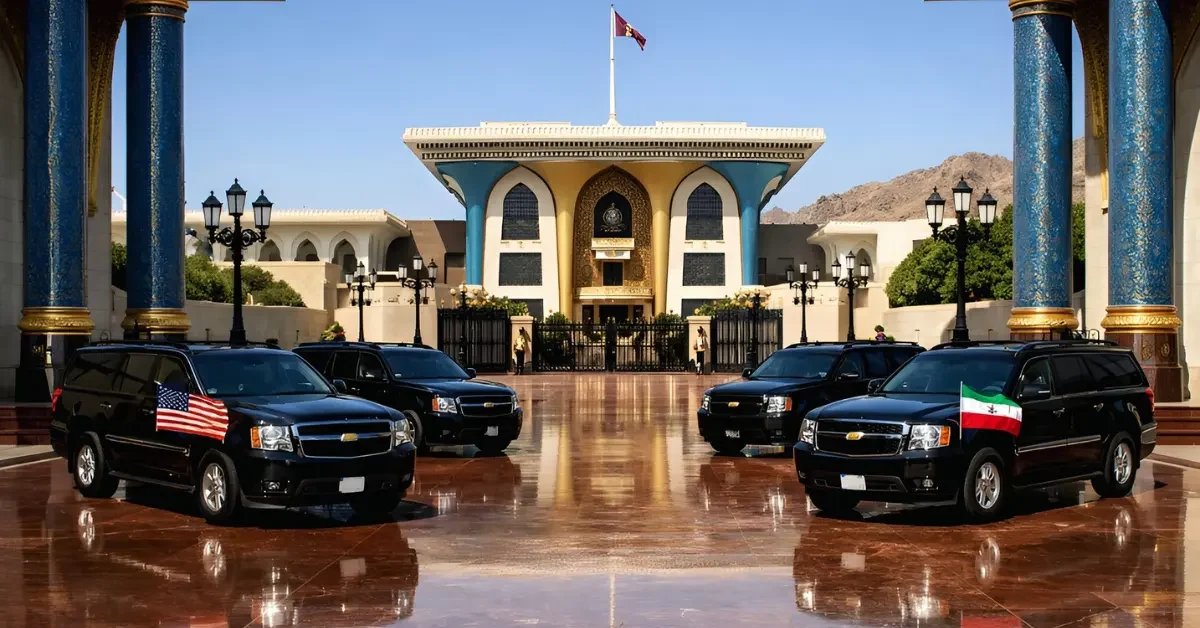
Delegations from the United States and Iran wrapped up a critical round of indirect negotiations in Muscat, Oman, on Friday. These meetings marked the first significant diplomatic engagement between the two adversaries since the United States and Israel launched airstrikes against the Islamic Republic last summer. The talks occurred under the shadow of renewed military threats from U.S. President Donald Trump and ongoing instability within Iran.
The negotiations aimed to address escalating tensions in the Middle East, but the two sides entered the discussions with sharply divided agendas. While Iranian officials described the meetings as a “good start” and expressed a readiness to continue, no clear timeline was set for future rounds. The talks were facilitated by Omani Foreign Minister Badr Albusaidi, who shuttled between the delegations to mediate the indirect dialogue.
A Divide in Agendas
A fundamental rift in expectations defined the atmosphere in Muscat. The United States, represented by a high-level delegation including envoy Steve Witkoff and President Trump’s son-in-law Jared Kushner, sought a comprehensive agreement. U.S. Secretary of State Marco Rubio stated prior to the meetings that Washington intended to broaden the scope of discussions beyond nuclear issues. The U.S. agenda included curbing Iran’s ballistic missile program, ending its support for militant groups across the region, and addressing the regime’s treatment of its own citizens.
In contrast, Tehran insisted that the dialogue remain strictly limited to its nuclear program. Iranian Foreign Minister Abbas Araghchi, who led his country’s delegation, emphasized that the talks were “exclusively nuclear.” According to Iranian state media, Araghchi dismissed the inclusion of other topics, reflecting Tehran’s long-standing position that its defense capabilities and regional alliances are not up for negotiation.
The United States also focused on the role of Iran-backed militias in Iraq. Reports indicate that Washington has threatened senior Iraqi politicians with sanctions targeting the state’s critical oil revenues if these groups are included in the next government. Despite their weakened positions following the recent conflicts, proxy groups like Hamas and Hezbollah have not yielded to demands for disarmament.
Shadows of the June Conflict
The diplomatic push in Oman comes months after a devastating 12-day war in June 2025 reshaped the strategic landscape. During that conflict, U.S. and Israeli forces bombarded Iranian nuclear sites, destroying key infrastructure including centrifuges used to enrich uranium. The strikes also decimated Iran’s air defense systems and targeted its ballistic missile arsenal.
Despite this damage, concerns remain regarding Tehran’s nuclear potential. The International Atomic Energy Agency (IAEA) has faced continued resistance from Iran, which has denied requests to inspect the bombed sites. This lack of transparency has alarmed nonproliferation experts, particularly as Iran previously limited inspections following the U.S. withdrawal from the 2015 nuclear deal.
Diplomats from Egypt, Turkey, and Qatar reportedly offered a proposal to bridge the gap before the Muscat talks. The plan suggested that Iran halt uranium enrichment for three years, export its stockpile of highly enriched uranium, and pledge not to initiate the use of ballistic missiles. While Russia signaled a willingness to accept the uranium, Iranian officials have historically rejected shipping their stockpile out of the country as a nonstarter.
Internal Turmoil and External Threats
The negotiations also took place against a backdrop of severe internal unrest in Iran. The country has been shaken by its deadliest protests since the 1979 revolution, sparked by economic crises and growing calls for the end of clerical rule. A brutal crackdown by the regime has resulted in thousands of deaths and detentions.
President Trump has used the unrest to apply additional pressure on Tehran. He recently warned that the United States would take “very strong action” if the Iranian government executed protesters. Analysts suggest the administration views the current moment as an opportunity. Alissa Pavia, a fellow at the Atlantic Council, noted that the U.S. seeks to “corner Iran into reaching a negotiated solution” while the country is weakened by proxy warfare, economic collapse, and domestic dissent.
Military Presence at the Table
The composition of the U.S. delegation underscored the serious military dimensions of the talks. Alongside diplomatic envoys, the U.S. team included Admiral Brad Cooper, the commander of U.S. Central Command (CENTCOM). His presence highlighted the continued high alert status of American forces in the region.
The meetings were held at a palace near the Muscat international airport, a venue used for previous discussions. Strict security measures were in place, with Omani officials prohibiting cameras near the site. While the immediate outcome of the Friday sessions remains ambiguous, the engagement itself signals a tentative return to diplomacy after a year of violence and confrontation. Both capitals are expected to review the results of this round before committing to further steps.
