

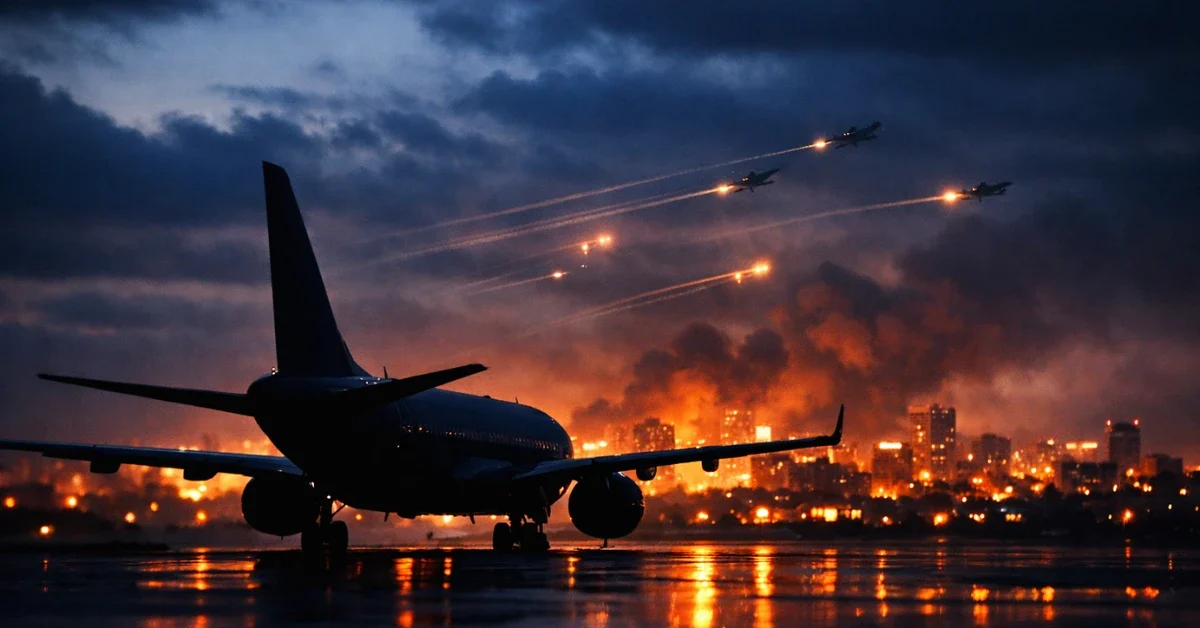
The recent US and Israel strikes on Iran have initiated a massive wave of military action, drastically escalating Middle East tensions. The joint operation heavily focused on the compound of Iranian Supreme Leader Ayatollah Ali Khamenei. U.S. President Donald Trump and Israeli Prime Minister Benjamin Netanyahu stated there are strong indications Khamenei was killed in the bombardment. While Israeli sources claim his body was recovered, the government in Tehran has not publicly confirmed his death.
These coordinated attacks rapidly triggered a broader regional conflict, with military operations now expanding into Lebanon. Following the initial assault on Tehran, Israel launched fresh aerial bombardments against Hezbollah, the prominent Iran-backed militant group. This deteriorating security situation has completely disrupted commercial aviation across the Middle East and sent immediate shockwaves through global energy markets.
Major Combat Operations Target Iranian Leadership
President Trump announced the commencement of the strikes via a social media video recorded at his Mar-a-Lago estate. He characterized the offensive as the beginning of major combat operations aimed at eliminating imminent threats to the American people. During his address, the president actively encouraged Iranian citizens to mobilize and overthrow their government.
Trump later told reporters that a substantial portion of Iran’s leadership was eliminated. Furthermore, the U.S. military successfully destroyed nine Iranian naval vessels and heavily damaged the country’s naval headquarters. According to media reports, the Central Intelligence Agency tracked Khamenei’s movements for months and shared this critical intelligence with Israel to execute the precise operation.
Iran immediately launched retaliatory strikes across the region. Iranian forces unleashed a barrage of attacks targeting U.S. military bases, Israel, and numerous other Middle Eastern locations. Explosions were reported in densely populated areas, including key transit hubs in Abu Dhabi and Dubai, as well as in Qatar, home to the largest American military base in the region. Meanwhile, Iranian state media claimed the initial U.S. and Israeli campaign killed more than two hundred people.
Israel Expands Military Campaign Into Lebanon
The violence quickly spilled over the border into Lebanon. After Hezbollah acknowledged firing missiles and drones at Israel to avenge Khamenei, the Israeli military initiated heavy airstrikes on Hezbollah-dominated southern suburbs of Beirut. The early-morning bombardment caused massive explosions that deeply shook the Lebanese capital. Panicked residents fled the area on foot and by car, creating severe traffic gridlock.
The Israeli Defense Forces stated they targeted high-ranking Hezbollah figures near Beirut, holding the militant organization fully accountable for the escalating violence. Israel subsequently advised civilians in multiple southern and eastern Lebanese villages to evacuate immediately. The military also reported successfully intercepting a projectile fired directly from Lebanon.
These renewed hostilities threaten a delicate, U.S.-mediated ceasefire established between Israel and Lebanon in 2024. Before the latest wave of strikes, the Lebanese presidency noted the U.S. ambassador had relayed assurances that Israel would not launch further attacks, provided Hezbollah refrained from hostile actions.
Air Travel Suspended and Oil Markets React
The sudden regional warfare caused immediate chaos in the commercial aviation sector. Flight tracking maps showed airspace over Iran, Iraq, Kuwait, Bahrain, and Israel virtually empty as airlines scrambled to reroute flights. Preliminary aviation data indicated that nearly forty percent of all scheduled flights to Israel were canceled.
Major global carriers abruptly suspended operations to critical destinations like Dubai, Abu Dhabi, Tel Aviv, Beirut, and Amman. Aviation security experts warned the disruption remains highly fluid, anticipating temporary shutdowns and precautionary evacuations at Gulf airports if the military threat expands further.
The escalating conflict also rattled global financial markets. Energy analysts anticipate a significant surge in crude oil prices driven by intense fears of supply chain disruptions. Industry estimates suggest marine hull insurance rates for commercial oil tankers navigating strategic Gulf waterways could jump by up to fifty percent.
U.S. Lawmakers Push Back on Military Action
Domestically, the sudden military offensive sparked intense political debate in Washington. Congress is rapidly preparing to vote on a war powers resolution designed to halt Trump’s military campaign. Senator Tim Kaine firmly condemned the president’s actions, arguing the conflict constitutes an illegal war. He emphasized that the U.S. Constitution strictly requires congressional approval before any formal declaration of war. Trump has publicly characterized the situation as a direct war against Iran, signaling that combat operations could continue for weeks.
