

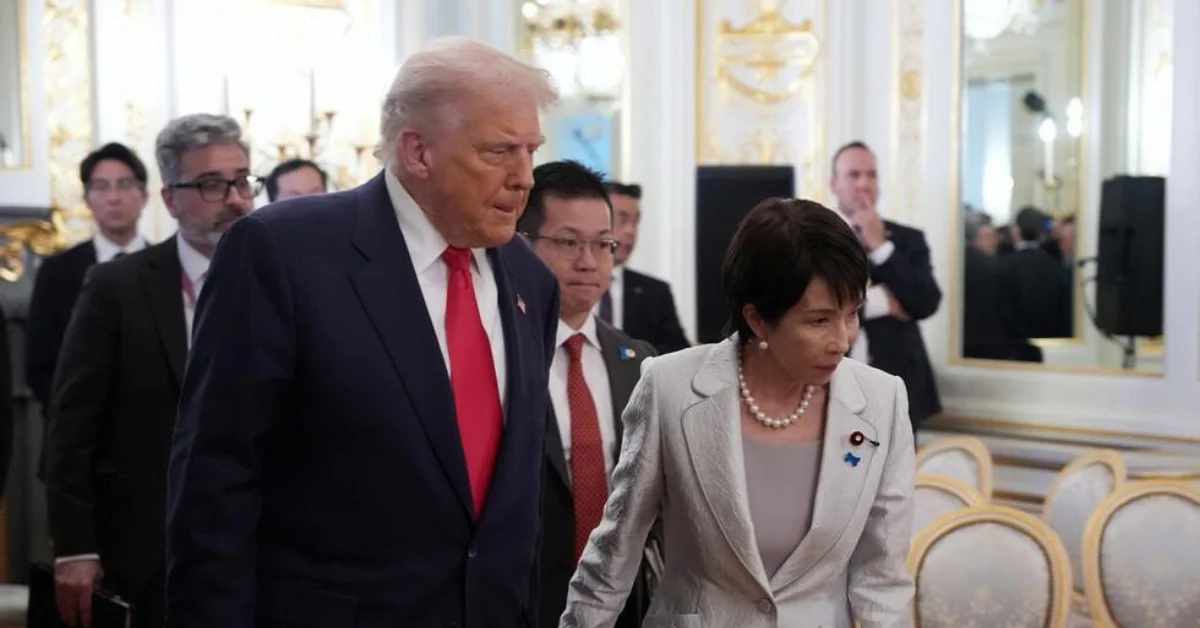
Japanese Prime Minister Sanae Takaichi met with U.S. President Donald Trump at the White House on Thursday, testing the strength of the US-Japan alliance amid an escalating war in Iran. The high-stakes Washington visit focused heavily on the global economic fallout from the conflict and American demands for Japan to help secure the vital Strait of Hormuz.
With Iranian forces effectively closing the critical maritime chokepoint to most traffic, global energy markets are facing severe disruptions. The crisis has forced both nations to weigh immediate Middle Eastern security demands against the long-term priorities of the US-Japan alliance in the Indo-Pacific.
Energy Shocks and the Strait of Hormuz
The U.S. and Israeli military operations against Iran, now in their third week, have led Iranian forces to interfere with commercial shipping. The Strait of Hormuz handles roughly one-fifth of the world’s oil consumption. Reports indicate Iran is restricting passage while selectively allowing shipments tied to transactions in Chinese yuan rather than U.S. dollars.
This disruption presents a severe vulnerability for Japan. The resource-scarce nation relies on the Persian Gulf for more than 90% of its crude oil and a significant portion of its liquefied natural gas. In response to the sudden shock, the Japanese government ordered the largest release of its strategic petroleum reserves in history.
Takaichi warned during the Oval Office meeting that the global economy is poised to take a “huge hit.” However, she firmly stated that Iran’s pursuit of nuclear weapons “must never be allowed” and explicitly condemned the effective closure of the strait.
Pressure for Military Support
President Trump is actively pressing allied nations to deploy naval assets to clear mines and escort tankers in the Middle East. While European countries such as Germany, Italy, and Spain have declined to participate, the pressure on Japan remains intense. Trump expressed frustration with allied burden-sharing but praised Tokyo, stating that Japan is “really stepping up to the plate, unlike NATO.” He emphasized that nations benefiting from the strait must contribute, warning allies not to wait until “after the war is won.”
Deploying the Maritime Self-Defense Force into an active conflict zone presents a major domestic challenge, as Japan’s pacifist constitution heavily restricts overseas military action. To legally justify deployment, the government must classify the blockade as a “survival-threatening situation” permitting limited collective self-defense, or an “important influence situation” allowing logistical support.
Takaichi told parliament that Japan has “not made any decisions whatsoever” regarding an escort mission, though officials are reviewing legal options. Meanwhile, Japanese Foreign Minister Toshimitsu Motegi has been consulting with U.S. Secretary of State Marco Rubio, as well as leaders in Saudi Arabia and the United Arab Emirates. Potential compromises could include intelligence sharing or future mine-clearing operations.
Deepening Defense and Economic Ties
Beyond the immediate crisis, the meeting highlighted expanding cooperation within the US-Japan alliance. The two leaders discussed joint missile production and expected Japanese participation in the U.S. “Golden Dome” missile defense initiative. Japan recently approved a fiscal year 2026 budget featuring a record $58 billion in defense spending and plans to establish a National Intelligence Agency.
Economic statecraft also played a central role. Japan is advancing massive investments in the U.S. economy. Trump recently highlighted $36 billion in Japanese-backed projects, including an Ohio natural gas power plant and a Texas oil export facility. Takaichi is expected to announce an additional $100 billion in investments, potentially covering nuclear power and copper smelting.
These commitments arrive as Tokyo navigates aggressive U.S. trade policies. The U.S. recently implemented new 10% tariffs that could rise to 15%, alongside new trade investigations into industrial overcapacity. By emphasizing American job creation, Japan hopes to ease these trade tensions and reinforce its strategic value.
Shifting Focus from the Indo-Pacific
The sudden eruption of conflict in the Middle East has disrupted broader strategic plans. Takaichi originally intended to use the Washington visit to focus on security in the Indo-Pacific, specifically deterring Chinese assertiveness and securing Taiwan.
Instead, the U.S. has begun redirecting military resources—including naval vessels, THAAD missile defense launchers, and Marines based in Okinawa—away from Asia and toward the Middle East. Furthermore, Trump announced that his planned trip to Beijing to meet with Chinese President Xi Jinping later this month will be postponed due to the ongoing war.
Despite these sudden shifts, the personal rapport between the two leaders appears strong. Trump praised Takaichi’s recent landslide electoral victory, describing her as a “very popular, powerful woman.” As the conflict continues to test global supply chains, the ability of both leaders to balance domestic constraints with international demands will shape the future of the US-Japan alliance.
