

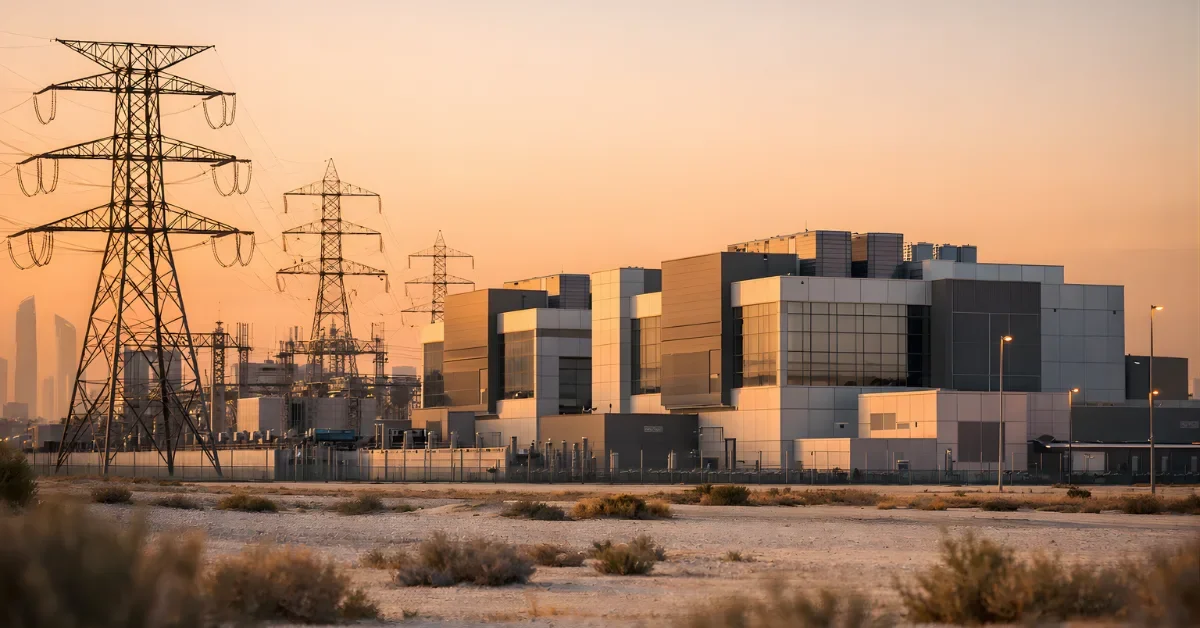
A major US-UAE plan to build a large artificial intelligence data center campus in Abu Dhabi is not finalized, as US officials continue to weigh security conditions tied to advanced technology exports.
The project, unveiled during President Donald Trump’s visit to Abu Dhabi, has been promoted by Trump officials as a way to deepen Gulf adoption of US technology rather than Chinese alternatives, but key enforcement and export details remain unresolved, according to sources cited in reports referencing Reuters.
What the AI campus plan includes
The proposed campus is described as a 10-square-mile site in the United Arab Emirates designed to host a cluster of powerful data centers, backed by G42, an Emirati state-linked tech firm.
Another description of the same project says the AI campus would cover 25.9 square kilometres in Abu Dhabi and be powered by up to 5 gigawatts of energy, with the site built by G42 while American firms handle operations.
The Middle East Institute also describes “Stargate UAE” as a plan to build a 5-gigawatt data center campus in Abu Dhabi using American technology.
Companies named in the project’s first phase
Technology companies named as working with G42 on the first phase include Nvidia, OpenAI, Cisco, and Oracle, along with Japan’s SoftBank, with the first phase identified as “Stargate UAE.”
The first phase is described as being set to go online in 2026 in reporting that references Reuters, and it is also described as planning to use advanced Nvidia AI chips.
Separately, the broader US-UAE agreement described in another report says Qualcomm will open an AI-focused engineering hub and Amazon Web Services will partner with local firms to boost cybersecurity and cloud adoption.
Security concerns and why timing is uncertain
Reporting that cites sources familiar with the matter says US officials have not yet decided what security conditions would apply to exporting advanced chips for the project or how the overall agreement would be enforced, leaving the deal “far from resolved.”
One report says the delay is tied to US concerns about technology transfer and foreign influence, pointing to the UAE’s history of working with Chinese technology firms, including past adoption of Huawei 5G infrastructure.
That same report says there is skepticism in both Republican and Democratic circles about how safeguards would be enforced, and it raises issues such as possible restrictions involving Chinese nationals and hardware.
Chips: what different reports claim
On chip volumes, one report says sources familiar with the deal indicated the UAE could start importing up to 500,000 of Nvidia’s top-tier AI chips each year beginning in 2025, while noting Nvidia did not comment.
A different report describes the site as planning to use 100,000 Nvidia Grace Blackwell GB300 chips and says the project remains in limbo because Washington has yet to define export controls needed to proceed.
Another account tied to sources briefed on the project says US officials still must determine the security conditions for exporting the advanced chips, reinforcing that final approvals and safeguards remain a central open question.
Wider push to expand Gulf “compute”
The Middle East Institute frames the AI era as a shift in strategic infrastructure where “compute” capacity and partnerships shape influence, and it says GCC countries are pursuing AI development that requires a full end-to-end AI “stack,” including chips and data-processing facilities.
It also notes that US policy shifted in May 2025, and says that after President Donald Trump visited Saudi Arabia, the UAE, and Qatar, multiple partnerships centered around AI were established, including the Abu Dhabi campus plan it calls “Stargate UAE.”
For the UAE, another report says the campus deal is structured around tighter alignment with US standards, including a requirement that the data centers involved are managed by US companies and a commitment by the UAE to update national security rules in line with American standards and prevent diversion of technology to other countries.
