

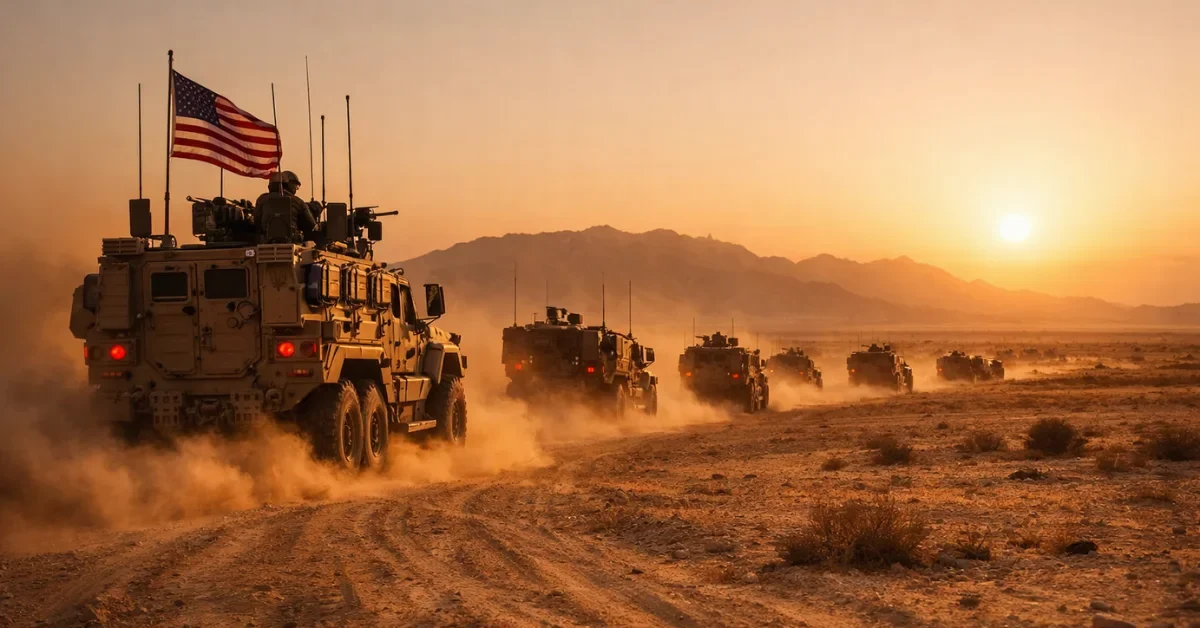
The United States is preparing to withdraw all of its remaining military forces from Syria, marking the end of a decade-long mission in the war-torn country. According to reports first published by The Wall Street Journal and cited by multiple international news outlets on Wednesday, the Trump administration has ordered the complete departure of approximately 1,000 U.S. troops over the next two months.
The decision represents a major strategic shift in American foreign policy in the Middle East. Officials cited in the reports indicate that Washington has concluded its military presence is no longer necessary following significant changes on the ground, including the integration of U.S.-backed local forces into the Syrian state structure.
Withdrawal Timeline and Logistics
The comprehensive withdrawal is expected to take place rapidly, with all personnel scheduled to leave Syrian soil within 60 days. This move follows a series of smaller, quieter exits that have occurred in recent weeks. U.S. Central Command (CENTCOM) has already overseen what it described as an “orderly exit” from key positions, characterizing the movements as part of a deliberate, conditions-based transition.
Specifically, American forces have reportedly finalized their departure from the Al-Tanf garrison, a strategic outpost located in southern Syria near the borders with Jordan and Iraq. Additionally, troops have vacated the Al-Shaddadi base in the northeastern part of the country. These locations had previously served as critical hubs for the global coalition’s operations against the Islamic State (ISIS), providing training and logistical support to local partners.
New Security Framework in Syria
According to U.S. officials referencing the strategic shift, the withdrawal aligns with a new agreement designed to reform Syria’s security framework. The reports detail a deal that facilitates the integration of the Kurdish-led Syrian Democratic Forces (SDF)—Washington’s primary ally in the fight against ISIS—into the official Syrian military apparatus.
This integration aims to strengthen state authority under the government of Syrian President Ahmed al-Sharaa. Following years of fragmented governance and civil conflict, the Syrian government has recently regained authority over large swathes of territory that had remained outside Damascus’s control, particularly in the resource-rich northeast. American officials have presented this agreement as a pivotal step toward national unity, reasoning that the near-complete dissolution of independent SDF command structures renders the original U.S. mission to protect these partners effectively obsolete.
Distinction from Regional Tensions with Iran
While the U.S. is pulling out of Syria, officials emphasized that this decision is not a signal of broader disengagement from the Middle East. In fact, the withdrawal contrasts sharply with recent American military buildups in nearby waters. The reports clarify that the Syria pullout is unrelated to escalating tensions with Iran.
In response to threats against American interests and dissatisfaction with stalled nuclear discussions, the Trump administration has actually enhanced its military posture in the region. This includes the recent deployment of the USS Gerald R. Ford aircraft carrier to the Middle East. Officials stated that while the counter-ISIS mission in Syria is concluding because local forces can now handle internal security, the U.S. remains poised to respond to external threats from Tehran.
The End of the Anti-ISIS Mission
The withdrawal effectively concludes the U.S. military campaign launched to dismantle the territorial caliphate of ISIS. For years, the presence of roughly 1,000 American troops served as a deterrent and a stabilizing force in eastern Syria. However, with the physical defeat of the terror group and the new political arrangements in Damascus, the White House has determined that the mission’s objectives have been met.
The transition of control to President al-Sharaa’s government signifies a new phase for the region. While questions remain regarding the long-term stability of the integration deal between Kurdish fighters and the Syrian army, the Trump administration has moved decisively to end the open-ended American commitment on the ground.
