

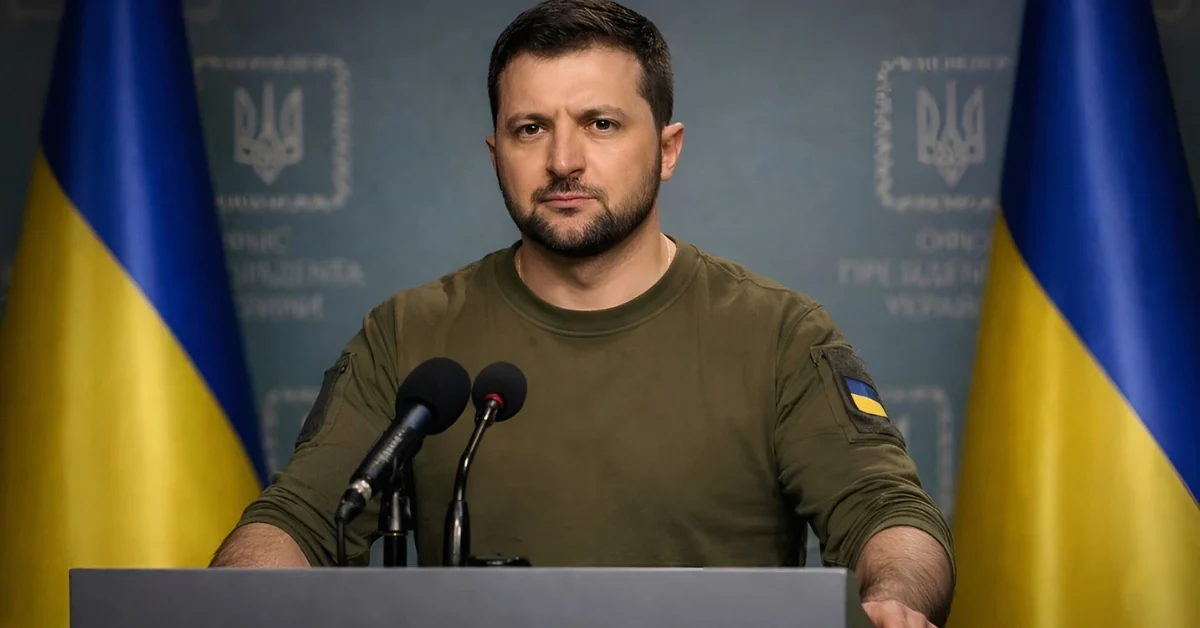
The United States has established a rigid deadline of June for Ukraine and Russia to finalize a peace agreement and end the nearly four-year war. Ukrainian President Volodymyr Zelenskyy revealed the timeline to reporters, stating that Washington is pressing for a resolution by the start of the summer.
According to Zelenskyy, American officials have made it clear that they expect the conflict to conclude within this timeframe. Speaking at a press briefing in Kyiv on Friday, with comments embargoed until Saturday morning, the Ukrainian leader outlined the pressure facing both nations. He noted that if the June target is not met, the U.S. administration intends to increase its leverage on both Moscow and Kyiv to force a settlement.
“The Americans are proposing the parties end the war by the beginning of this summer and will probably put pressure on the parties precisely according to this schedule,” Zelenskyy said. He added that U.S. officials “want to do everything by June” and are seeking a “clear schedule of all events” to ensure the war comes to a close.
Upcoming Talks in Miami
In an effort to accelerate negotiations, the United States has proposed hosting the next round of trilateral discussions on American soil. Zelenskyy confirmed that the talks are tentatively scheduled for next week, with Miami suggested as the likely venue. This would mark the first time such high-level trilateral meetings have taken place in the U.S. during this phase of the conflict.
“We have confirmed our participation,” Zelenskyy stated regarding the upcoming round of negotiations. The push for a domestic venue signals a shift in Washington’s strategy to take a more direct role in mediating the deadlock.
Standoff Over Territory
The announcement of the June deadline follows a failed round of U.S.-brokered talks in Abu Dhabi earlier in the week. Those discussions produced no breakthroughs as the warring parties remain deeply divided on core issues. The primary sticking point continues to be the status of the Donbas region. Russia insists that Ukraine must withdraw its forces from the area, a demand that Kyiv has flatly rejected.
Zelenskyy reiterated Ukraine’s refusal to concede territory, emphasizing that the situation on the ground remains the only acceptable baseline for a ceasefire. “‘We stand where we stand’ is the fairest and most reliable model for a ceasefire today, in our opinion,” he said. He acknowledged that “difficult issues remained difficult” and noted that the most complex topics would likely be reserved for future meetings between national leaders.
Energy Infrastructure Under Fire
As diplomatic pressure mounts, the war’s physical toll continues to escalate. On Saturday, fresh Russian strikes targeted Ukraine’s energy infrastructure, forcing nuclear power plants to reduce their output. The attacks highlight the fragility of the current situation and the urgent need for a cessation of hostilities.
Zelenskyy mentioned that the U.S. has once again proposed a ceasefire specifically banning strikes on energy facilities. While Ukraine has expressed readiness to observe such a pause if Russia reciprocates, trust remains low. Zelenskyy recalled a previous instance where Moscow agreed to a U.S.-suggested one-week pause, only to violate it after four days.
Economic Proposals and Previous Deadlines
The negotiations also involve significant economic components. Zelenskyy disclosed that Russia has presented the United States with a massive $12 trillion economic proposal. Dubbed the “Dmitriev package” after Russian envoy Kirill Dmitriev, the plan suggests that bilateral economic agreements with the U.S. are being treated as integral to the broader peace process.
The June deadline is not the first timeline set by the current U.S. administration. President Donald Trump had previously established an August 8 deadline for an agreement, warning of severe tariffs on Russia if the conflict did not end. That date passed without a resolution, though some secondary tariffs were subsequently imposed. Additionally, Keith Kellogg, a special envoy for Ukraine, had earlier proposed a plan to reach an agreement within 100 days of the administration taking office, a target that also elapsed without success.
Despite these missed milestones, Zelenskyy indicated that Washington’s current stance is firm. “If the Russians are genuinely prepared to conclude the war, establishing a deadline is crucial,” he remarked. With the conflict now spanning nearly four years, the coming months appear decisive as the U.S. seeks to turn up the heat on both sides to finally silence the guns.
