

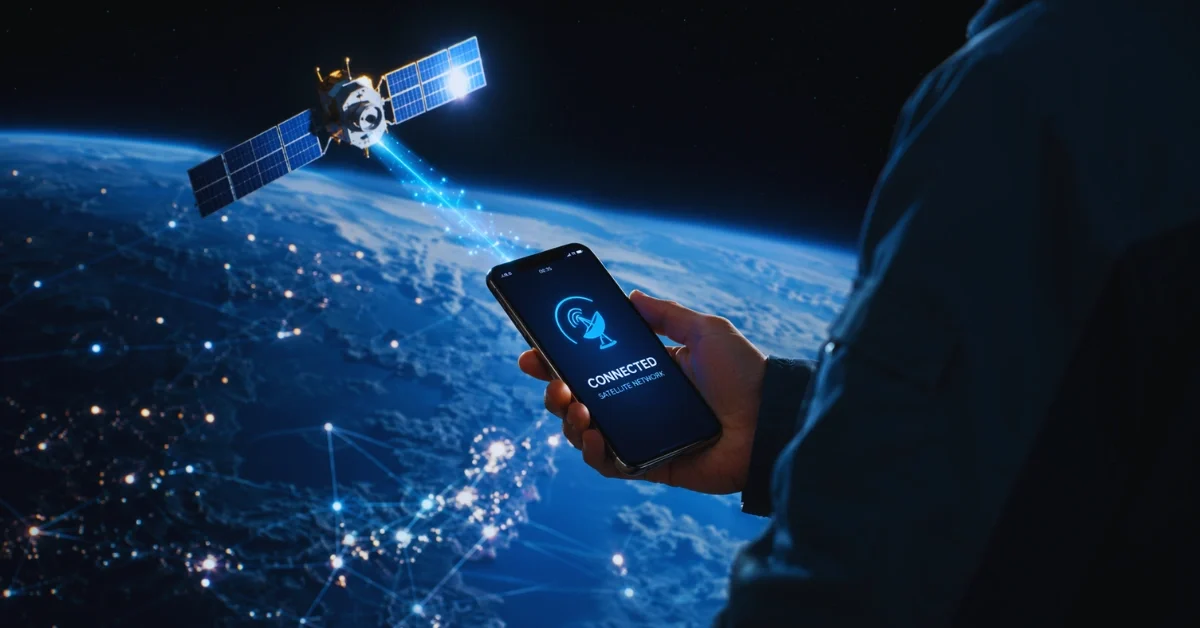
The highly anticipated Amazon Globalstar acquisition has officially been confirmed. Amazon is purchasing the satellite communications giant Globalstar in a massive $11.57 billion transaction. This strategic move aims to rapidly expand the capabilities of Amazon Leo, the e-commerce giant’s satellite internet service. By integrating direct-to-device connectivity into its low-earth orbit network, Amazon intends to provide cellular coverage to consumer devices in remote areas far beyond the reach of traditional cell towers.
The Amazon Globalstar acquisition places Jeff Bezos’ company in direct competition with SpaceX and its dominant Starlink network. The agreement also successfully navigates a complex three-way negotiation involving Apple, which previously held a significant stake in Globalstar. Through this buyout, Amazon will not only absorb existing satellite infrastructure but also take over the responsibility of powering vital emergency features for iPhone and Apple Watch users worldwide.
Financial Details of the Merger
At a valuation of $11.57 billion, or roughly 9.8 billion euros, the purchase of Globalstar ranks as the second-largest acquisition in Amazon’s history. It sits only behind the $13.7 billion takeover of Whole Foods Market in 2017, while surpassing the $8.5 billion purchase of MGM Studios in 2021.
Under the terms of the newly signed merger agreement, Globalstar shareholders have two options for their holdings. For every share of Globalstar they own, investors can choose to receive either $90 in cash or 0.3210 shares of Amazon common stock.
Financial markets reacted swiftly to the announcement. Globalstar shares soared by approximately 10% during early trading hours, pushing the stock price above the $80 mark and elevating the company’s total market capitalization to around $10.3 billion. Meanwhile, Amazon’s own stock experienced a favorable bump, rising by more than 2%.
Competing With SpaceX and Starlink
A primary driving force behind this buyout is Amazon’s desire to challenge Elon Musk’s SpaceX, specifically its highly successful Starlink division. Starlink currently dominates the space communications sector with over 10 million active customers and roughly 10,000 satellites already in orbit. SpaceX is also preparing for a massive initial public offering targeted for June, which aims to raise $75 billion at a staggering $2 trillion valuation.
To capture market share, Amazon is heavily investing in its Amazon Leo network, formerly known as Project Kuiper. The company has a regulatory deadline to ensure half of its planned 3,200 low-earth orbit satellites are operational by July 2026, with the full constellation deployed by 2029. Amazon currently operates more than 200 satellites and plans to launch its initial satellite internet services later this year, ahead of an official mid-2026 rollout.
According to Amazon’s 2025 financial report, the company promises that its upcoming satellite constellation will deliver significant improvements over existing options. The tech giant claims its network will offer upload speeds six to eight times faster and download speeds twice as fast as current solutions, all at a lower cost to the consumer.
The business world is already showing confidence in Amazon’s infrastructure. The company has secured significant investment commitments from major organizations and governments. Early clients include Delta Airlines, JetBlue, AT&T, Vodafone, DirecTV Latin America, Australia’s National Broadband Network, and NASA.
Apple’s Stake and Future Services
One of the most complicated aspects of the merger involved Apple. The iPhone manufacturer has relied on Globalstar for several years to power its satellite messaging capabilities. In 2024, Apple invested $1.5 billion into Globalstar, securing a 20% ownership stake and access to 85% of the operator’s satellite communication service capabilities.
Because of this existing relationship, finalizing the buyout required extensive negotiations among Amazon, Globalstar, and Apple. With the deal now complete, Apple will transition to sourcing its satellite services directly from Amazon Leo. Amazon has committed to supporting the existing and planned upcoming Globalstar constellations, which are manufactured by MDA Space, ensuring no disruption for current Apple devices.
The ongoing partnership will continue to facilitate crucial functions like Emergency SOS, messaging, Find My, and roadside assistance for Apple products.
Greg Joswiak, Apple’s senior vice president of Worldwide Product Marketing, expressed confidence in the transition. “Apple and Amazon have a long and proven track record of working together through Amazon’s core infrastructure services, and we look forward to building on that collaboration with Amazon Leo. This ensures our users will continue to have access to the vital satellite features they have come to rely on, including Emergency SOS, Messages, Find My, and Roadside Assistance via satellite, so they can stay safe and connected while off the grid,” Joswiak stated.
The Background of Globalstar
Globalstar brings decades of telecommunications experience to Amazon. Originally formed as a joint venture between Qualcomm and Loral, the company launched its first low-earth orbit satellites back in 1998. It has been led by Chief Executive Officer Paul Jacobs, who previously headed Qualcomm and is the son of Qualcomm co-founder Irwin Jacobs.
By the end of 2025, Globalstar had amassed nearly 800,000 subscribers for its mobile satellite services. Now, its established infrastructure and direct-to-device technology will be fully absorbed into the Amazon ecosystem, marking a major shift in the global satellite communications industry.
